The biggest stock market debut in Philippine history is now in motion. Mynt Inc., the operator of GCash, started taking orders from institutional investors on September 24 for an initial public offering (IPO — a company's first sale of shares to the public) that could raise up to ₱92.32 billion, with more than 20 cornerstone investors already committed before a single share has been priced.
The GCash IPO by the numbers
| Term | Detail | | --- | --- | | Maximum offer price | ₱10 per share (a ceiling, not a final price) | | Base offer | Up to 8.03 billion shares — 1.61 billion new (primary) and 6.42 billion from existing shareholders (secondary) | | Overallotment option | Up to 1.2 billion additional secondary shares | | Maximum proceeds | About ₱80.3 billion base; up to ₱92.32 billion with overallotment | | Final pricing | Around October 1, after book-building | | Public offer period | October 6 to 12 | | Target listing | October 20, on the PSE under the ticker GCASH |
At the ₱10 ceiling the deal values Mynt at roughly ₱669 billion (about US$10.7 billion) and would eclipse the current Philippine IPO record — Monde Nissin's ₱55.89-billion offering in 2021 — by a wide margin, according to Crypto Briefing's breakdown of the deal.
Cornerstone investors cover the institutional tranche
Technode Global reports that Mynt has secured commitments from more than 20 global and domestic cornerstone investors — anchor buyers who commit to large allocations before the offer opens — covering approximately the entire institutional tranche of the deal, worth about ₱36.5 billion.
The global names include funds managed by BlackRock, Capital Research and Management, FIL Investment Management, HSBC Global Asset Management, the International Finance Corporation, Lazard Asset Management, Schroders, T. Rowe Price, and Surveyor Capital. Albizia Capital and Amundsen Investment Management are making their first Philippine cornerstone investments, while Ninety One is making its first in Southeast Asia.
The domestic roster is just as telling: ATRAM Trust, BPI Asset Management and Trust, China Bank Capital, Metrobank's Trust Banking Group, Philequity Management, and RCBC Capital — a cross-section of the country's biggest fund managers buying into a fintech that competes with some of their parent banks.
A first under the SEC's relaxed float rules
Mynt is the first large issuer to benefit from the Securities and Exchange Commission's relaxed public float requirement, listing with a minimum 12 percent float instead of the standard 15 percent. Globe Telecom holds about 34 percent of Mynt, and Ant Group is among the selling shareholders in the secondary tranche.
The business being floated is enormous by local standards: GCash counts around 90 million registered users, roughly 39 to 40 million monthly active users, 2025 revenue of ₱79.8 billion, and an annual gross transaction value of about ₱17 trillion.
Why this listing matters for the PSE
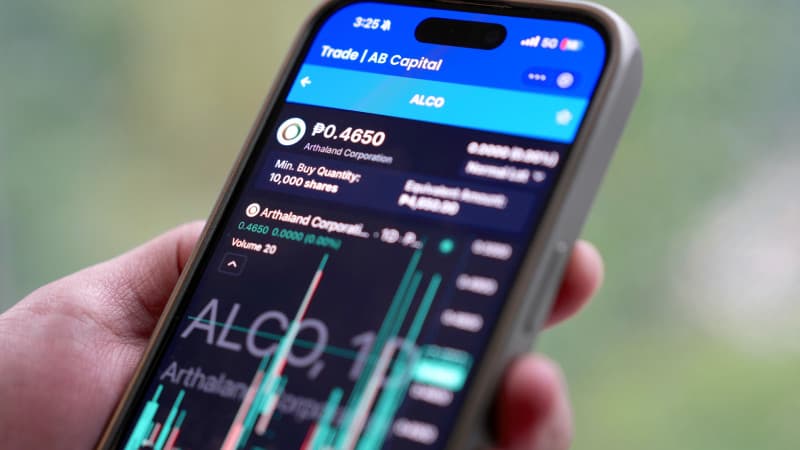
A deal this size is a stress test for Philippine capital markets — the cornerstone coverage means institutional demand is effectively locked, so the open question is retail appetite during the October 6–12 offer. Capital market strategist Jonathan Ravelas cautioned against reading the price ceiling as a verdict: "The ₱10 is a ceiling, not a promise, and certainly not a measure of whether the IPO succeeds or fails," he said — the final price could land lower after book-building. A successful float would also validate the pipeline of digital-economy listings behind it, on an exchange where fintech-adjacent offerings like Arthaland's preferred shares selling through GStocks PH have only started testing retail distribution through GCash's own app.
FAQ
When can ordinary Filipinos buy GCash IPO shares?
The public offer period runs October 6 to 12, with the final price set around October 1 after institutional book-building. The shares list on the Philippine Stock Exchange around October 20.
What will the stock trade as?
Mynt will list under the ticker symbol GCASH on the PSE.
Is ₱10 the final share price?
No. ₱10 is the maximum indicative price; the final offer price will be set through book-building and may come in lower.