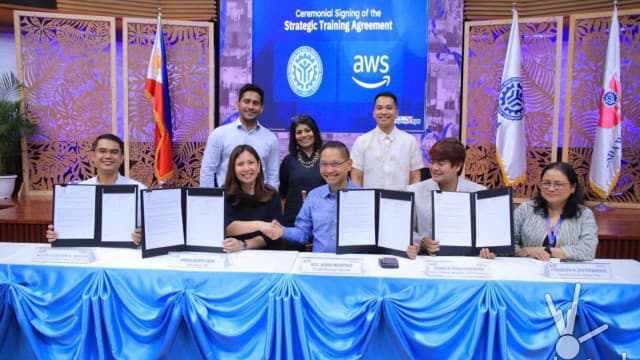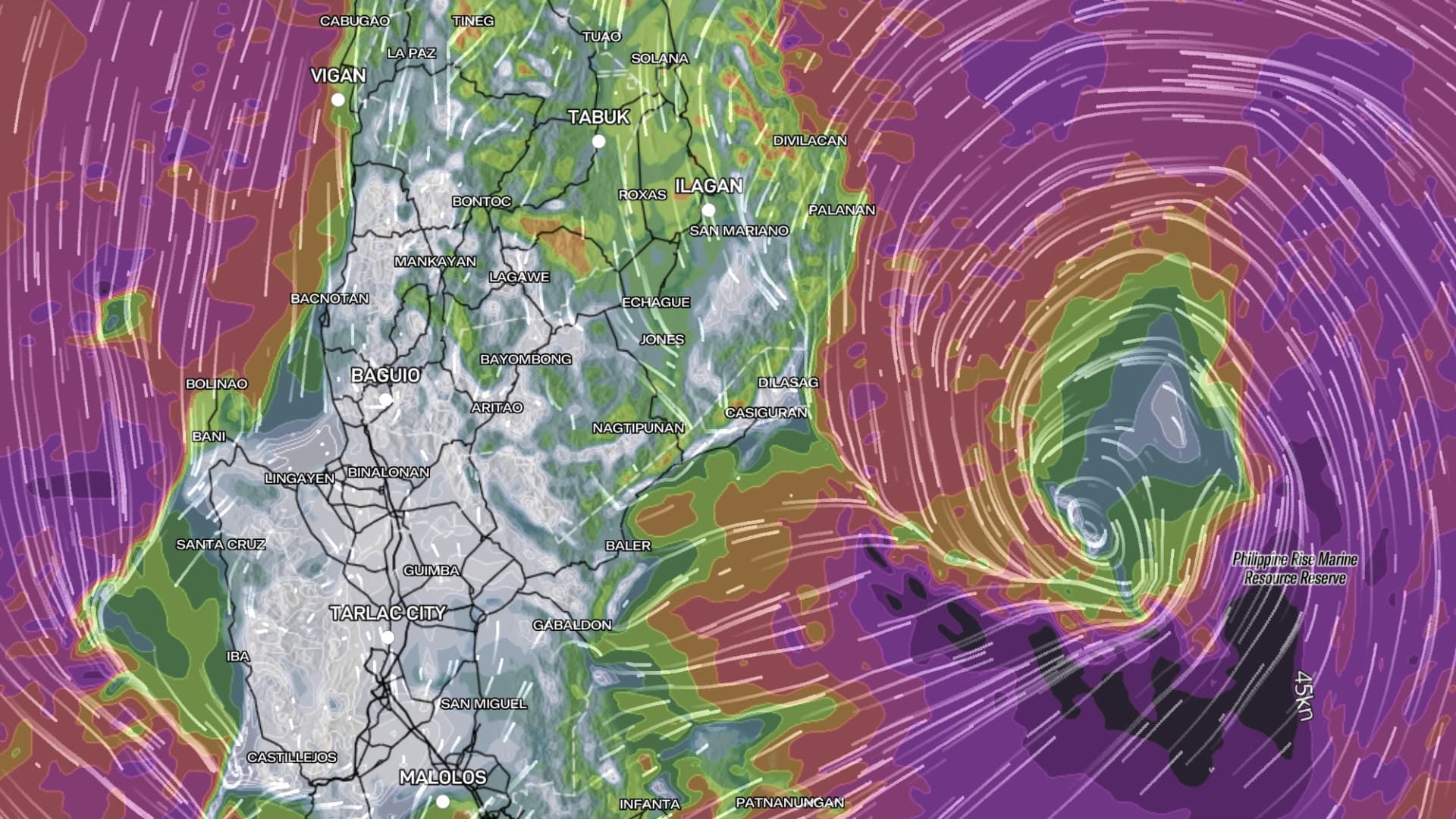
PAGASA's free PANaHON weather service now carries an AI forecast that maps the Philippines in 2-kilometer squares and, according to officials, can look up to 14 days ahead, against five days for the bureau's usual model. The weather bureau launched the AI integration in Pasay City on Tuesday, November 17, 2026, the Philippine News Agency (PNA) reported.
If you check the weather before a trip, a harvest or a long drive, you can now open this AI forecast yourself, next to the forecasts PANaHON already showed. Below is what was launched, where to find it, and what the bureau itself says about its limits.
What PAGASA launched on November 17
The new forecast comes from the AI-powered for a Resilient Philippines (AI-4RP) project. PAGASA built it with the Department of Science and Technology's Advanced Science and Technology Institute (DOST-ASTI) and Atmo, a US-based AI weather company, according to PNA.
The main claims made at the launch:
| Item | AI forecast (AI-4RP / ATMO AI) | PAGASA's usual model (NWP) |
|---|---|---|
| Grid size | 2 km | Not stated at the launch |
| Forecast range | Up to 14 days (officials) | 5 days |
| How it works | Learns patterns from decades of past weather data | Solves physics equations on supercomputers |
| Status | New, accuracy still being evaluated | Stays in use |
NWP means Numerical Weather Prediction: a computer model that simulates the atmosphere with physics and math. PAGASA Administrator Nathaniel Servando told PNA that NWP will stay in use, and that improving it needs more supercomputing power. AI models instead use decades of historical data and pattern recognition to produce forecasts faster.
DOST Secretary Renato Solidum Jr. said the system delivers localized forecasts down to a 2-km grid and lead times of up to 14 days, while work continues toward 15-minute data-processing intervals.
How do you see PAGASA's AI forecast in PANaHON?
Open PANaHON, go to the Numerical Weather Prediction section of the menu, and pick ATMO AI at the top instead of ECMWF. That is how the PANaHON website's November 2026 update notes describe it. The AI layer shows rain, rain accumulation, wind, pressure, temperature, heat index and humidity.
PANaHON works in a phone or desktop browser at panahon.gov.ph. The Android app, published by DOST-PAGASA, is free on Google Play, where it shows more than 50,000 downloads and a last update dated November 15, 2026. PNA's report does not give step-by-step instructions for the app itself, so if the option is missing on your phone, update the app or use the website.
14 days or 5 days? What the site says right now
There is a gap between the launch figures and the service. Officials announced a 14-day range. But as of November 18, the PANaHON website's own "What's new" notes describe the ATMO AI layer as a 2-km model "with forecasts up to 5 days ahead."
PAGASA has not explained the difference. The likely reading is that the 14-day range is the model's capability, while the public layer currently shows five days. Until PAGASA updates its notes, plan on seeing about five days in the app.
What a 2-km grid means, by our math
A forecast model splits the map into squares and gives each square one value for rain, wind or temperature. Smaller squares mean a forecast closer to your own town or barangay.
- A 2 km x 2 km square covers 4 square kilometers.
- The European Centre for Medium-Range Weather Forecasts (ECMWF), whose data PANaHON already shows, runs its global forecast at around 9 km, up to 15 days ahead. A 9 km square covers about 81 square kilometers.
- By our math, 81 ÷ 4 = about 20 AI squares fit inside one 9-km square. This assumes square grid cells and compares published grid sizes only. It is not a measure of accuracy.
For comparison, Google's WeatherNext 3, which feeds forecasts into Search, Gemini and Maps, works at about 5 km for temperature and moisture. We covered it in our post on Google's 5-km AI forecasts.
Is the AI forecast more accurate?
Not proven yet, and the officials said so themselves. Servando told PNA that PAGASA will keep evaluating and improving the model's accuracy.
The launch claims go further. BusinessWorld reported that the system can issue assessments every 15 minutes, compared with the old system's three-hour interval, and Atmo said Scripps, a University of California research institute, evaluated the forecast over a year of real data. These are the company's claims; PAGASA has not published its own accuracy figures.
For warnings, keep following PAGASA's official bulletins. The AI layer is one more forecast to check, not a replacement for typhoon signals or rainfall advisories.
Why longer forecasts matter in an El Niño year
Solidum said the technology could help protect farm yields and sharpen early flood warnings. The timing fits: PAGASA declared a very strong El Niño on November 4, expected to last into the first half of 2027, with below-normal rainfall over most of the country this month and drought possible in several provinces. A forecast that looks further ahead gives farmers and local governments more time to plan around dry spells and the heavy rain that tropical cyclones can still bring.
Where the model came from
AI-4RP started from a 2023 agreement between DOST and Atmo. In October 2024, Atmo said the Philippines had received the region's first live AI-based weather forecasting system, calibrated for the archipelago's weather. This week's launch brings it into PANaHON, where anyone can open it. It joins other government AI weather work, such as Project NOAH's ₱1 billion flood forecasting budget.