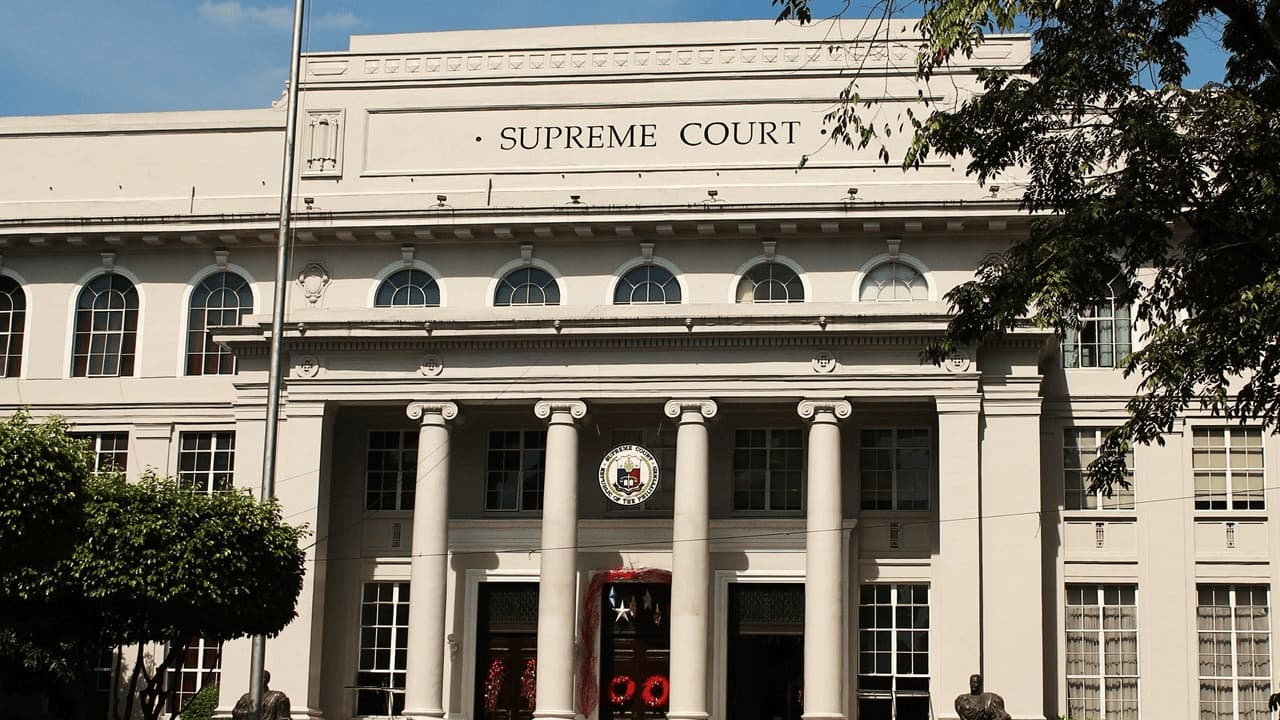
Will an algorithm ever decide a Philippine court case? The Supreme Court's answer, delivered on a global stage, is no — and the wording it chose is deliberate. Speaking at the Rule of Law and Democracy Conference at Stanford Law School on September 26, Chief Justice Alexander Gesmundo laid out how the Philippine judiciary plans to use AI under its Governance Framework on the Use of Human-Centered Augmented Intelligence in the Judiciary.
Why 'augmented,' not 'artificial'
The framework's name is the policy. By calling it "augmented intelligence" rather than artificial intelligence, the Court positions the technology as a support tool — something that assists judges, court personnel and court users — while the judgment itself stays human. Planned uses run toward the unglamorous side of court work: legal research tools and administrative support, not robot verdicts.
The framework sits inside the judiciary's broader Strategic Plan for Judicial Innovations 2022–2027, which aims to improve access to justice across an archipelago of more than 7,000 islands, where physical distance from a courtroom is itself a barrier.
What Gesmundo told the conference
Gesmundo delivered an address titled "Global Innovation Network to Build the Rule of Law: The Philippine Experience," then joined a panel alongside Oregon Supreme Court Chief Justice Meagan Flynn, Singapore Supreme Court Justice Kwek Mean Luck and World Justice Project executive director Alejandro Ponce, according to a full account of the address.
His framing separated speed from caution: "In our own innovation journey, we move fast on experimentation. But we move carefully on the core of what courts do: rights, due process, security, and public trust. Those are things a court cannot afford to break."
He also rejected adopting technology for its own sake, in a line that doubles as the framework's philosophy: "Technology is a mechanism, but people are the purpose."
A proposed ASEAN Judicial Innovation Hub
Beyond the Philippine framework, Gesmundo floated a regional project: an ASEAN Judicial Innovation Hub in partnership with Stanford University. As described at the conference, it would rest on three pillars — a shared innovation network among judiciaries, a justice academy for judicial training, and a research center focused on the rule of law. No launch timeline was announced.
If it materializes, the hub would give Southeast Asian courts a common venue for working through the same AI questions the Philippine framework tries to answer — a notable move for a judiciary that has more often imported reform models than proposed them.
What this means if you have a case in a Philippine court
For ordinary court users, nothing changes overnight. No new AI tool was launched, and no rollout dates were given. What the framework does is set the rulebook in advance: when AI does reach Philippine courtrooms, it is supposed to arrive as research and workflow support for judges and staff, with a human accountable for every decision.
That rulebook matters because the courts are already dealing with AI's side effects. The Supreme Court recently fined a bar review coach ₱30,000 over a false viral post claiming AI would check the bar exams — a small preview of how quickly AI claims, real or fake, can collide with public trust in the justice system. A framework that names due process and public trust as non-negotiables is the judiciary's attempt to get ahead of that collision.