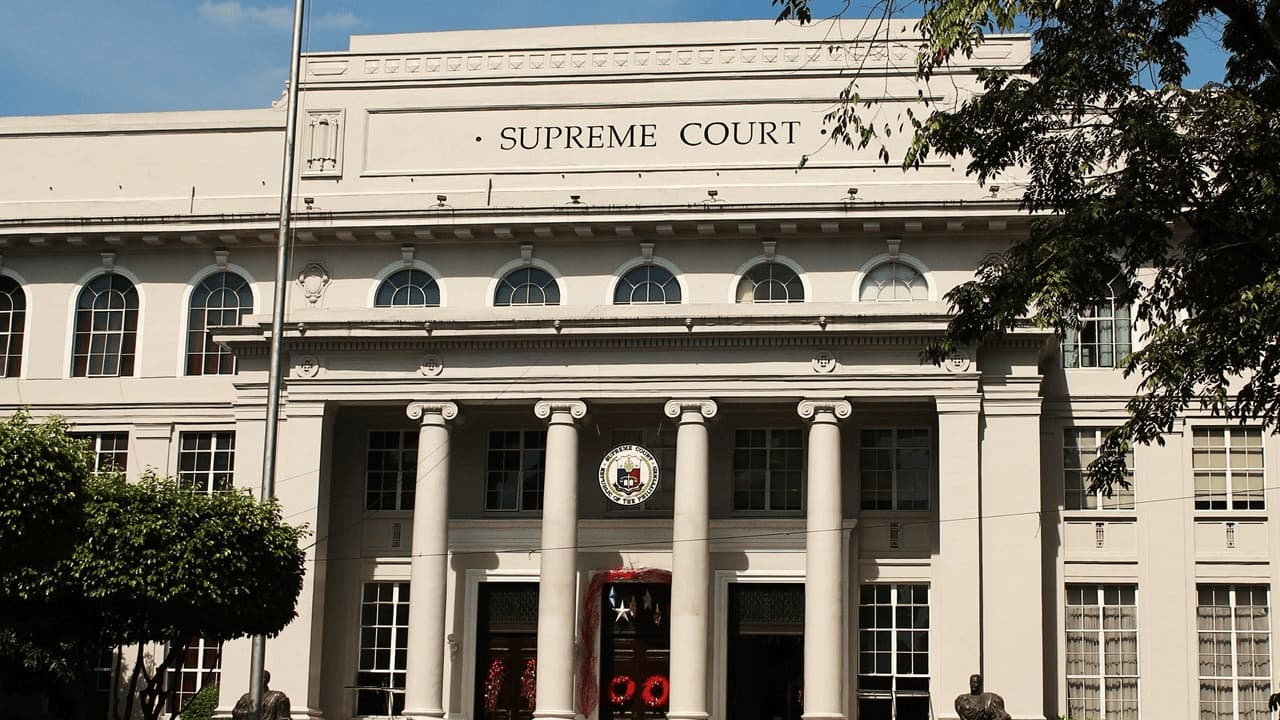
The Supreme Court has found bar review coach Edgar S. Dizon guilty of indirect contempt for a viral 2023 Facebook post claiming that artificial intelligence (AI) would check the Bar examinations. The Court fined him ₱30,000, struck his name from the list of 2016 Bar passers, and warned him against practicing law without a license, the SC Office of the Spokesperson announced on September 11. The per curiam decision of the Court En Banc is dated July 15, 2026, and is docketed as B.M. No. 4734.
What the "AI checking" post said
On September 21, 2023, a post from the Facebook group Bar Law for Dummies and the account "Tsidkenu Dizon" went viral days before the 2023 Bar Examinations. It claimed the exams would be "sorted, checked, and corrected by means of artificial intelligence," and told examinees to always start their answers with "YES or NO" because that is what the "AI Checking" would look for first.
The Court said the post caused anxiety among examinees who were in the final stretch of their review. The Office of the 2023 Bar Chair, headed by Associate Justice Ramon Paul L. Hernando, had to trace the source of the post and issue an advisory that four human examiners, all experts in their fields, would check every subject. At the time, GMA News reported that Justice Hernando called the claims false and baseless, and that the Court asked the National Bureau of Investigation to look into the accounts behind the post.
How Dizon responded, and why it hurt his case
Instead of taking the post down, Dizon gave a media interview in which he threatened to sue the Court and demanded a public apology within 24 hours. He also emailed the SC's Judiciary Public Assistance Section, saying the advisory had a chilling effect on him, and asked the Court to issue a statement correcting it.
When the Court ordered him to explain, Dizon admitted he owned the account and had passed the 2016 Bar. He said he never took the lawyer's oath because of pending criminal cases, and that he wrote the review materials used in the Bar Law for Dummies program. He denied saying AI would check the exams, arguing that his post used the words "TO HELP."
The Court did not accept that reading. It found the post clearly conveyed that AI would sort and check answers, and that Dizon, as a Bar passer himself, should have known the exams are graded by a committee of examiners appointed by the Court. The examiners, the SC stressed, are "all warm bodies" who are neither powered nor guided by AI.
The ruling: contempt plus unauthorized practice of law
Under Rule 71, Section 3 of the Rules of Court, unlawful interference with court processes outside a courtroom, conduct that degrades the courts, and unauthorized practice of law can all be punished as indirect contempt. The Court found Dizon liable on those grounds:
- The post unlawfully interfered with the 2023 Bar Examinations and undermined the integrity of both the exams and the Court, which supervises the legal profession.
- The misinformation forced Bar officials to divert limited time and resources into tracing the post, coordinating with government agencies, issuing clarifications, and answering inquiries.
- Dizon showed no remorse. He demanded an apology, threatened legal action, refused to remove the post, and asked for a retraction of the advisory.
- By running Bar review coaching sessions and authoring review materials without ever taking the oath, he engaged in the unauthorized practice of law.
The penalties are a ₱30,000 fine, removal from the roll of 2016 Bar passers, and a warning against further unauthorized practice. Daily Tribune's report notes that the ruling also stressed the post distracted examinees at a point when they were under heavy pressure.
Senior Associate Justice Marvic M.V.F. Leonen wrote a separate concurring opinion. He agreed that Dizon should be punished for undermining the Bar, but emphasized that the Court's power to punish for contempt must be balanced against the constitutional right to free speech, including legitimate criticism of the courts.
What this means for AI claims about government processes
The decision sets a clear marker for anyone posting about how the Bar, or any court process, works. A false claim that AI is grading or deciding outcomes can be treated as interference with the administration of justice, not just as a bad take. That matters in a country where Bar review groups, coaching pages, and "tips" posts spread quickly on Facebook, and where AI is already changing how Filipino students study. Universities here are adopting AI tools that flag unverified claims and fake citations, as we covered in Jenni AI's expansion into Philippine schools.
The Court's position on grading is also now on the record twice: the Bar is checked by human examiners, first stated in the 2023 advisory and repeated in this decision. Radyo Pilipinas reported the same penalties on September 11, adding that Dizon's coaching activities counted as unlicensed practice because he had never taken the lawyer's oath.
For readers, the practical takeaway is simple. Treat any social media claim that "AI will check" a government exam, a court case, or a licensing test as unverified until the agency itself says so. In this case, the agency said the opposite, and the person who spread the claim now owes ₱30,000 and has lost his place on the list of Bar passers.