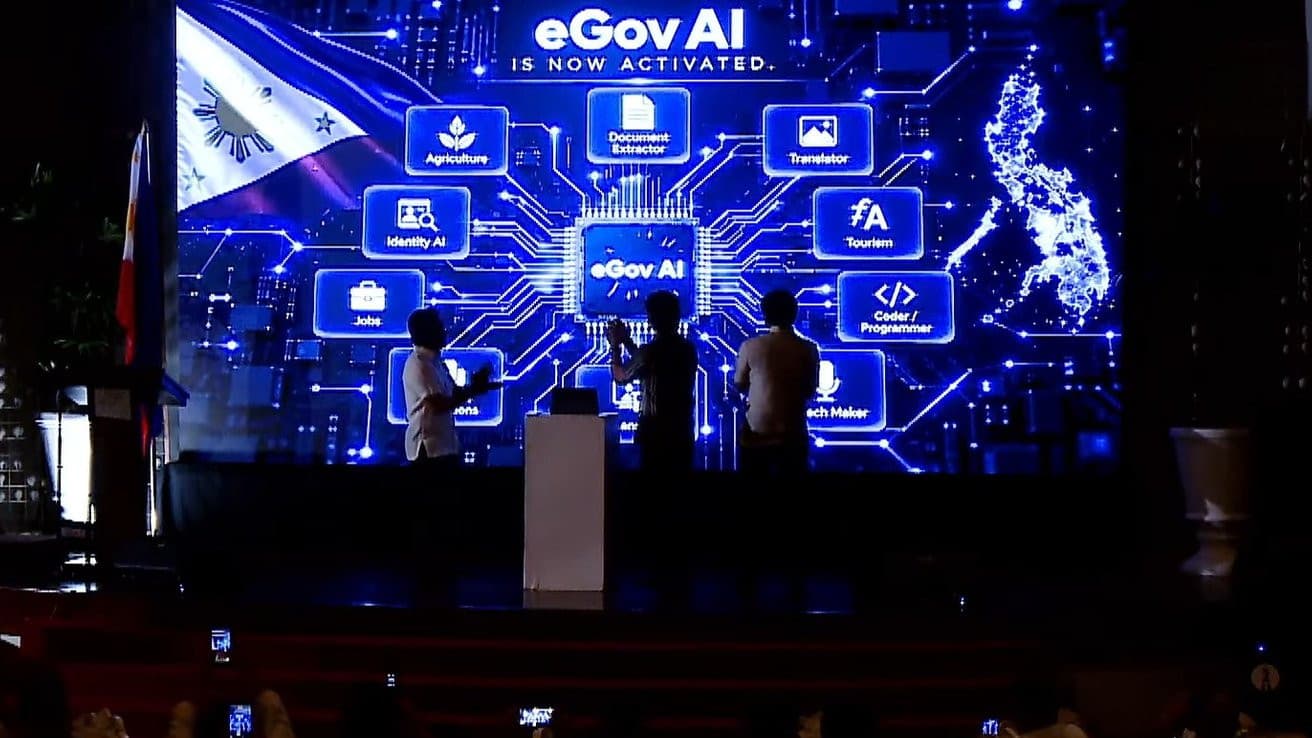
The eGovPH superapp now has a built-in artificial intelligence assistant. The Department of Information and Communications Technology (DICT) launched eGovAI on September 21 at The Manila Hotel, adding a free virtual assistant called Kuya AI to the government app that, by DICT's count, serves 61 million registered Filipinos. The features run on Google Gemini and, according to DICT Secretary Henry Aguda, were built by the agency's own developers.
What Kuya AI can do
DICT lists 11 main services at launch, according to Wazzup Tech PH's rundown of the eGovAI launch. The tools cover a wide spread of everyday government tasks:
- A general assistant for navigating government services, laws, policies and guidelines
- Document extraction and form understanding, which pull details out of uploaded paperwork
- Identity verification help, including eKYC (electronic know-your-customer, the digital ID checks used when signing up for services) and liveness checks
- Translation and speech generation
- Image identification
- Coding and programming assistance
- Tourism information with real-time mapping
- Health guidance and farming or crop-related information
The assistant is free for verified eGovPH users. In practical terms, the goal is fewer trips to government offices: ask the assistant where to renew a license or what a form requires, instead of lining up to ask a clerk. DICT frames eGovAI as a way to make government transactions faster and to cut the number of offices a Filipino has to physically visit to get one thing done — the same promise that has driven the superapp's growth into the country's main digital front door for government services.
Built by DICT, powered by Gemini
Aguda said the new features are powered by Google Gemini but developed in-house. "The eGovAI marked another important step in our continuing effort to make government work better for every Filipino," he said in remarks carried by MARKETECH APAC's launch coverage. Speaking at the launch, President Ferdinand Marcos Jr. urged citizens to use the technology "wisely, responsibly, and ethically."
The same event doubled as the awarding ceremony for the eGovPH Hackathon 2026, which recognized the top 30 teams building digital solutions for government services — a signal that DICT wants outside developers involved in the superapp's next features, not just its own team.
The bigger e-government picture
eGovAI lands in a crowded month for Philippine government technology. DICT recently opened its free Wi-Fi monitoring dashboard to the public amid scrutiny of its connectivity programs, and the private sector has been racing in the same direction — Smart's AI.Smart browser assistant bundles ChatGPT, Gemini and AWS Nova for subscribers. What separates eGovAI is scale and stakes: it is bolted onto the country's official e-government platform, not sold as a telco add-on, and it arrives free rather than as a subscription. It is also DICT's most concrete consumer-facing AI product to date — not a policy paper or a pilot, but a tool now sitting in the pocket of every registered eGovPH user who updates the app.
What 61 million users should watch for
Putting a generative AI assistant inside the app that holds Filipinos' government IDs and transaction records raises the bar for getting things right. Two things are worth watching. First, accuracy: a wrong answer about a requirement or deadline from an official government assistant carries more weight than the same mistake from a consumer chatbot, and DICT has not yet published details on how Kuya AI's answers are checked. Second, data handling: the assistant's identity-verification and document-extraction tools necessarily process personal data, and the National Privacy Commission has spent this same month reminding foreign platforms that registration and transparency under the Data Privacy Act are not optional. DICT has not announced pricing tiers, usage limits, or a timeline for additional tools; for now, the assistant is live, free, and available to any verified eGovPH user who updates the app. How well Kuya AI answers in Filipino and other local languages — not just English — will decide whether it actually reaches the tens of millions of users DICT is counting, and that is the first thing worth testing once the update lands.