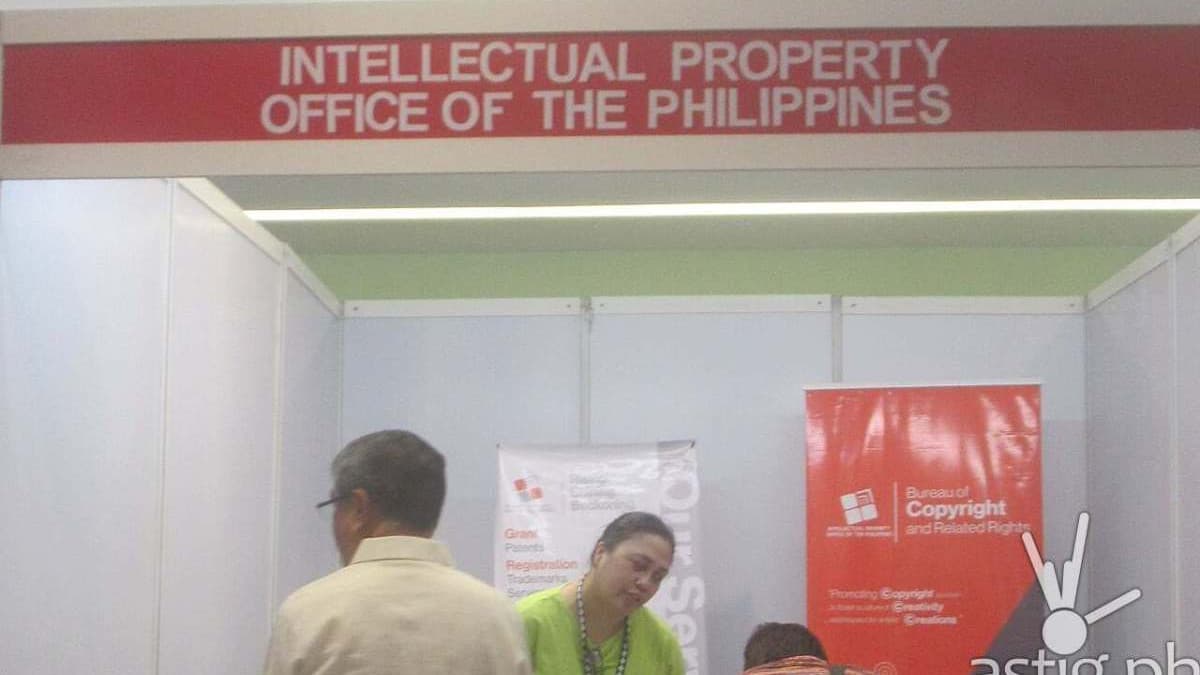
Can you copyright something ChatGPT or Gemini helped you make? The Intellectual Property Office of the Philippines (IPOPHL) has just published its first real answer: yes — but only for the parts you actually created yourself.
The draft Guidelines on the Registrability of AI Systems and AI-Related Works, presented after an initial public consultation earlier this month, set out how IPOPHL would treat works made with artificial intelligence when creators apply to register them. The core rule, as carried in the agency's announcement, is that a work involving AI is registrable only to the extent that it contains original expression attributable to a human author. Typing a prompt, on its own, is not enough.
The four categories of AI works
The draft sorts AI-related works into four types, each with its own outcome:
| Category | Example | What gets protected |
|---|
| AI-assisted | A writer asks AI to suggest wording, then selects and rewrites for the final manuscript | Only the writer's own original expression |
| AI-enhanced | A photographer uses AI to remove objects from or restore their own photo | The original photo plus the human modifications |
| Hybrid | A songwriter writes the lyrics while AI generates the melody | The human contribution, if it meets the creativity bar |
| AI-generated | A user submits an image made from a bare prompt, with no further creative work | Nothing — it does not qualify |
The practical upshot for a Filipino writer: if you have AI reorganize or polish your manuscript, you keep rights over your own original expression — but a work produced wholly by AI from a general prompt gets no copyright at all.
No single test — a case-by-case call
The draft deliberately avoids one fixed test for registrability. Instead, IPOPHL says it may weigh the nature and extent of the human creative contribution, the role the AI system played, how AI-generated elements were selected, modified, or arranged, and the information the applicant submits. That last point matters in practice: creators who want protection for AI-assisted work may need to be able to show what they contributed, which makes keeping drafts and records of the creative process worthwhile.
For AI systems themselves, registration would cover only the copyrightable expression of the computer program — not training data, training materials, or the system's outputs.
"We want a framework that provides clarity without getting ahead of the technology," said Emerson Cuyo, director of IPOPHL's Bureau of Copyright and Related Rights. Director General Teodoro Pascua stressed that the guidelines do not regulate AI in general; they aim to clarify how AI-related works are treated at registration. Deputy Director General Ann Claire Credo-Cabochan said the goal is a legal framework that stays responsive to new technology while remaining faithful to the existing Intellectual Property Code.
IPOPHL will keep refining the draft through consultations with government bodies, lawyers, academics, creators, and technology companies before finalizing it. The office has been active on the copyright front all year — it recently warned concertgoers that uploading full concerts can violate performers' rights — and this draft extends that work to the fastest-moving question in creative industries today.
FAQ
Can I copyright an image I made with just a prompt?
Not under the draft. Providing a prompt or instruction to an AI system does not, by itself, count as sufficient human creative contribution — submitting the raw output for registration would not give you copyright over it.
If AI polished my novel, do I lose my copyright?
No. Using AI does not bar protection. You keep rights over your own original expression — the parts you wrote, selected, and arranged — but not over material the AI generated on its own.
Are these rules final?
No. They are draft guidelines undergoing consultation, and IPOPHL says they will be refined with input from government, legal, academic, creative, and technology sectors before taking effect.