Key Takeaways
- A new ASEAN Business Advisory Council (ASEAN-BAC) study puts the region's creative industries at around $300 billion (around ₱18.8 trillion) in aggregate value for 2025, with creative exports of roughly $150 billion (around ₱9.4 trillion) in 2024.
- The Philippine creative economy reached ₱2.12 trillion in 2025 — 7.6% of GDP — and supports 8.71 million jobs, or 17.8% of the country's workforce.
- The same regional push warns that existing copyright laws, in the Philippines and across ASEAN, do not yet address AI-generated or AI-assisted work.
- The Philippines chairs ASEAN in 2026 and is bidding to host a proposed ASEAN Center of Excellence for Creative Industries.
The Philippine creative economy now carries a very specific price tag: ₱2.12 trillion in 2025, equal to 7.6% of the country's gross domestic product (GDP), with 8.71 million Filipinos working in the sector. Those figures, announced by Trade Secretary Cristina Roque during the ASEAN Creative Industries Expo, are at the center of a regional push to modernize intellectual property (IP) rules before generative AI outruns them.
What the ASEAN study found
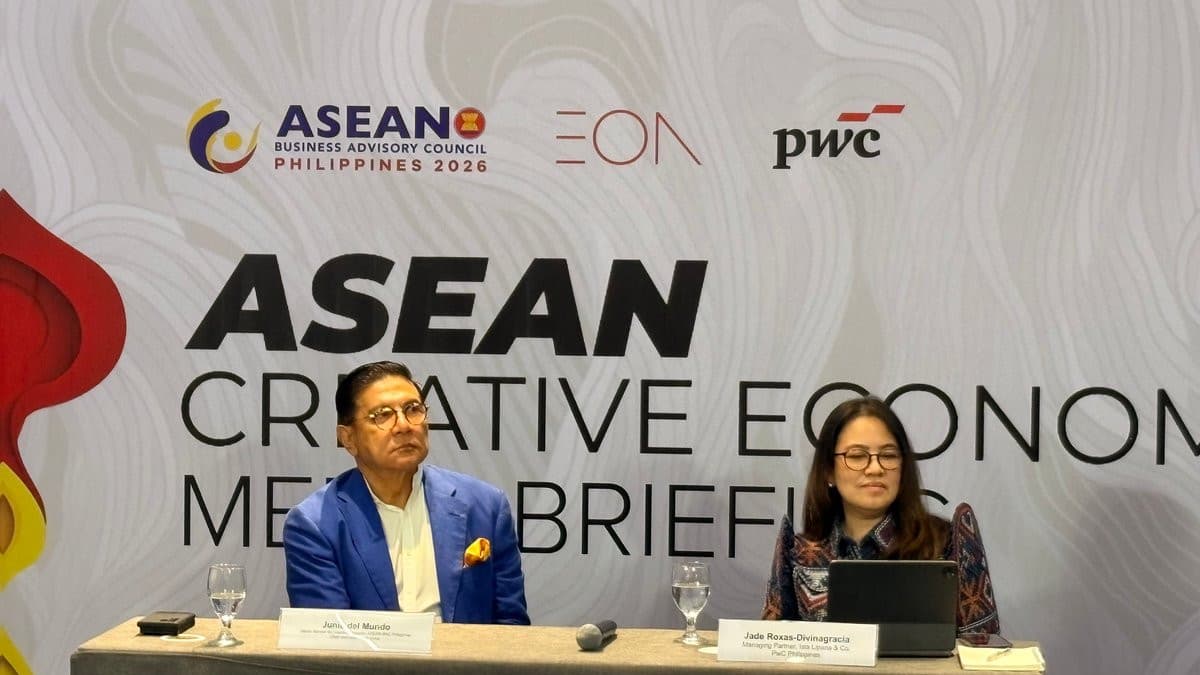
The numbers come from the ASEAN Creative Economy Initiative study conducted by Isla Lipana & Co./PwC Philippines for ASEAN-BAC, presented at a briefing covered by the Daily Tribune. The study examined five sectors — film, animation, game development, fashion, and performing arts — and found that 67% of surveyed stakeholders see digital transformation as the strongest growth driver, while 55% cited regional financing as a key area for cooperation.
It also found a familiar weakness. "ASEAN is generally strong in creation and production... but our participation becomes less consistent as we move further into ownership, into commercialization, into distribution," said Mary Jade Roxas-Divinagracia, deals and corporate finance managing partner at Isla Lipana & Co./PwC Philippines, who presented the study alongside ASEAN-BAC Philippines creative economy senior adviser Junie del Mundo.
In plain terms: the region makes the work, but too often does not own or monetize it. For the Philippines, the export split shows the stakes — around ₱320 billion in creative goods exports and ₱427 billion in creative services exports.
Where copyright law falls short
The study lands with a warning that current regional and national copyright frameworks do not address AI-generated or AI-assisted work. That gap matters more every year, because the money is moving toward exactly the kind of digital, service-based creative output AI can now imitate. Globally, creative services exports reached $1.7 trillion (around ₱107 trillion) in 2024 — more than double the $709 billion (around ₱44.5 trillion) earned from creative goods.
For the 8.71 million Filipinos in the sector — animators, game developers, designers, musicians, writers — the question is no longer abstract. If an AI model can generate work in their style, and the law cannot say who owns the output, both their income and their leverage are at risk.
The Philippine rulebook is already being drafted
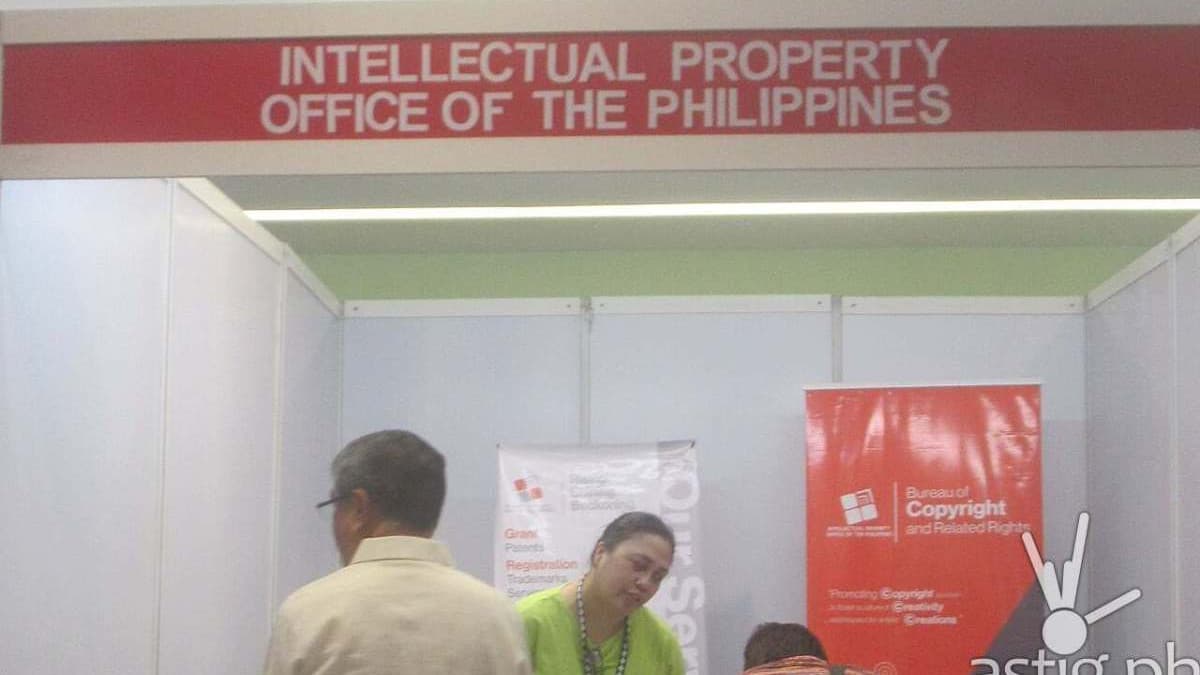
The Philippines is further along than most of its neighbors. The Intellectual Property Office of the Philippines (IPOPHL) is holding public consultations on the country's first AI copyright registration rules, which sort output into four categories — AI-assisted, AI-enhanced, hybrid, and AI-generated — and protect only the parts a human actually made.
But enforcement has a hole in it. A BusinessMirror column examining the draft framework points out that no current technology can reliably verify how much of a work came from a machine. A 2026 systematic review found human accuracy at spotting AI output "hovering near chance" across text, image, and voice. Google's SynthID watermark needs roughly 200 text tokens to detect reliably, and C2PA provenance metadata frequently disappears when platforms re-encode files. The registration system will therefore run largely on disclosure and conscience — an honor system for a multi-trillion-peso industry.
What happens next
Timing gives the Philippines unusual influence. The country holds the ASEAN chairship in 2026, has made the creative economy a stated regional priority, and is seeking to host the proposed ASEAN Center of Excellence for Creative Industries. Whether the region's copyright modernization happens as a coordinated ASEAN effort or as a patchwork of national rules will shape how much protection a Filipino animator or game studio actually gets when their work crosses borders.
For now, creators should watch two tracks: IPOPHL's consultation on the draft registration guidelines at home, and the ASEAN-level push the new study is meant to accelerate. The ₱2.12 trillion figure makes the argument for both — that is no longer a niche sector asking for protection, but nearly a fifth of the Philippine workforce.