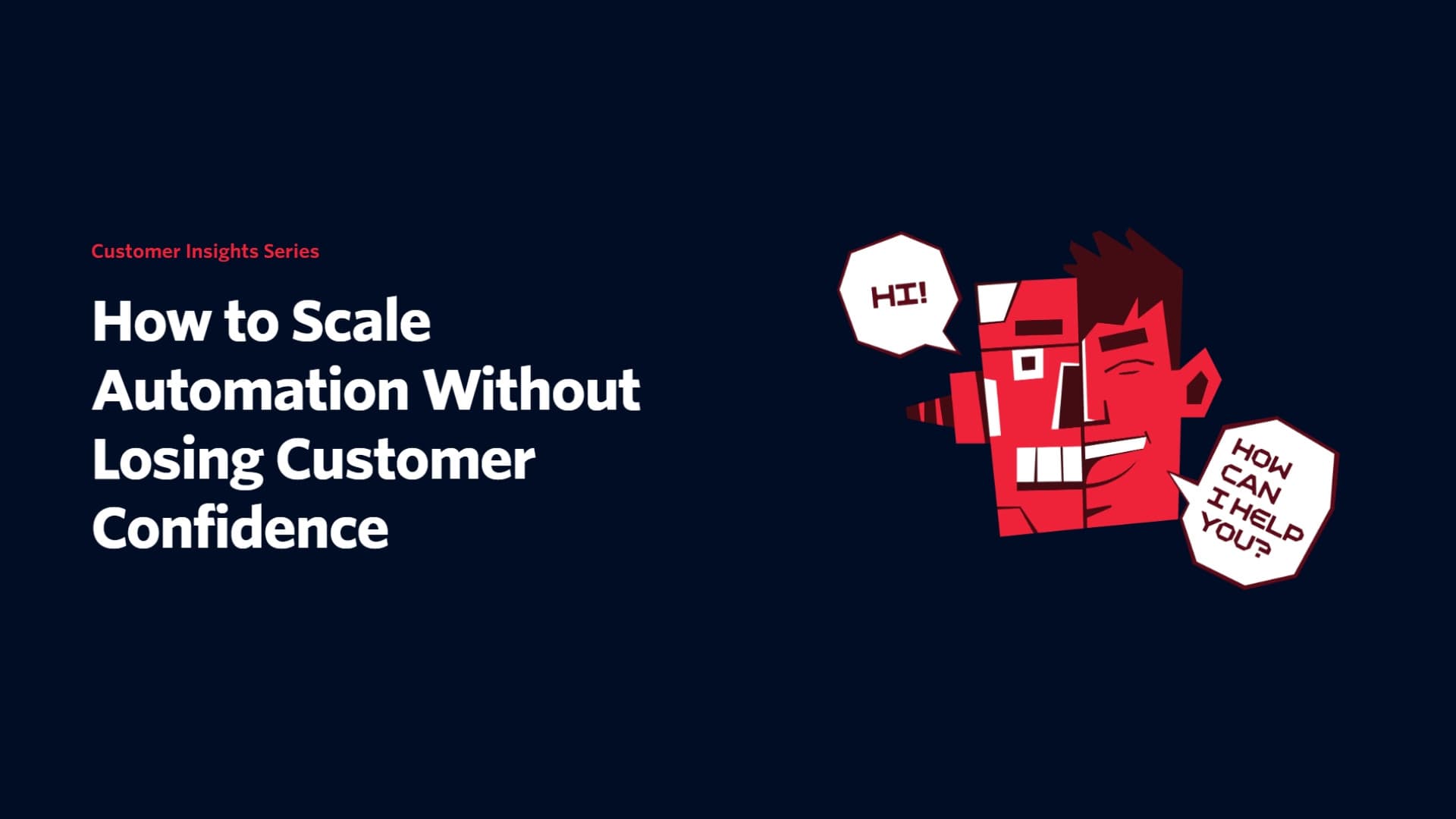
Artificial intelligence now handles 46% of customer service conversations in the Philippines, and Twilio expects that share to reach 61% by 2027. But the same research shows Filipinos are not convinced the machines are listening: 73% say they still have to repeat their information when dealing with automated systems. The figures come from Twilio's 2026 Customer Insights Series, which the cloud communications company presented around its Signal Singapore 2026 conference this month.
The study surveyed 7,652 consumers and 660 business leaders across 18 markets between April 9 and May 1, 2026. The Philippine sample covered 353 consumers and 35 business leaders — small, but one of the few country-level reads on how AI support is actually landing here.
Adoption is racing ahead of trust
Filipino consumers are not strangers to AI support. Twilio's Philippine data shows 81% have already interacted with AI service tools, and 79% believe the bots have improved over the past year.
The problem is memory. While 74% of Philippine organizations claim their AI agents recognize returning customers and can pull up their history, 73% of consumers report the opposite experience: they repeat their names, account details, and complaints each time. More than twice as many consumers say the AI forgets them as businesses that admit it does.
The pattern holds across the wider region. Tech Edition's report on the Asia-Pacific findings shows 70% of consumers in Asia Pacific have abandoned an AI chat because the system could not recall basic details, and 5% walked away from the brand entirely after one bad exchange. Even a handoff does not fix it: 65% said they had to repeat their information again after being transferred from a bot to a human agent.
"Trust depends heavily on expectations," consumer neuroscience professor Dr. Gemma Calvert said in the same report. She warned that when AI is deployed before it can cope with real customer needs, "that failure becomes part of their experience of the brand itself."
What Filipinos will let AI do
Comfort with automation depends heavily on the task. In the Philippine sample:
- Scheduling an appointment: 89% comfortable
- Booking a dinner reservation or processing a return: 87%
- Selecting concert seats: 85%
- Processing a payment: 61%
- Applying for a loan: 58%
- Handling a medical inquiry: 54%
The line is easy to see. Routine transactions are fair game for a bot. Money and health still demand a human.
Disclosure is the weak spot
Filipino consumers also want honesty about who — or what — they are talking to. In the Philippine data, 73% want upfront disclosure when an interaction is AI-driven, yet only 26% of Philippine organizations identify their AI at the start of a conversation. The regional picture is no better: only 22% of Asia-Pacific businesses currently identify their AI agents.
Human oversight is further along. Among Philippine organizations, 80% have implemented or piloted human-in-the-loop systems that let a person monitor or step into an automated conversation, and 51% treat human monitoring as standard practice. For consumers, a seamless transfer to a human is the single most important comfort factor, cited by 29%.
Twilio's answer: give the AI a memory
Twilio, which sells the communications infrastructure many of these systems run on, argues the fix is context. "The difference is you have to connect the memory of the brand's understanding of the consumer with the general-purpose knowledge of an AI assistant," Twilio chief operating officer Thomas Wyatt said at the Singapore event.
That is the pitch behind Conversation Memory, a product Twilio made generally available at its SIGNAL 2026 conference earlier this year. It builds a persistent, identity-resolved customer profile so an AI or human agent starts every conversation already knowing the customer's history and preferences.
Why the BPO industry should care
Customer service is not just something Filipinos receive — it is something the country sells. The IT and business process management (IT-BPM) sector employs millions of Filipinos in exactly the kind of work this survey measures, and the industry is chasing $50.5 billion (around ₱3.2 trillion) in revenue by 2028 while large local enterprises like PLDT put agentic AI to work internally.
For that industry, the trust gap in this data reads as a warning. AI already sits inside nearly half of domestic customer conversations, but the consumers on the other end say it forgets them, and most organizations do not tell them it is AI at all. An industry that markets itself on service quality cannot afford for that failure to become, in Dr. Calvert's words, part of the brand. The numbers suggest the race to automate is being won — and the race to make automation trustworthy has barely started.