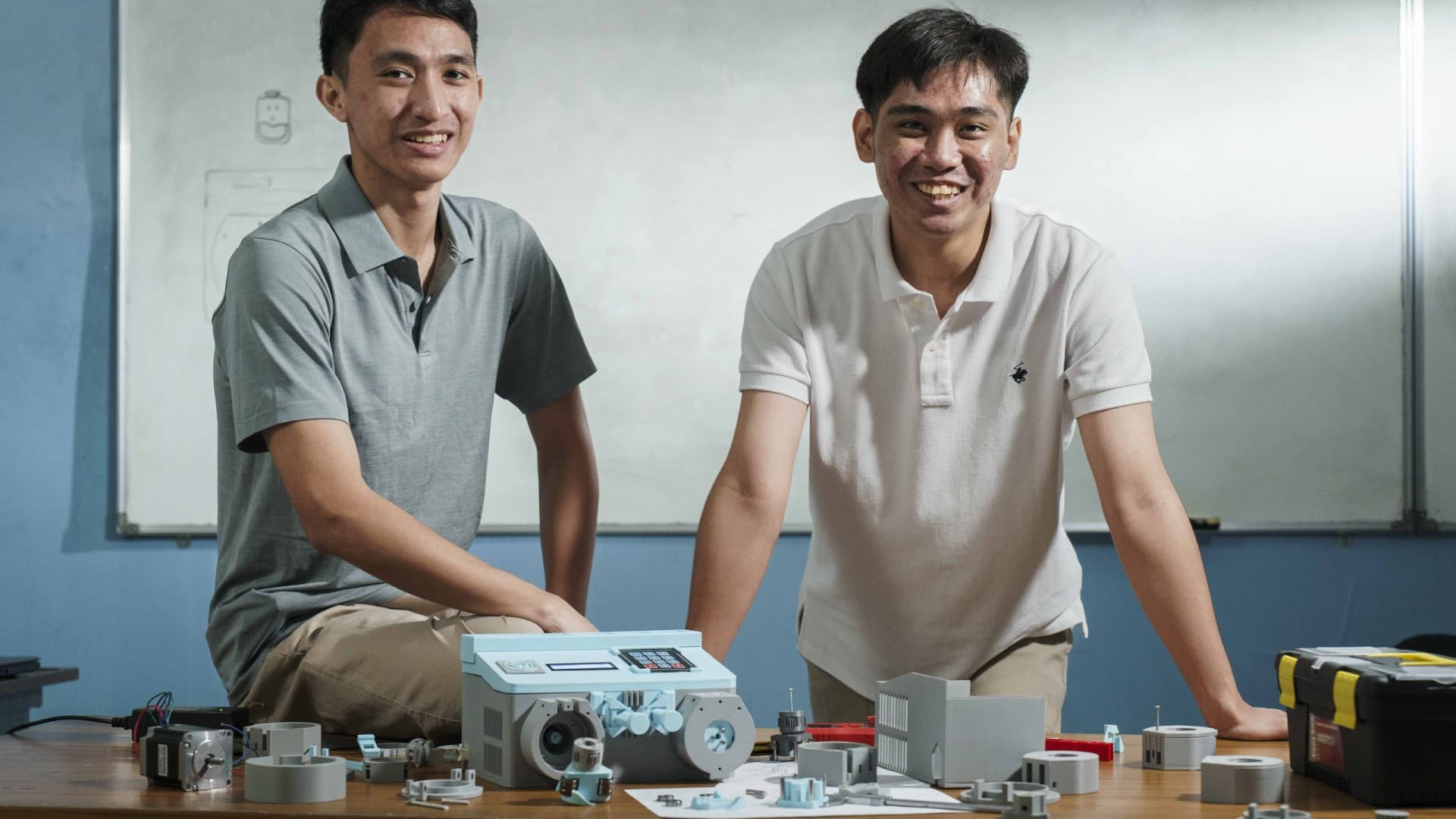
Two engineering graduates from the University of the Philippines Diliman have won the James Dyson Award 2026 Philippine national prize for a machine that could change how Filipino kidney patients receive dialysis: at home, with less manual work and less risk.
Andrew Jacob Buensalido and Allyson Cabrestante developed BiDaKidney, a low-cost, semi-automated peritoneal dialysis machine. The win, announced this week by the award organizers, comes with ₱398,280 to fund further development — and a slot in the running for the international prize of ₱2,390,230, according to the award announcement carried by Mindanao Times.
The problem BiDaKidney is built for
Peritoneal dialysis, or PD, is a treatment for kidney failure that patients can do at home, using the lining of the abdomen to filter waste from the blood. It spares patients the repeated trips to a dialysis center that hemodialysis requires — a real burden in a country where distance and cost keep many patients from consistent care.
The need is growing fast. The Philippines counted 64,845 dialysis patients in 2024, up 22 percent from 53,296 in 2023, and kidney disease ranks among the ten leading causes of death nationally. But managing PD at home is demanding: patients or caregivers must handle tubing by hand, run fluid exchanges on schedule, and keep written records of every session. Mistakes raise the risk of contamination and infection.
How the machine works
BiDaKidney automates the most error-prone parts of that routine. A controlled pump manages the flow of dialysis fluid, while built-in weight sensors track the volume exchanged — replacing manual handling of tubing and hand-written logs. The design works with standard PD supplies, so it slots into existing treatment rather than requiring a new ecosystem, as detailed in the announcement published by Punto Central Luzon.
"If treatment at home can become simpler, safer, and cheaper, patients may continue care with greater confidence," Buensalido said of the goal — keeping patients on treatment while easing the load on the families who support them.
It is worth noting that the details above come from the award organizers' Philippine announcement, which several local outlets carried; the device is a prototype, not yet a commercial product, and no pricing or availability has been set.
What happens next
The national prize money is intended to support the machine's further development and its path toward commercialization. As national winners, Buensalido and Cabrestante move to the international stage of the James Dyson Award — now in its 21st year, running across 28 countries and regions, and with more than 400 inventions supported over its history. The global top-20 shortlist will be revealed on October 14, 2026, with the international winners announced on November 4, 2026.
Two other Filipino inventions were named national runners-up and also progress to the international judging:
- Sentinel — a building-damage sensor that embeds graphene and carbon fiber into concrete blocks for structural health monitoring, a relevant idea in an earthquake- and typhoon-prone country.
- OrthoFlex — a portable, robot-assisted elbow rehabilitation device with a wireless interface.
A pattern worth watching
The win adds to a strong run for young Filipino talent in international science and technology competitions this year — Filipino students also took home four medals at the country's first International AI Olympiad appearance. For a health system where kidney care is one of the heaviest recurring costs a family can carry, a locally designed, low-cost machine that keeps treatment at home is more than a trophy project — if BiDaKidney reaches production, its natural first market is the growing number of Filipino households managing dialysis right now.