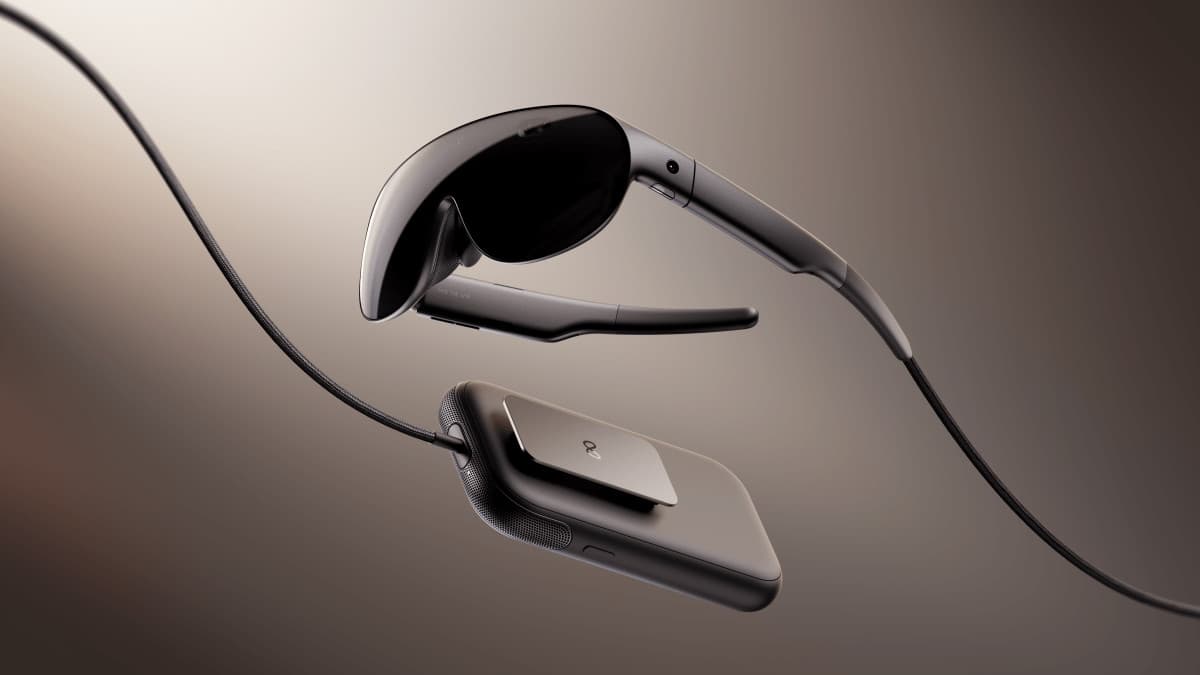
Meta VR Glasses are the company's answer to the biggest complaint about virtual reality: the headset itself. Announced at Meta Connect on September 23, the new device squeezes a 5K micro-OLED display system into a roughly 100-gram frame — about five times lighter than a Quest 3 — by moving the processor, battery, and storage into a separate puck that clips to a pocket or bag, Meta announced. They arrive in spring 2027 at $1,299.99, which converts to around ₱81,500.
Meta VR Glasses specs at a glance
| Spec | Detail |
|---|---|
| Weight | About 100 grams (glasses only) |
| Display | 5K "Infinite Display," micro-OLED panels, 37 pixels per degree, pancake lenses |
| Field of view | About 70° horizontal, 66° vertical |
| Video and audio | Dolby Vision; Dolby Atmos spatial audio built into the frames |
| Processor | Qualcomm Snapdragon Reality Elite, housed in the tethered puck |
| Battery | Up to 3 hours of continuous high-resolution playback; 45W fast charging |
| Build | Magnesium alloy frame |
| Controls | No controllers — voice, eye tracking, and hand gestures |
| Price and launch | $1,299.99 (around ₱81,500), spring 2027 |
The two-part design is the whole trick: an optical tether carries the work of the puck to the glasses, so your face only carries the displays, cameras, and speakers. Meta says the glasses support full-color passthrough (seeing the real world through the cameras), more than 75 games playable with hand gestures at launch, and access to the existing Meta Quest game catalog. Hologram video calls with real-time facial expressions and wireless PC and Mac connectivity round out the feature list.
An entertainment machine first
Meta is positioning the device around movies and sports as much as gaming. It is the first VR device to be certified IMAX Enhanced, letting it play IMAX-format films in their expanded aspect ratio, and TechCrunch's coverage of the launch reads the announcement as Meta pivoting its VR line from metaverse ambitions toward entertainment. A Disney+ partnership brings Marvel 3D titles in November, ESPN is building immersive sports viewing with 8K streams and 180-degree camera views, and the partner list spans Prime Video, YouTube, Crunchyroll, the NBA, MLB, and Xbox Cloud Gaming.