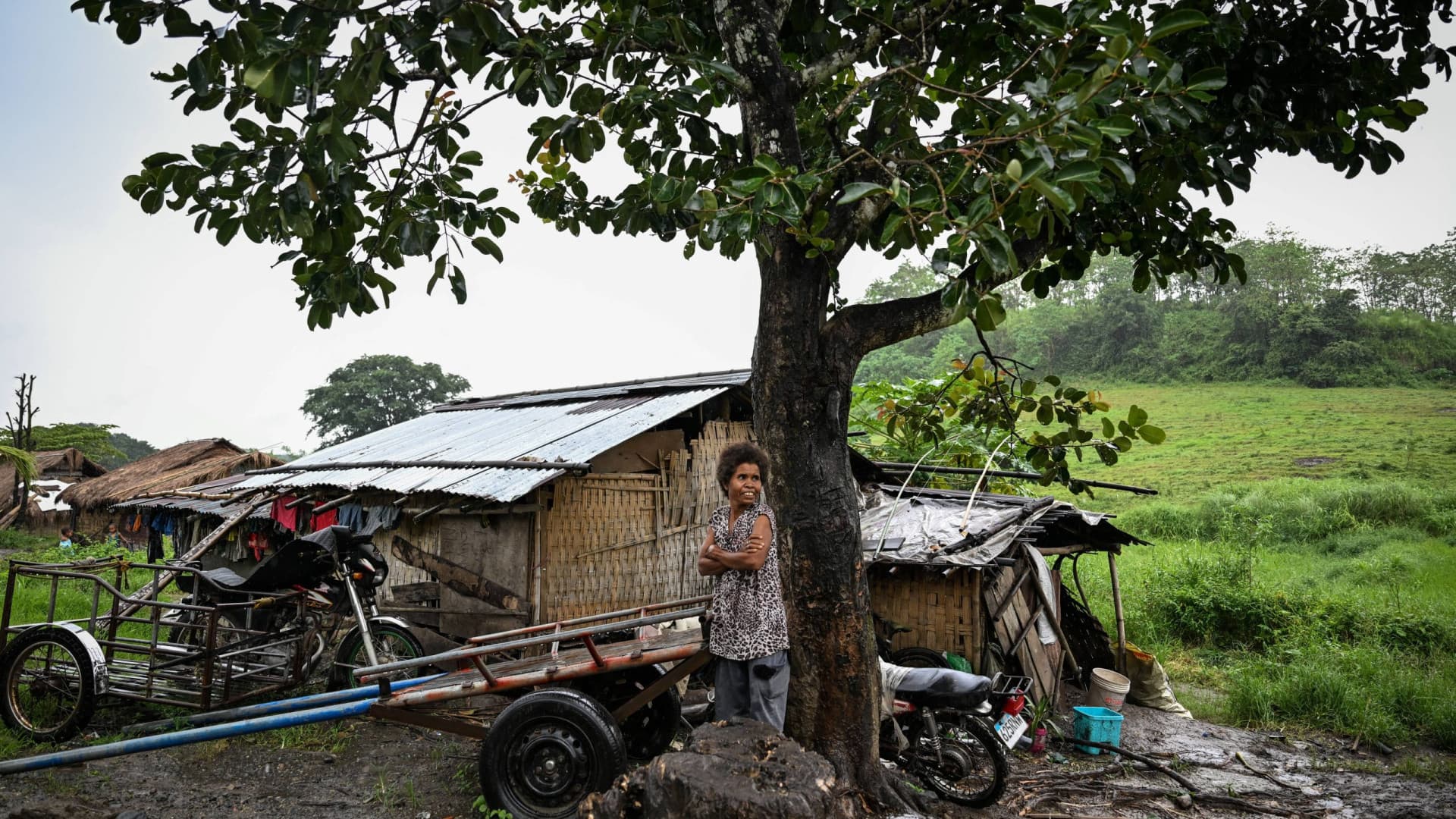
The Aeta Hungey tribe, an indigenous community of about 1,000 people in Capas, Tarlac, says government employees have told it to leave its land by December to make way for the Pax Silica technology hub — with an offered compensation of ₱30 per square meter that residents unanimously rejected. The account comes from an Agence France-Presse (AFP) feature published on September 20, carried by Daily Tribune, Gulf News and other outlets.
The community occupies part of the 1,620-hectare site in New Clark City that the government has set aside for the project, a US-led effort to build semiconductor and AI-hardware manufacturing in the Philippines.
A ₱30-per-square-meter offer, rejected
According to the tribe, employees of the Bases Conversion and Development Authority (BCDA) — the state agency that manages New Clark City — said residents would need to relocate to an area about 16 kilometers away. The ₱30-per-square-meter compensation offer was turned down by the community as a whole.
"Our lives, our livelihood and our culture are tied to this ancestral land," tribe chieftain Petronila Muñoz said in the AFP report. "Land is more important. Money runs out."
Residents say they first learned their land could be affected through a letter received in July, which warned the project "could affect your occupied lands." They remain unsure whether the government would help build new homes or provide farmland at the relocation site.
What Pax Silica promises
The Philippines joined Pax Silica in April 2026, when the United States announced the initiative to strengthen supply chains for semiconductors and rare earth elements and reduce dependence on China. The government estimates the New Clark City hub could draw up to $70 billion (around ₱4.4 trillion) in investment and create about 190,000 jobs, producing high-end components for AI data centers.
The project has been covered here mainly as an investment story — from the DTI's clarification that the hub will build AI hardware rather than data centers to Foxconn's move to anchor the site. The AFP report adds a human cost that had stayed largely out of view.
No master plan, no consultation
The tribe says no master plan or boundary map has been shared showing which parts of its land will actually be affected, and no consultation has been held with the community. The BCDA declined to answer AFP's specific questions and withheld boundary maps and geospatial data, saying official proceedings were not yet complete.
BCDA president Joshua Bingcang has said the Aetas are living on government land, and the agency has required incoming investors to build their own power and water systems for the site.
"There's still no clarity. What will happen to us? That's our biggest question," Muñoz said. "Why do we have to be the ones to sacrifice for the kind of development they want?"
Political economist Calixto Chikiamco, quoted in the same report, called Pax Silica a "historic opportunity" for the country but said the government had done "a terrible job" communicating the project to those affected.
A deadline that will force the issue
The December deadline gives this dispute a hard clock. The government wants the flagship of its semiconductor push moving quickly — early zoning work on the wider Pax Silica map is already reshaping where AI facilities go — but it now has to reconcile that timetable with roughly 1,000 people who say they were never consulted and have nowhere confirmed to go. How the BCDA handles the relocation, and whether a master plan is finally shown to the community, will shape both the project's local acceptance and the way foreign investors read the risk around it. As of the AFP report's publication, no revised offer or consultation schedule had been announced.