A beep card costs ₱44 to start at an LRT station: ₱30 for the card plus a ₱14 minimum load, according to the Light Rail Transit Authority (LRTA). On LRT-2 and MRT-3, you can now skip the card and tap the Visa or Mastercard already in your wallet. LRT-1 and most city buses still need a beep card.
This guide covers how to get and load a beep card, where it works, and when tap-to-pay with a bank card or phone is the better choice. Every fee and step below comes from the operators' and card issuers' own pages.
Which payment works on which line
| LRT-1 | LRT-2 | MRT-3 | BGC Bus and P2P buses |
|---|
| beep card | Yes | Yes | Yes | Yes, on partner buses |
| Visa or Mastercard tap | Not yet | Yes, at Fast Lane gates | Yes, at designated gates | Not confirmed |
| Phone or smartwatch wallet | Not yet | Yes | Yes | Not confirmed |
| GCash Commute QR | Not confirmed | Yes | Yes | Not confirmed |
The beep column comes from beep's list of partner lines and routes. The LRT-2 entries come from RCBC's LRT-2 Fast Lane page, and the MRT-3 entries come from Visa's MRT-3 announcement. "Not confirmed" means we could not find an official page that says it works.
How to get a beep card
beep is a stored-value card. You load money onto it, then tap it at a reader, and the fare is deducted. It is issued by AF Payments Inc. (AFPI), the company behind the fare-card system on the three Metro Manila rail lines.
Where to buy one:
- Any LRT-1, LRT-2 or MRT-3 station, at the teller booth or a ticket vending machine (TVM). beep's station list includes the newer LRT-1 stations up to Dr. Santos and the LRT-2 stations up to Antipolo.
- Some bus terminals, including BGC Bus at EDSA McKinley and Market! Market!, One Ayala, and TAS Trans in Pilar, Las Piñas and Nuvali. Several of these sell cards only at set hours.
- Online, through beep's official stores on Lazada and Shopee.
What it costs: The LRTA prices the standard card at ₱30 plus a ₱14 minimum load. Cards bought outside the stations can cost more. beep's FAQ explains that the government subsidizes the cards sold at rail lines, so prices differ by channel.
Stations sell one card per passenger at a time. Under beep's conditions of use, hoarding or reselling station cards can break the Consumer Act and the Price Act.
Discount cards for seniors, PWDs and students
Senior citizens and persons with disability (PWDs) can get a personalized concessionary beep card for the 20% fare discount. You can apply at any rail station. Per beep's step-by-step process:
- Show your LGU-issued Senior Citizen or PWD ID. Students show a valid school ID or proof of enrollment for the current school year.
- Give your full name, birthdate, contact number or email, and city of residence. Staff take a webcam photo of you and your ID.
- Sign the acknowledgment form.
- Pay the one-time ₱30 issuance fee, in cash only. This fee is not load. You still need to load the card before you ride.
- Wait for the card to print, then check that your details are correct.
There is one inconsistency. beep's requirements page lists students as eligible, but its FAQ says students still get a discounted single journey ticket instead of a card for rail. Ask the station teller which applies.
Paano mag-load ng beep card?
You can load (top up) a beep card in three ways. The card holds a maximum of ₱10,000, according to beep's conditions of use.
1. At a station. Use a TVM or the teller booth at any LRT or MRT station. Stations may set a minimum load.
2. With an NFC phone and the beep app. NFC (near-field communication) is the chip that lets a phone read contactless cards. The free beep app on Android and iPhone lets you buy load and then "fetch" it, which means writing it onto the card. In the app, you pay with GCash, Maya or ShopeePay, then hold the card against the back of your phone when told to. The steps for each wallet are on beep's e-wallet loading guide.
3. Through a partner app or ATM, then claim it at a station. Some partners only send a load request. You then tap your card at a beep e-load station or fetch it with your NFC phone to receive it. Partners on beep's list include Maya, Venio, ShareTreats, JustPay.to and Chinabank ATMs. According to the beep FAQ:
- An unclaimed load request expires after 180 days.
- A request cannot be cancelled once the partner has processed it.
- If you start claiming at one e-load station and stop, you must wait 30 minutes before claiming at another.
Watch the fees on small top-ups. A Chinabank ATM top-up costs ₱10 per transaction, per beep's loading guide. By our math, that is a 10% fee on a ₱100 load but only 2% on a ₱500 load. If you use a channel with a flat fee, load larger amounts less often.
How to use a beep card on trains and buses
On the trains: Tap the card at the entry gate and again at the exit gate. The fare is based on distance. You can check your balance at any TVM, at a teller window, or in the beep app.
On buses: beep works on BGC Bus, many point-to-point (P2P) routes and some provincial buses. Partners named on beep's list include RRCG, UBE Express, TAS Trans, Precious Grace Transport and LNC Link. You can also look for the beep sticker on the bus window. Per the beep FAQ:
- Find the beep validator near the driver.
- Tap the card and wait for the light to turn from amber to green. A beep sound confirms the payment.
- Check the fare and new balance on the screen.
- Do not tap again. You do not tap out when you get off the bus.
We could not confirm the payment options on the EDSA Carousel from an official page, so this guide does not cover it.
Tap-to-pay with a bank card or phone
LRT-2
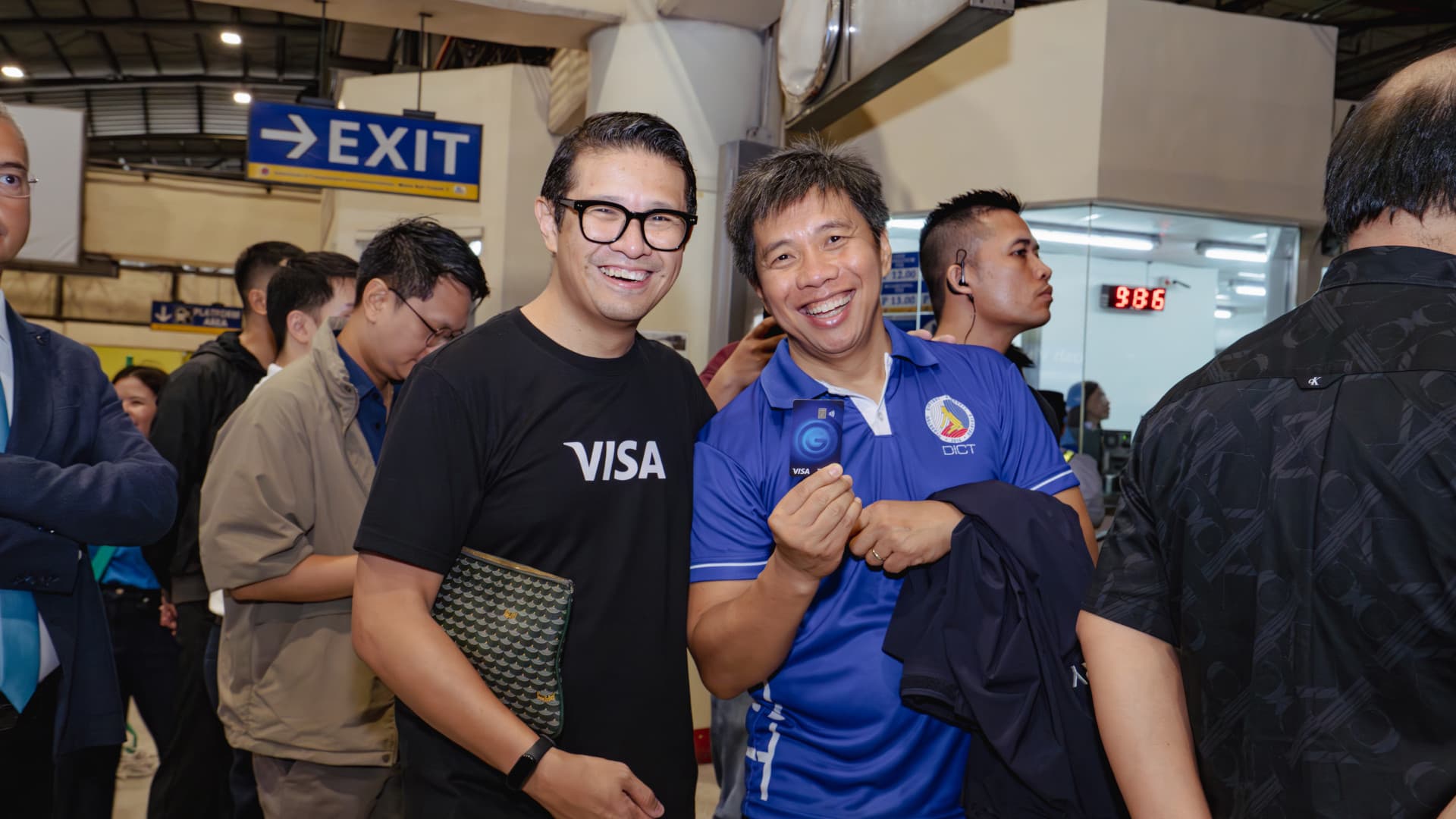
LRT-2 started accepting contactless payments at all 13 stations in July 2026, Visa announced. Visa built it with RCBC and the Department of Transportation (DOTr). Per RCBC's Fast Lane FAQ:
- What works: contactless Visa or Mastercard credit, debit and prepaid cards, plus phones and smartwatches with a payment wallet such as Google Pay or RCBC Pay. Look for the wave symbol on your card.
- What does not work yet: GCash-issued Visa or Mastercard cards and GCash Tap to Pay. Use GCash Commute QR instead.
- How it charges: Your trips are added up and charged once at the end of the day, not per ride.
- One card per person: You cannot tap one card for a companion.
MRT-3
MRT-3 has had tap-to-pay since July 2025. Visa said the system is in place at all 13 stations, but BPI's MRT-3 page says only designated turnstiles accept cards, so look for the signs. When you tap in, the system holds the maximum fare. BPI lists that as ₱28. When you tap out, it deducts the actual fare and returns the rest. BPI says there is no extra charge for paying by card.
GCash Commute QR
GCash Commute QR works on both LRT-2 and MRT-3 for fully verified GCash users, with no added fee, according to RCBC's page. You generate a new QR code for each trip. The app holds ₱16.50 for LRT-2 and ₱14 for MRT-3 at the current promo fares. If you do not scan out, you pay the maximum fare. We covered GCash's Commute QR cashback promo when it launched.
LRT-1 is still beep only
Neither RCBC's page nor Visa's LRT-2 announcement covers LRT-1. RCBC executive Lito Villanueva said LRT-2 would go first because LRT-1 has more stations and an ongoing extension, in a GMA News report republished on RCBC's DiskarTech site. As of this writing, no LRT-1 launch date had been announced.
Rules that can cost you money
Tap in and out with the same card or phone. On LRT-2, if you tap in with one card or device and out with another, both are charged the maximum fare, says RCBC.
Do not stay too long. On LRT-2, a card is charged a ₱15 overstaying fee if you stay inside the train network for more than 120 minutes before tapping out.
Do not walk through an open exit gate. If you do not tap out, you are charged the maximum fare. Show your card to the station staff so they can record your exit. RCBC says you are still charged the maximum fare at first, then adjusted within three banking days.
Keep your beep card safe. The load on a lost standard beep card cannot be recovered, per the beep FAQ. Only concessionary cards can have their balance moved, for a ₱100 fee.
Extend your beep card before it expires
beep cards are generally valid for four years, says the beep FAQ. You can extend a card once, for one year, through the beep app within six months before the expiry date printed on it. The extension costs ₱10, per the fee schedule in beep's conditions of use. beep also lists the stations and bus terminals that handle extensions.
If the card expires first, you have 12 months to move the balance to a new card, for a ₱50 transfer fee. After that, the balance is lost. By our math, using station prices, letting a card expire costs ₱80 (the ₱50 transfer fee plus ₱30 for a new card). Extending it costs ₱10, so you save ₱70.
Fares are half price on LRT-2 and MRT-3 for now
Since March 23, 2026, the DOTr has given a 50% discount on all LRT-2 and MRT-3 fares, the LRTA says. beep cards are charged the discounted fare automatically, and ticket machines show the lower price. The LRTA page gives no end date. Check the fare posters at the station before you budget for a month of rides.
Who to call if something goes wrong
- beep card, load or e-load station problems: the beep hotline at (02) 8737-9600, Smart 0998-581-9675 or Globe 0917-512-1319, as listed on beep's website.
- Double charge on a bus: tell the driver or conductor first. beep says refunds follow the bus company's own rules.
- LRT-2 bank card charges: email LRT_helpdesk@rcbcbankard.com with the card used, the date, and your entry and exit stations. RCBC says it replies within three banking days.
- MRT-3 concerns: feedback@dotrmrt3.gov.ph or 8929-5347 local 2303, the contacts listed on BPI's MRT-3 page.
If you want to know when the next train arrives, TrainSight shows LRT and MRT trains on a live map. For road tolls, see our Autosweep and Easytrip RFID guide.