The proposed 2027 national budget allocates ₱53.1 billion for government-wide ICT and digitalization, and its most visible line item is a major expansion of free public Wi-Fi: 38,829 active access points next year, almost 69% more than the 22,916 envisioned for 2026 — on the same ₱5-billion allocation. The figures come from the government's proposed spending plan, as reported by The Chronicle PH. As of publication, only one outlet has reported the full line-item breakdown, so the numbers below may still shift as Congress deliberates.
Where the ₱53.1 billion goes
The Department of Information and Communications Technology (DICT) accounts for ₱14.4 billion, or 27.2% of the total. The other big movements:
| Program | 2026 | Proposed 2027 |
|---|
| Free Public Internet Access Program | ₱5 billion | ₱5 billion (38,829 access points, up from 22,916) |
| eGovernment Program | ₱1.49 billion | ₱3.23 billion |
| National Broadband Program | ₱667 million | ₱1.1 billion |
| Philippine Digital Infrastructure Project | — | ₱2.16 billion |
| Government Data Center Infrastructure | — | ₱950 million |
| National Government Portal | — | ₱312 million |
Another ₱722 million goes to workforce development and emerging technologies, including ₱143 million for ICT upskilling and ₱193 million for Digital Transformation Centers.
The eGovernment jump is notable: the program more than doubles from 2026. In July, DICT officials were still estimating the eGov ask at around ₱2.7 billion, including ₱800 million for the eGov PH super app, per GMA News — the proposed budget lands higher, at ₱3.23 billion. In that July estimate, the ask beyond the super app covered cloud infrastructure and hosting, cybersecurity tools, developer compensation, and the integration work that lets agency systems talk to each other — the plumbing behind moving more government transactions online.
Same ₱5 billion, 69% more Wi-Fi sites
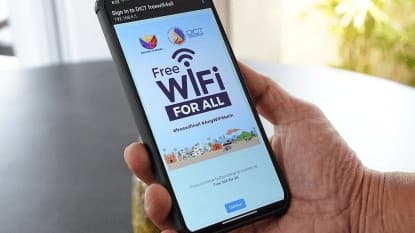
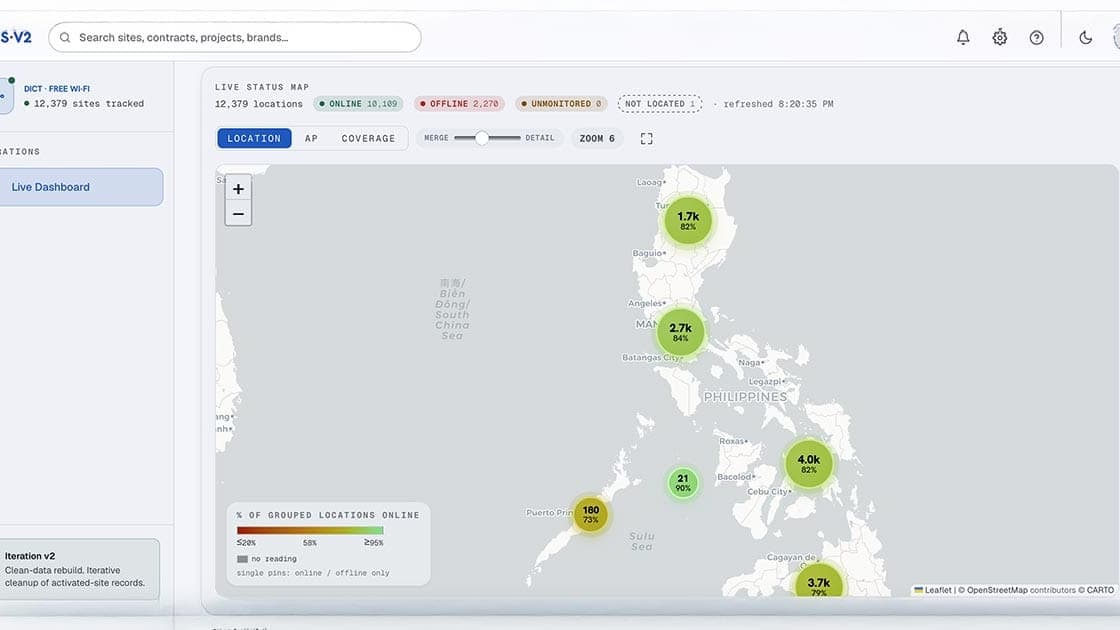
The Free Public Internet Access Program is the government's main connectivity push for communities that commercial telcos underserve. The expanded network is expected to cover 14,969 public locations across 1,634 localities, prioritizing public schools, healthcare facilities, transport hubs, and geographically isolated communities.
The obvious question for budget deliberations: can the program really grow its active access points by nearly 69% without a single peso of additional funding? Cheaper hardware, renegotiated bandwidth contracts, or a shift in what counts as an "active" access point could each explain part of the math — but the proposed budget documents, as reported, do not spell it out. Expect legislators to press DICT on exactly this during the hearings.
What it means for your barangay's connection
For readers in areas with weak or expensive connectivity, this is the line item to watch. Free public Wi-Fi sites in schools, health centers, and transport hubs are often the only practical internet access in far-flung barangays, and a near-70% expansion would materially widen that safety net — if the sites stay online and usable, which has been the program's historical weak spot. The rest of the infrastructure lines pull in the same direction: the National Broadband Program's jump to ₱1.1 billion funds the government-owned backbone meant to lower bandwidth costs in the provinces, while the ₱950 million for government data centers and ₱312 million for the National Government Portal support the services that free Wi-Fi users would actually connect to. The broadband and data-center lines also feed the government's larger digital agenda, including the PAIIM plan to grow the country's AI computing capacity 30-fold by 2033.
The ₱53.1-billion proposal now heads into congressional deliberations, where line items routinely move before the General Appropriations Act is signed. The final shape of the digital budget — and whether the Wi-Fi target survives scrutiny — should be clear by December.