Filipinos drowning in fake courier updates, bogus bank alerts, and too-good-to-be-true job offers have a new free tool to check them against. Scam Ba 'To? — a web platform built by John Clement Escobañez, an IT professor at National University Manila's College of Computing and Information Technologies — analyzes a suspicious text, email, or chat message and rates it Red, Yellow, or Green, Newsbytes.PH reports. The project is independently developed, free to use, and built specifically around how scams work in the Philippines.
How Scam Ba 'To? works
Instead of installing an app, you paste the suspicious message into the checker at scambato.org. The platform examines what the message asks you to do, the links and domains it carries, and the transaction context — then returns one of three ratings:
- Red — dangerous behavior detected; do not act on the message.
- Yellow — additional verification recommended before you respond.
- Green — lower observed risk, offered as guidance rather than a guarantee.
The system handles the message types Filipinos actually receive: payment notices, account warnings, courier and delivery updates, government notices, school messages, job offers, and e-wallet alerts. It works in both English and Filipino, and the site says it uses only essential browser storage, with no advertising cookies.
What sets the tool apart is what it refuses to do. Many scam filters treat common features — a one-time password (OTP), an urgent tone, a shortened link — as automatic proof of fraud, which trains people to panic about legitimate bank messages. Scam Ba 'To? scores behavior instead. "Catching scam messages is only half the problem," Escobañez says. "If a system repeatedly scares people about legitimate transactions, it is also failing."
What is under the hood
The platform leans on a verification layer rather than guesswork. Its database currently holds 77 gold-verified entities, 648 recognition entities, 716 organization-intelligence profiles, 186 verified destinations, and 211 verified organization facts, alongside 94 source-grounded scam cases. Where an organization is verified, the tool can point users to its official channels — so instead of just being told a message looks fake, you are shown where the real bank or agency can be reached.
Validation has been substantial for an independent project: the system has gone through 48,000 controlled benchmark executions covering 16,447 unique messages and 6,144 behavioral representatives.
There are honest limits. The platform distinguishes recognizing an organization from authenticating a sender — knowing that a message claims to be from a familiar bank is not proof the bank sent it — and a Green rating does not guarantee legitimacy. As of publication, Newsbytes.PH is the only news outlet to have reported on the platform's launch; the details above are drawn from that report and from the platform itself.
A tool that fits the moment
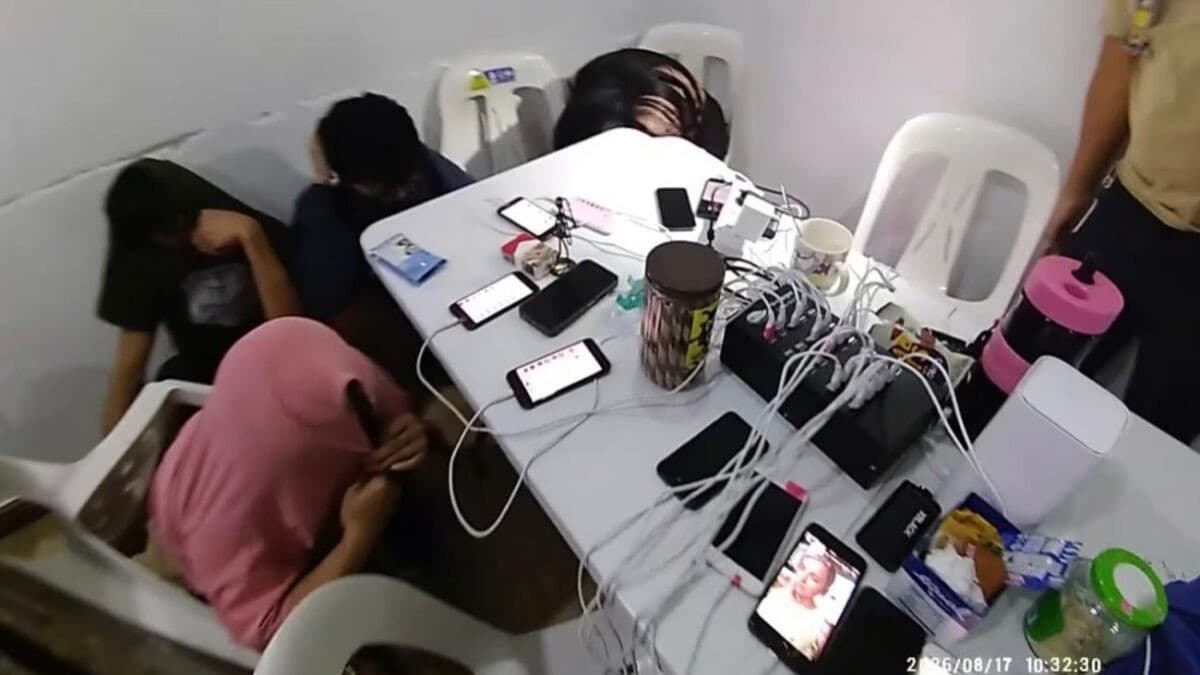
The launch lands in the middle of the country's push against message-based fraud. Banks and e-wallets are shipping mandatory defenses under the Anti-Financial Account Scamming Act (AFASA), regulators are tightening identity rules, and enforcement operations continue — the NBI recently raided a Parañaque online scam hub running exactly the kind of schemes this checker screens for. A free, PH-focused checking habit — "check muna" before clicking — is a low-cost layer on top of those institutional defenses.
FAQ
Is Scam Ba 'To? free?
Yes. It is a public-interest project with no charge, no app install, and no advertising cookies, per the platform's own site.
Does a Green rating mean a message is safe?
No. Green means lower observed risk based on the message's behavior, links, and context. The developer is explicit that it is guidance, not a guarantee — when money is involved, confirm through the organization's official channels.
What kinds of messages can I check?
SMS, messenger chats, emails, and links — including payment notices, bank account warnings, courier updates, government and school notices, and job offers, in English or Filipino.