Once a tree has been cut, milled, and turned into a table or a door frame, even an expert can struggle to say what species it came from — which is exactly what illegal loggers count on. The Department of Science and Technology wants to close that loophole with genetics. Its Forest Products Research and Development Institute (DOST-FPRDI) is building the Philippine Forest DNA Database, a molecular reference library that can identify timber species from a wood sample even after processing has erased the visual clues, Newsbytes.PH reports.
How do you get DNA out of a plank of wood?
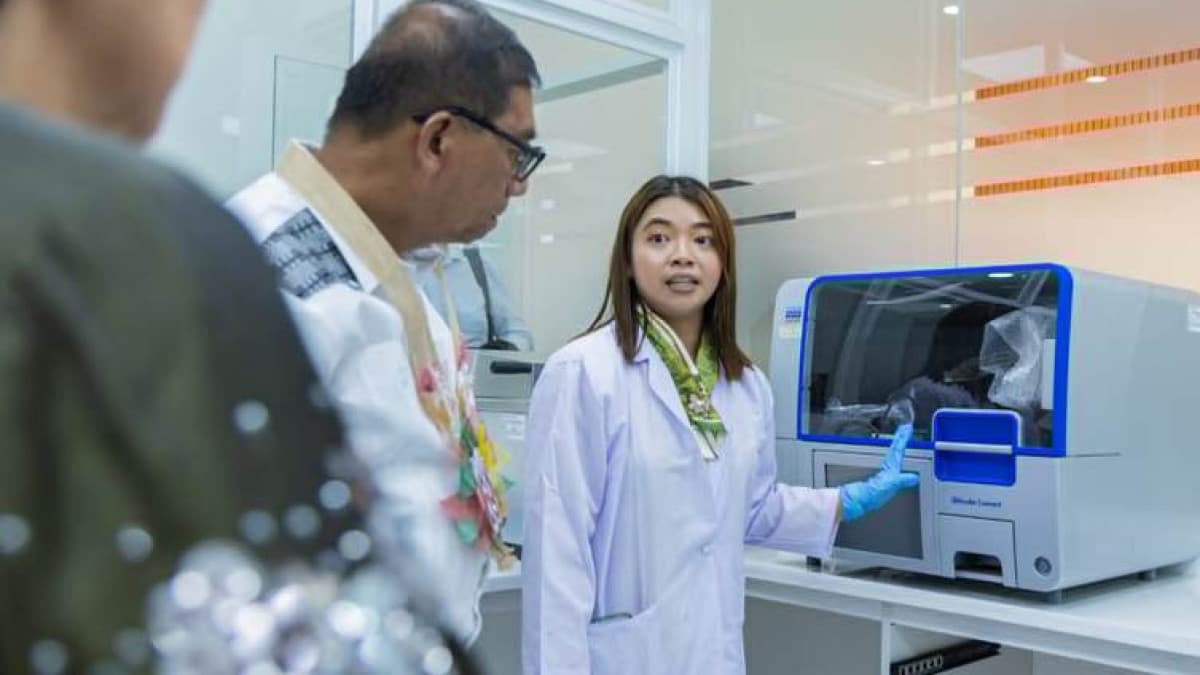
The work runs through the institute's Wood and Non-wood DNA Laboratory, the first facility in the country dedicated to forest DNA research. The lab was unveiled earlier this year under DOST-FPRDI's Advancing LABoratories, Accelerating Breakthroughs (ALAB) program, as BusinessMirror reported in July, and the database project is funded through the DOST Grants-in-Aid Program with monitoring by the Philippine Council for Industry, Energy and Emerging Technology Research and Development (PCIEERD).
The process itself is straightforward to describe and painstaking to do: technicians collect and grind wood samples, break down the cells, remove contaminants, then isolate and purify the DNA for molecular analysis that can pin down the species. Matching those results requires a reference — and that reference does not exist yet. "There is no existing DNA database for Philippine timber," senior science research specialist and project lead Jennifer Conda has said. Building one for the country's endemic species, including those listed under CITES (the international treaty controlling trade in endangered plants and animals), is the project's core task.
Why it matters for forests — and for exporters
The database is aimed first at law enforcement. DNA identification would give investigators scientific evidence in cases involving suspected illegal timber, and confiscated wood could be sent to the laboratory to verify its species — turning a judgment call into a lab result that can support prosecution of forestry violations. "Timber can be difficult to identify once a tree has been cut, processed, or turned into a finished product," DOST-FPRDI director Rico Cabangon noted.
There is a trade angle as well. Major markets — the United States, Australia, and Europe — increasingly require proof that wood products were legally sourced. A local DNA verification service would let Philippine producers and exporters back up their documentation scientifically instead of relying on paperwork alone. It also keeps testing money in the country: the same ALAB push gave the institute an enhanced fire testing laboratory, where evaluating construction materials locally is expected to cost under ₱100,000 per sample versus roughly ₱500,000 overseas.
"When we can identify our forest products with greater certainty, we strengthen our ability to protect and sustainably manage what remains of our forests," DOST Secretary Renato Solidum Jr. said of the effort.
When will it actually be usable?
This is a long game. The institute projects that DNA testing services will be available by around 2030, once the reference database is established, after which the facility is planned to open to the public. That timeline reflects the scale of the collection job — sampling and sequencing enough verified specimens of Philippine species to make matches reliable. The institute is not starting from zero, though: its xylarium already holds 10,983 authenticated wood specimens covering more than 90 percent of Philippine tree species, collected over decades of wood anatomy research.
The project joins a run of science-led government programs — like the ₱1-billion AI-powered flood forecasting expansion under Project NOAH — that put technical infrastructure behind problems the country has long fought with paperwork and manpower alone.