Four in ten Filipino internet users — 42.4% — were already using ChatGPT every month at the last count that ranked countries, and the newest global edition of that research now puts generative AI at 3.24 billion monthly users, or 38.9% of everyone on Earth. The Digital 2027 report, published on October 21 by DataReportal with We Are Social and Meltwater, also records the other side of that growth: traffic to the web's biggest sites has fallen more than 10% since ChatGPT launched.
For a Philippine business that lives on Google rankings and Facebook posts, that is the practical question in the data — where do customers look first now, and is it still where you are?
The headline numbers
| Digital 2027 measure | Figure | Change |
|---|
| Monthly generative AI users | 3.24 billion (38.9% of population) | +57.2% in 12 months (+1.2 billion) |
| Social media user identities | 5.81 billion (69.9%) | +2.7% (+151 million) |
| Internet users | 6.15 billion (73.9%) | — |
| Weekly time on social media and online video | 19 h 18 min | +3.8% |
| Traffic to the top 10,000 web domains | — | down more than 10% since ChatGPT's launch |
| Time spent on the web | — | down 11.2% in 24 months |
Source: Meltwater's release and DataReportal. "Identities" are accounts, not people, and the AI count can double-count someone who uses two chatbots — DataReportal flags both caveats itself.
ChatGPT remains the biggest platform, with about twice the monthly users of its nearest rival. Google's Gemini app has grown more than fourfold in a year, and its web audience is now above 60% of ChatGPT's; Anthropic's Claude is at roughly a quarter of ChatGPT's web users. Younger people drive the growth: 93.3% of 16-to-24-year-olds used AI in the past month, against 52.2% of people aged 65 and up. The most common reason, at 60.4% of active users, is simply finding information.
Where Filipinos stand
The country ranking that placed the Philippines sixth comes from the previous edition, Digital 2026, released in October 2025. It found that 42.4% of Filipino internet users aged 16 and over had used ChatGPT in the past month, behind Kenya (49.5%), Brazil (49.1%), Israel (49%), Malaysia (48.4%) and the UAE (44.7%), as PhilSTAR Life reported at the time. The global average then was 26.5%, per Newsbytes.PH. The survey behind it was GWI's second-quarter 2025 wave.
That number is a year old. Digital 2027's public pages do not give a fresh Philippine figure; the AI-use chapter names Kenya (97.3%) and Nigeria (96.6%) as the countries where the largest share of internet users touched any AI tool in the past month, a broader measure than ChatGPT alone. DataReportal's country reports normally follow later in the year.
What is current is the size of the Philippine audience. DataReportal's Digital 2026: The Philippines counts 98.0 million internet users (83.8% of the population) and 95.8 million social media identities (81.9%), up 10.3% in a year, with Facebook's ad tools reaching 97.7% of internet users. Meltwater's country analysis, cited by Newsbytes.PH this week, puts Filipinos at 33 hours and 50 minutes a week on social media, with 97.8% going online by phone. NoypiGeeks ran the same pairing of the global report with the local figures.
Search is shrinking, but it still beats AI for brand research
The report does not say Google is finished. Online adults are 74% more likely to say they visit a search engine than an AI platform when researching a brand, and only 17% discover new brands through AI, ranking it 15th among channels. But AI is climbing as a research tool: 26% of online adults now use it to research purchases, up from 24.4% a quarter earlier, which DataReportal reckons is about 58 million extra shoppers. Among 16-to-24-year-olds, 46.9% use Instagram and Facebook as their main source for researching brands. And, citing Similarweb, DataReportal estimates that more than four in ten Google searches now show an AI Overview, so even a "search" often ends in an AI-written answer.
"Audiences no longer discover, research or make decisions about brands in one place," Meltwater chief strategy officer Alexandra Bjertnæs said in the release. We Are Social's Mobbie Nazir called it "a fundamental shift in how people behave online." Meltwater's Asia-Pacific enterprise sales head Mimrah Mahmood, quoted by TechSabado, urged marketers to check how they appear across news, social, search and AI environments rather than one channel at a time.
If you sell online in the Philippines
The money at stake is local. Digital 2026 Philippines data cited by Newsbytes.PH and NoypiGeeks puts 2025 advertising spending in the country at $3.53 billion (around ₱224 billion at this week's rate of about ₱63.4 to the dollar), of which $2.12 billion (around ₱134 billion) was digital; social media advertising alone was an estimated $679 million (around ₱43 billion), up 14.5%. Some 23.5 million Filipinos bought consumer goods online, spending about $14 billion (around ₱888 billion), with 57.5% of that on mobile.
Set against the report's findings, three things follow for a Philippine seller or brand, none of which need a budget:
- Check what the chatbots say about you. With ChatGPT use among Filipinos running well above the global average, a wrong price, address or "permanently closed" in an AI answer costs sales. Ask ChatGPT and Gemini about your business the way a customer would.
- Keep the facts identical everywhere. AI answers and Google's AI Overviews draw on your website, your Facebook page and marketplace listings. Meltwater's advice is to review how you show up across all of them together, not channel by channel.
- Do not abandon social. Filipinos still spend nearly 34 hours a week there, and it is where under-25s research brands first.
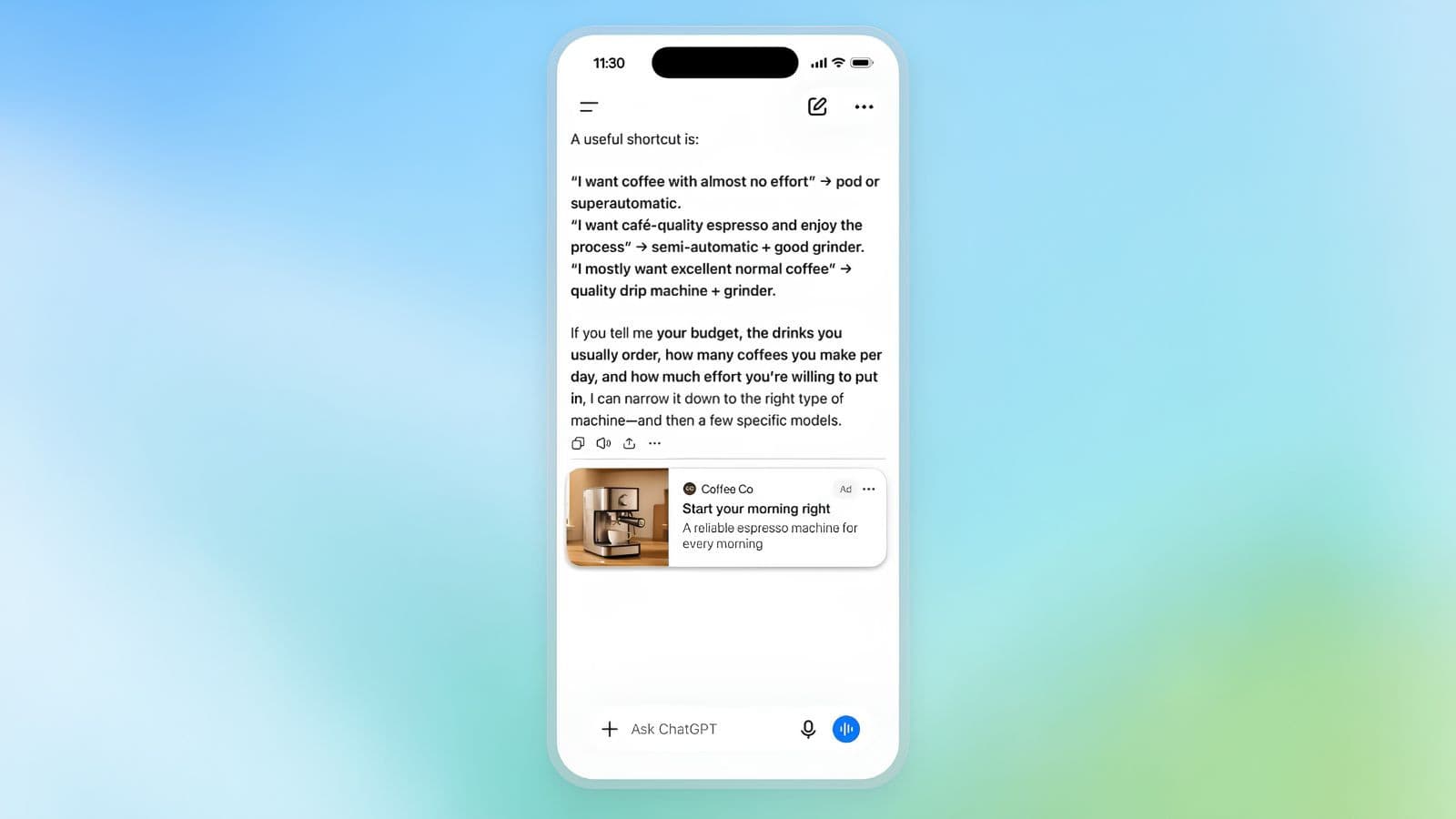
Access to these tools is cheap here, which helps explain the usage: ChatGPT's free tier now carries ads in the Philippines, Google's paid Gemini plans start at ₱285 a month, and Smart bundles several AI models from ₱49.
Where the numbers come from
DataReportal's AI figures combine a GWI survey of more than 235,000 internet users aged 16 and over across 53 economies (second quarter of 2026), Manochi's monthly estimates of active users for October 2026, and Similarweb app and web data for August 2026. The Philippine audience figures come from the UN, GSMA Intelligence and the platforms' own advertising tools, which report reachable accounts rather than verified people. The peso conversions above are approximate and use a mid-market rate looked up on October 22.