The threat of a Facebook ban in the Philippines eased on August 27, when Malacanang said the government has "no major issues" with the platform and the Department of Information and Communications Technology (DICT) agreed with Meta to form a technical working group on harmful content. The two announcements, made hours apart, wind down a two-week standoff that began with regulators studying a possible ban and telcos blocking violent content at the network level.
What Malacanang said about the Facebook ban
Presidential Communications Office Undersecretary Claire Castro told reporters that no ban is currently being imposed. "Facebook has been quick to respond to requests to take down posts that are proven to be fake news or violent content," she said, adding that the government "hasn't really had any major issues with Facebook," The Manila Times reported.
The tone is a clear shift. Just two days earlier, the Palace said President Marcos was open to banning platforms and gaming apps that harm the youth, a position we covered in our earlier report on the Palace statement. Castro clarified that the administration is still studying the wider issue, but a blanket social media ban is not on the table.
Inside the DICT-Meta meeting in Singapore
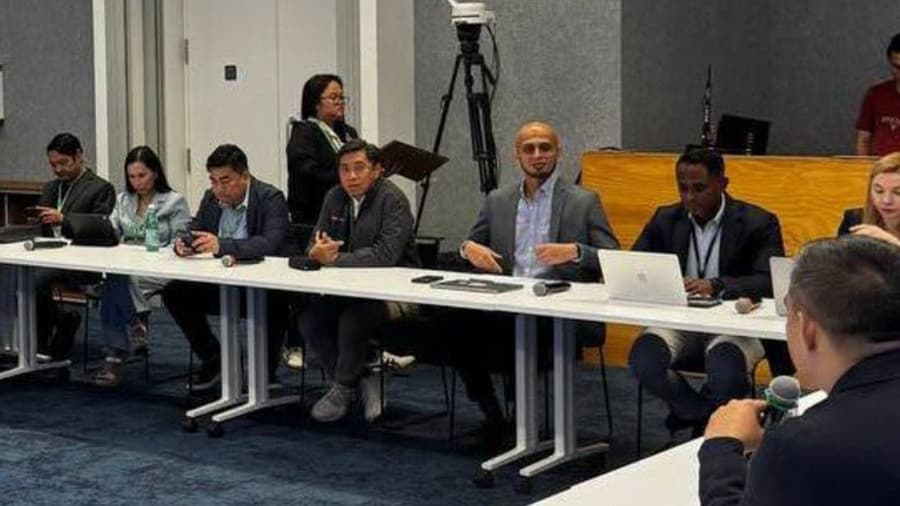
On the same day, DICT Secretary Henry Aguda led a Philippine delegation that met Meta executives in Singapore, Newsbytes.PH reported. The delegation included National Bureau of Investigation (NBI) Director Melvin Matibag, National Telecommunications Commission (NTC) Chairperson Ella Blanca Lopez, and Cybercrime Investigation and Coordinating Center (CICC) Executive Director Renato Paraiso, with representatives from the Senate and the Office of the Executive Secretary. Meta sent Sarim Aziz, its director for public policy in Southeast Asia, and Gio Tiongson, its head of public policy for the Philippines.
The meeting followed repeated complaints from Philippine officials that Meta keeps no full office presence in the country, which slowed down law-enforcement requests and content takedowns. The two sides agreed on several concrete steps:
- A technical working group to improve coordination and response times on harmful content, online threats, and child sexual abuse and exploitation material (CSAM)
- A designated Meta point of contact for open communication with Philippine authorities
- Cooperation on lawful requests for account records, plus technical assistance in CSAM investigations
- Commitments to assist law enforcement in cases involving imminent harm to a child or risk of death or serious injury
- Digital literacy programs that address disinformation
"The commitments made today are a starting point. The responsibility now is to turn them into action," Aguda said after the meeting. Meta executives are expected to visit Manila next to formalize the cooperation framework.
How the standoff got here
The de-escalation caps a fast-moving series of events. The CICC first said it was studying a possible Facebook ban over slow takedowns of harmful posts. Telcos then moved in parallel: Globe, PLDT, and Smart blocked more than 100 sites streaming school shootings and violent content, and Converge later joined the DICT-coordinated network-level blocking. The August 25 Palace statement that a ban was possible pushed the standoff to its peak.
What stays on the watchlist
A working group is a channel, not a result. What Filipino users should watch next is whether takedown times actually improve, whether the Meta point of contact speeds up NBI and CICC casework, and whether the promised Manila visit produces a signed framework. Castro also made clear that the government's scrutiny of social media in general continues, and platforms that stay unresponsive to takedown requests remain under threat of restriction. For now, though, the country's most heavily used social platform is staying put.