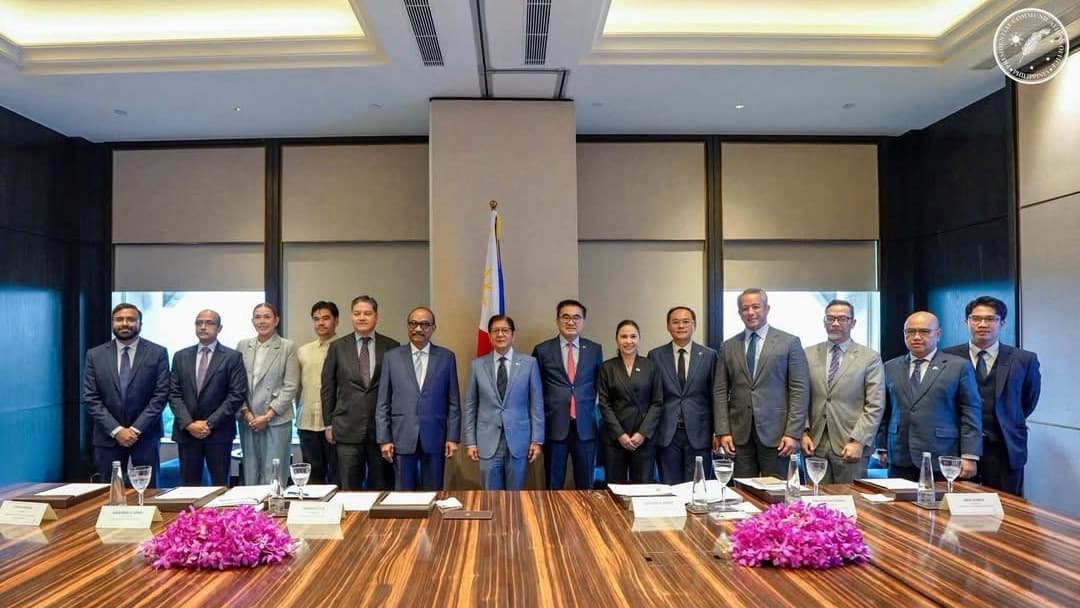
Indian conglomerate iSON Group has committed $75 million (around ₱4.7 billion) in new and scaled-up Philippine investments, a package projected to create about 2,000 local jobs, the Palace said in a readout reported on September 14. The pledges came during President Ferdinand Marcos Jr.'s working visit to India for the 18th BRICS Summit in New Delhi, where he met Indian business leaders alongside Trade Secretary Cristina Roque, Finance Secretary Frederick Go, and ICT Secretary Henry Aguda.
The same trip opened a separate, potentially far-reaching conversation: NPCI International Ltd. is exploring a partnership with LandBank to bring India's Unified Payments Interface (UPI) — the real-time payment rails behind most of India's digital transactions — to the Philippines.
Where the ₱4.7 billion is going
iSON Group, a New Delhi-based conglomerate with businesses spanning agri-technology, healthcare, telecommunications, BPO, and renewable energy, laid out three main projects:
- A $50-million (around ₱3.1 billion) agro-solar hybrid initiative, pairing agriculture with solar power generation.
- Round-the-clock healthcare teleconsultation priced at roughly ₱65 a month, aimed at remote regions. "This is very helpful for us, especially in areas where access to doctors and health care facilities remains limited," Roque said.
- A $10-million (around ₱630 million) expansion of its BPO and global delivery center operations.
The group is not a newcomer. Context.ph reported that iSON has deployed 450 telecommunications towers in the Philippines since 2021, serving 600 tenants, with about $65 million (around ₱4.1 billion) already invested.
UPI on LandBank: what the payments talks could mean
UPI is India's interbank real-time payments framework, and NPCI International is the arm that exports it. The exploratory talks with LandBank focus on improving government payment efficiency and easing cross-border transactions — which, if it moves past the study stage, could eventually give overseas Filipino workers and small merchants a cheaper rail for remittances and payments.
Nothing is signed yet, and no timeline has been announced. Still, the Philippines has been widening its payment plumbing all year — QR Ph already accepts Alipay-linked foreign wallets — so a UPI link-up would fit an existing pattern of connecting local rails to foreign ones.
Cognizant, Hinduja, HCLTech, and VVDN line up expansions
At an executive roundtable, four Indian technology majors — Cognizant, Hinduja Group, HCLTech, and VVDN Technologies — told the President they intend to scale up Philippine operations, with plans centered on artificial intelligence, digitalization, engineering, and telecommunications work.
"In fact, they've said that the Philippines is really the best destination for trade and for business for them," Roque said, per BusinessMirror. "They are already existing in the Philippines. So they already know exactly how everything goes."
No specific investment figures or headcounts were disclosed for these four companies in the Palace readout — their pledges are directional, not contracted. Separately, the delegation discussed mobilizing private capital for the delayed Sangley Point International Airport project with GMR Group and Cavitex Holdings, an effort aimed at relieving capacity pressure on Ninoy Aquino International Airport.
Why this matters for Philippine IT-BPM workers
The jobs pledged here land in an industry that is actively courting non-US investors — IBPAP has formed a coalition chasing $505 billion in IT-BPM revenue by 2028 — and Indian capability centers are a natural fit for that push. The honest caveat: most of these commitments sit at the memorandum-of-understanding stage. The ₱65-a-month telehealth plan, for instance, still depends on last-mile broadband reaching the rural users it targets, and the UPI exploration must survive LandBank's core-banking integration before any Filipino sees a faster remittance. What is concrete today is iSON's ₱4.7-billion figure, its 2,000 projected jobs, and a queue of Indian firms saying they want more Philippine seats, not fewer.