You can put a household online in the Philippines for a one-time ₱780 prepaid 5G kit, or sign up to ₱2,699 a month — locked in for 36 months — for gigabit fiber. The gap between those two numbers is where most people overpay. Choosing a home internet plan here comes down to three questions: how many people share the connection, whether fiber actually reaches your address, and how much commitment you can accept. This guide compares what PLDT Home, Globe GFiber, Converge, Smart, and DITO charge as of October 2026, based on provider pages and announcements we read directly, and walks through how to decide between a fiber line and a 5G home WiFi box.
Fiber vs 5G home WiFi: what you are actually choosing
Fiber is a physical cable into your home. An installer visits, the line is connected to the network, and speed stays mostly steady regardless of weather or how many neighbors are online. The trade-offs: you wait for installation, your address must be serviceable, and the big providers attach long contracts — PLDT's Fiber Unli plans carry a 36-month contract, per the provider's own FAQ.
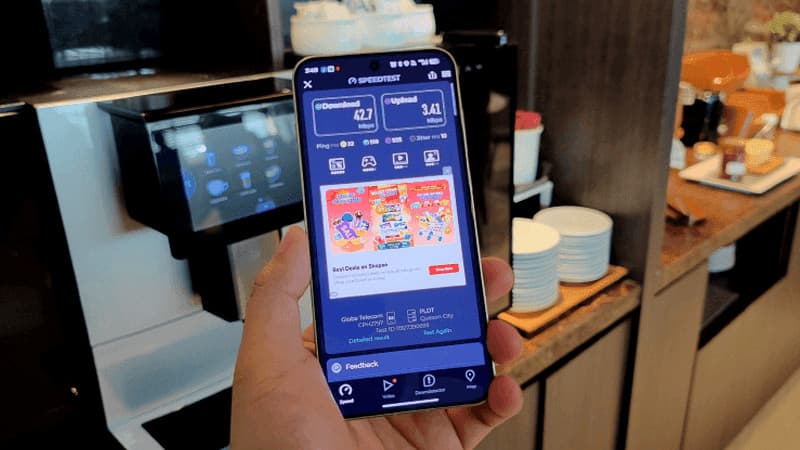
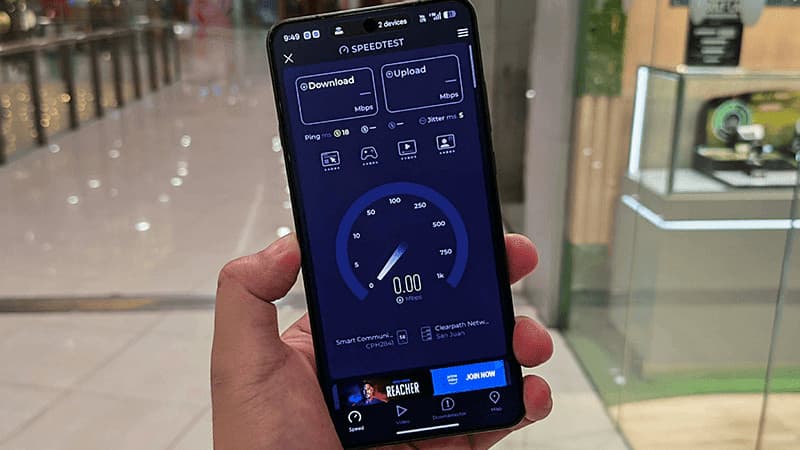
5G home WiFi (also called fixed wireless) is a router with a SIM inside. You buy the box, plug it into power, and it runs on the same 5G network as your phone. There is no installation and no waiting — but speed depends on signal strength at your exact spot and how busy the nearby cell site is. Smart's flagship box advertises up to 600Mbps, yet real-world speed varies by address in a way fiber does not.
Prepaid WiFi kits are the commitment-free version of the same idea: pay for the modem once, then reload only when you need data. DITO's cheapest kit is ₱780, and you can stop loading any month with no penalty.
How much speed does your household actually need?
Less than the ads suggest. Netflix's own requirements are 3 Mbps for HD, 5 Mbps for Full HD, and 15 Mbps for 4K. By that math, five people all streaming 4K at the same time need about 75 Mbps — which still fits inside PLDT's cheapest 100Mbps fiber plan.
Where bigger plans earn their keep is price per megabit. By our math from PLDT's published prices, the ₱1,299 100Mbps plan works out to about ₱13 per Mbps a month, while the ₱2,699 1Gbps plan is about ₱2.70 per Mbps. Gigabit is the better ratio — but only if you actually use it. For a household of two to five people that streams, browses, and takes video calls, 100–300Mbps is comfortable. Gamers care more about stability and ping than raw bandwidth, and heavy uploaders — streamers, or anyone moving big files for work — are the main group that genuinely feels a 500Mbps-and-up plan.
One caution on "up to" speeds: when PLDT launched its Fiber Unli All bundle, GizGuide's launch report noted the fine print on the 200Mbps tier — an average of 160Mbps and a minimum of 60Mbps, at 80% reliability. That is standard industry practice, and it is why the serviceability check below matters more than the headline number.
Magkano ang fiber plan ngayon?
Here is what the three biggest fiber providers list, checked in October 2026:
| Plan | Monthly price | Advertised speed | Lock-in |
|---|
| PLDT Fiber Unli 1299 | ₱1,299 | 100 Mbps | 36 months |
| PLDT Fiber Unli All 1399 | ₱1,399 | 200 Mbps | 36 months |
| Globe GFiber 1499 | ₱1,499 | up to 300 Mbps | varies by promo |
| Converge FiberX | from ₱1,500 | see note below | no-contract option |
| Globe GFiber 2499 | ₱2,499 | 1 Gbps | varies by promo |
| PLDT Fiber Unli 2699 | ₱2,699 | 1 Gbps | 36 months |
PLDT Home lists Fiber Unli at ₱1,299 (100Mbps), ₱1,699 (500Mbps), ₱2,099 (700Mbps), and ₱2,699 (1Gbps) on its Fiber Unli page. The Fiber Unli All bundles — which add Cignal TV, HBO Max Standard, 9GB of Smart mobile data shared across up to three numbers, and unlimited landline calls — now start at ₱1,399 for 200Mbps, with 500Mbps at ₱1,799 and 700Mbps at ₱2,499. That is ₱100 a month below the ₱1,499/₱1,899/₱2,599 pricing Gadget Pilipinas reported at the bundle's July 2026 launch, so the lineup has quietly gotten cheaper.
Globe GFiber's own pages block automated readers, so we could not re-check them directly for this guide. The most recent breakdown we could read, Revu Philippines' October 2025 report, lists GFiber at ₱1,499 for up to 300Mbps, ₱1,999 for 500Mbps, and ₱2,499 for 1Gbps — the gigabit tier we covered when it became the country's cheapest 1Gbps plan. Globe also sells the 300Mbps tier as prepaid fiber at ₱1,499 per 30 days — about ₱50 a day — with no lock-in.
Converge has kept its FiberX entry price at ₱1,500 since it doubled the base plan's speed to 200Mbps at the same price in November 2022, as Newsbytes.PH reported. It also sells no-contract FiberX plans on 6- or 12-month terms with no termination fees — useful for renters. Converge's site also blocks automated checks, so confirm current tier speeds on convergeict.com or at a Converge store before signing.
Smart and DITO: what 5G home WiFi costs
| Option | Upfront | Ongoing cost | Advertised speed |
|---|
| DITO WoWFi Lite | ₱780 kit | capped-data loads from ₱480 | up to 50 Mbps |
| DITO WoWFi Pro | ₱1,490 kit | ₱790 / 30 days unlimited | up to 100 Mbps |
| Smart 5G Max Home WiFi (prepaid) | ₱2,995 (promo until Nov 20) | ₱1,299 / 30 days unlimited | up to 600 Mbps |
| DITO WoWFi Ultra | ₱4,990 kit | ₱1,090 / 30 days unlimited 5G | up to 500 Mbps |
| Smart Home WiFi Plan 999 (postpaid) | — | ₱999 / month, 200GB + 2GB daily bonus | 5G |
| Smart Home WiFi Plan 1499 (postpaid) | — | ₱1,499 / month, unlimited 5G | 5G |
Smart's prepaid flagship, the 5G Max Home WiFi, dropped 40% to ₱2,995 in September, a promo price WalasTech reports runs until November 20, 2026. The kit includes a SIM and 15 days of free unlimited data; after that, the UNLI 1299 load gives 30 days of unlimited data — about ₱43 a day by our math. On postpaid, Smart's Home WiFi plans run ₱999 a month for 200GB of 5G data plus a 2GB daily bonus, or ₱1,499 for unlimited 5G, both on a 24-month contract with a 30-day money-back guarantee if there is no 5G signal at your address.
DITO's WoWFi lineup, per the company's own guide (updated April 2026), starts at ₱780 for the Lite kit (up to 50Mbps), ₱1,490 for the Pro (up to 100Mbps, with unlimited-data loads at ₱490 for 15 days or ₱790 for 30 days), and ₱4,990 for the 5G Ultra (up to 500Mbps, with unlimited 5G at ₱1,090 for 30 days). At ₱790 a month after the kit, WoWFi Pro is the cheapest unlimited home connection in this comparison — if DITO's signal is strong at your address, which is the big if.
Lock-in and installation fees: the fine print that costs you
- PLDT: 36-month contract on both Fiber Unli and Fiber Unli All. There is no upfront cash-out, but a ₱100 monthly installation fee is added to the bill for all 36 months — ₱3,600 in total, by our math. The Cignal box on bundle plans adds a one-time ₱300 installation and activation fee, payable at ₱50 a month for six months.
- Smart Home WiFi postpaid: 24-month contract, softened by the 30-day money-back window.
- Converge: traditional plans, plus the no-contract option on 6- or 12-month terms with no termination or cancellation fees; higher no-contract plans include a WiFi 6 modem at no charge.
- Prepaid kits — DITO WoWFi, Smart 5G Max prepaid, Globe GFiber Prepaid, and PLDT's own Fiber Prepaid (advertised "for only ₱999" on PLDT's homepage): no lock-in at all. Your only sunk cost is the device.
A 36-month lock-in is three years of betting that your address, your job, and the provider's service quality all stay put. If any of those is uncertain, the no-contract and prepaid routes are worth their somewhat higher cost per month.
How to check what is actually serviceable at your address
- Smart: check 5G coverage at smart.com.ph/homewifipostpaid before applying — the 30-day money-back guarantee exists precisely because 5G reception is address-specific.
- DITO: use the 5G coverage checker linked from DITO's site; the WoWFi modem can be moved anywhere with DITO coverage.
- PLDT: applications need a valid ID, and gated villages, subdivisions, and townhomes need an entry or gate pass emailed to applyonline@pldt.com.ph before installation. In-house wiring is the customer's responsibility.
- Globe: GFiber Prepaid availability shows up in the GlobeOne app — Revu notes the 300Mbps tier appeared there for activation once it went live in their area.
- Ask the street, not the brand. Reliability differs block by block. Neighbors on the same provider are a better predictor than any coverage map.
- Test before you commit. A ₱780–1,490 prepaid kit is the cheapest way to learn how a network actually performs in your living room before signing a 24- or 36-month fiber contract.
When the whole country slows down: cable cuts and backups
Even a perfect plan slows when international capacity drops. On October 2, the C2C submarine cable's Philippines–Singapore segment was cut; users nationwide saw intermittent, slower connections while PLDT, Converge, and Eastern Communications rerouted traffic, The Star reported, before full service was restored over that weekend.
Two practical lessons. First, during a cable cut, switching providers will not help — everyone leans on the same international routes, so patience beats panic-buying a new modem. Second, for work-from-home setups that cannot drop offline, the cheapest real insurance is a backup on a different network: a fiber line as the main connection plus a prepaid 5G kit — DITO's ₱1,490 WoWFi Pro, loaded only when needed at ₱490 per 15 days, is the cheapest route — covers both a cable cut on one network and the more common brownout-or-backhoe outage on your own street.
So which setup should you get?
- Renters and anyone moving within two years: a prepaid 5G kit, or Converge's no-contract plans. Avoid 36-month lock-ins.
- Households of two to five that stream and take video calls: entry fiber — PLDT at ₱1,299–1,399 or Globe at ₱1,499 — is the steadier buy; by Netflix's numbers, 100–300Mbps covers several simultaneous 4K streams.
- Big households, gamers, and heavy uploaders: Globe's ₱2,499 or PLDT's ₱2,699 gigabit plans give the most speed per peso, at roughly ₱2.50–2.70 per Mbps.
- No fiber on your street: Smart's ₱2,995 5G Max box (unlimited at ₱1,299 per 30 days) or DITO's WoWFi Pro (₱790 per 30 days) — check coverage first, and keep the receipt.
All prices above are as of October 2026 and move with promos. Treat the provider's current page, not this guide, as the final word before you sign.