Filipino investors may soon be able to buy into US stocks and exchange-traded funds (ETFs) through a locally regulated broker. The Securities and Exchange Commission (SEC) has cleared DragonFi Securities Inc. to test exactly that — making it the first licensed Philippine broker-dealer allowed to trial access to selected foreign equities under the SEC's Strategic Sandbox, or StratBox, Philstar.com reported.
A sandbox approval is not a product launch: it lets DragonFi run the offering within defined limits while the regulator watches how it performs. But it is the first formal crack in a long-standing wall — until now, Filipinos who wanted Apple or an S&P 500 ETF had to open accounts with offshore platforms outside Philippine regulation.
How the depositary receipt model works
DragonFi will not send clients' orders straight to a US exchange. Instead, it will offer over-the-counter depositary receipts (DRs) — locally registered instruments that each represent an underlying US stock or ETF held abroad. The international securities sit with global financial institutions under segregated custody, while local client funds stay with registered Philippine institutions, according to InsiderPH. The investor's relationship, and the regulator's oversight, stay onshore.
Who can invest, and how much
The test deliberately ties foreign access to participation in the local market:
- Investors with certified Philippine investments can put up to 50 percent of their local holdings' value into the approved foreign offerings.
- Holders of a Personal Equity and Retirement Account (PERA) can invest up to 100 percent of the value of their Philippine PERA holdings.
That structure answers an obvious policy worry — that easy US access would drain money out of Philippine equities. SEC Commissioner McJill Bryant T. Fernandez put it plainly: "We remain committed to ensuring that our local capital markets are equally, if not better, promoted."
What the SEC is watching for
Through the sandbox, the commission said it will evaluate the offering's operational framework, investor protection measures and regulatory implications "within a controlled environment," and the results will feed into future rules for similar products. Testing starts only after the SEC validates DragonFi's amended testing plan and client-suitability protocols, beginning with a monitored cohort before wider access — so there is no public sign-up date yet.
DragonFi is backed by the tycoons behind DoubleDragon Corp., Tony Tan Caktiong and Edgar "Injap" Sia II. Its CEO, Jon Carlo Lim, called the clearance "a defining milestone for DragonFi and for Philippine investors," arguing that Filipinos "should be able to participate in the world's largest capital markets through a structure that is locally regulated, transparent and built with investor protection at its core."
What it means for Filipino retail investors
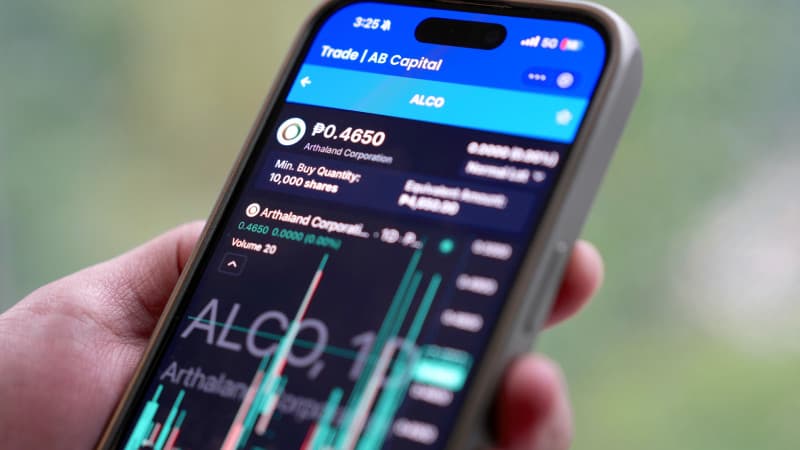
For the growing base of local retail investors — the same market that has been absorbing new instruments like Arthaland's preferred shares on GStocks PH — this is the first regulated bridge to US markets that does not require moving money offshore. The trade-off is patience and limits: pilot-stage access, caps tied to your local portfolio, and a product whose final shape depends on how the sandbox run goes.
FAQ
When can Filipinos actually start buying US stocks through DragonFi?
No date has been announced. Testing begins only after the SEC validates DragonFi's amended testing plan and suitability rules, and it will start with a monitored group of investors before expanding.
How much can a participant invest?
Up to 50 percent of the value of certified Philippine investments — or up to 100 percent of the equivalent value for PERA holders.
Does this replace offshore brokerage accounts?
Not yet. It is a sandbox pilot with pre-approved US stocks and ETFs only, structured as depositary receipts rather than direct share ownership — but unlike offshore accounts, it operates fully under Philippine regulation.