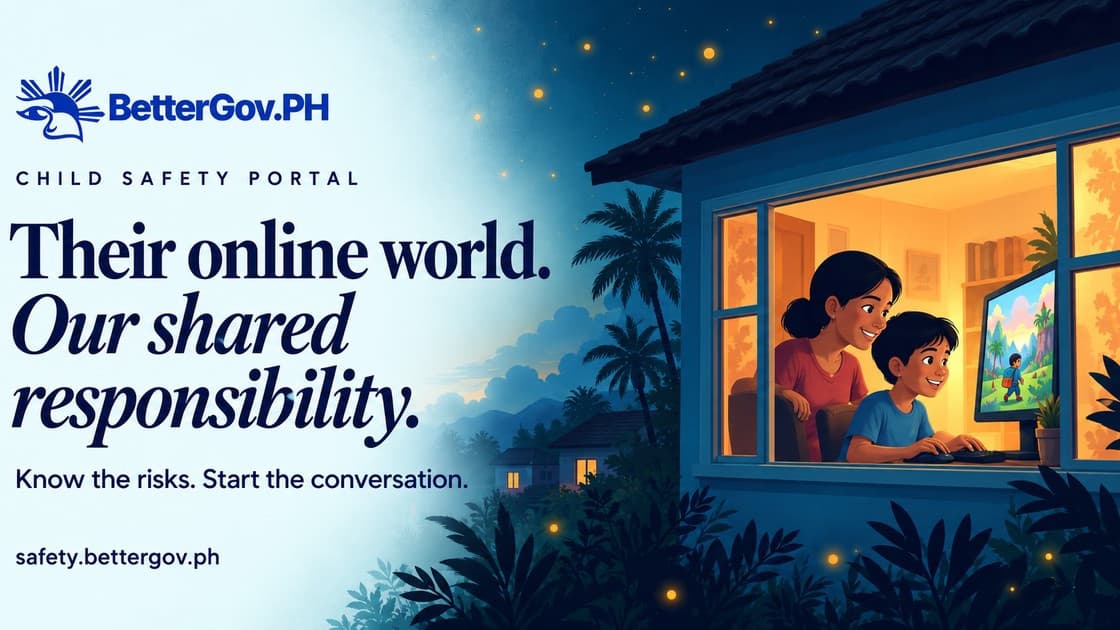
The short version: Filipino parents now have a free, bilingual starting point for dealing with online dangers to their children. BetterGov.PH launched its Child Safety Portal on September 29 at safety.bettergov.ph, with guides in English and Filipino, an interactive tool for spotting warning signs, and direct referrals to real hotlines.
As of publication, press coverage of the launch has come from a single outlet; the portal itself is live, and its published materials are the basis of this article.
What the portal covers
The portal organizes children's online risks into six categories: cyberbullying, grooming, sextortion, scams, harmful content and privacy threats. Around those, it offers separate guides for parents, teachers and schools, faith communities, and law enforcement, plus a reporting section on how to safely document and report incidents.
There is also a training track — a 10-module workshop program, about three hours in total, designed for schools, parishes and barangays. The content is framed around the story of a boy named Miguel and his family, and the overall approach favors conversation with children over confiscating their devices. One honest caveat: while the site describes itself as bilingual, much of the visible content is currently in English, with Filipino-language materials still being filled in.
How Risk Radar works
Risk Radar is the portal's interactive tool for parents who sense something is wrong but cannot name it. It walks through warning signs across four domains — emotional, physical, digital and linguistic — to help adults recognize behavior changes that may signal concerning online activity, from sudden secrecy about screens to new vocabulary picked up from harmful communities. The reporting section pairs with it, stressing that incidents should be safely documented — screenshots, usernames, dates — before they are reported, so cases handed to authorities actually hold up.
The portal is explicit about its limits: it does not replace professional help, and parts of it are still under development.
Where to get help right now
The portal points families to established channels:
- Bantay Bata 163 for child-welfare support
- PNP Anti-Cybercrime Group at (02) 8414-1560
- 911 when a child is in immediate danger
Why it arrives now
The launch lands in the middle of the Philippines' most intense stretch of child-online-safety policymaking in years. In the past two weeks alone, the government blocked and then unblocked Discord within 24 hours, authorities began investigating the online community linked to the Banga school shooting, and regulators had already flagged grooming activity on gaming platforms. Congress, meanwhile, is weighing minimum-age and platform-licensing bills.
The portal's own materials cite the scale of the problem it is aimed at: more than 350 subjects in FBI investigations tied to violent online networks, 1,093 sadistic-enticement reports to the US National Center for Missing and Exploited Children in the first half of 2025, and seven high school students in the Philippines rescued after a Roblox-linked incident.
For parents, the practical value is that this is a single, free, Filipino-context resource that exists today — not a bill awaiting passage or a platform promise awaiting enforcement. It costs nothing to use, works in the language many households actually speak, and connects to hotlines that already operate. Its limits are just as practical: it is an information and referral resource, not a monitoring app or an enforcement mechanism, so it works only as well as the conversations parents have with their children.