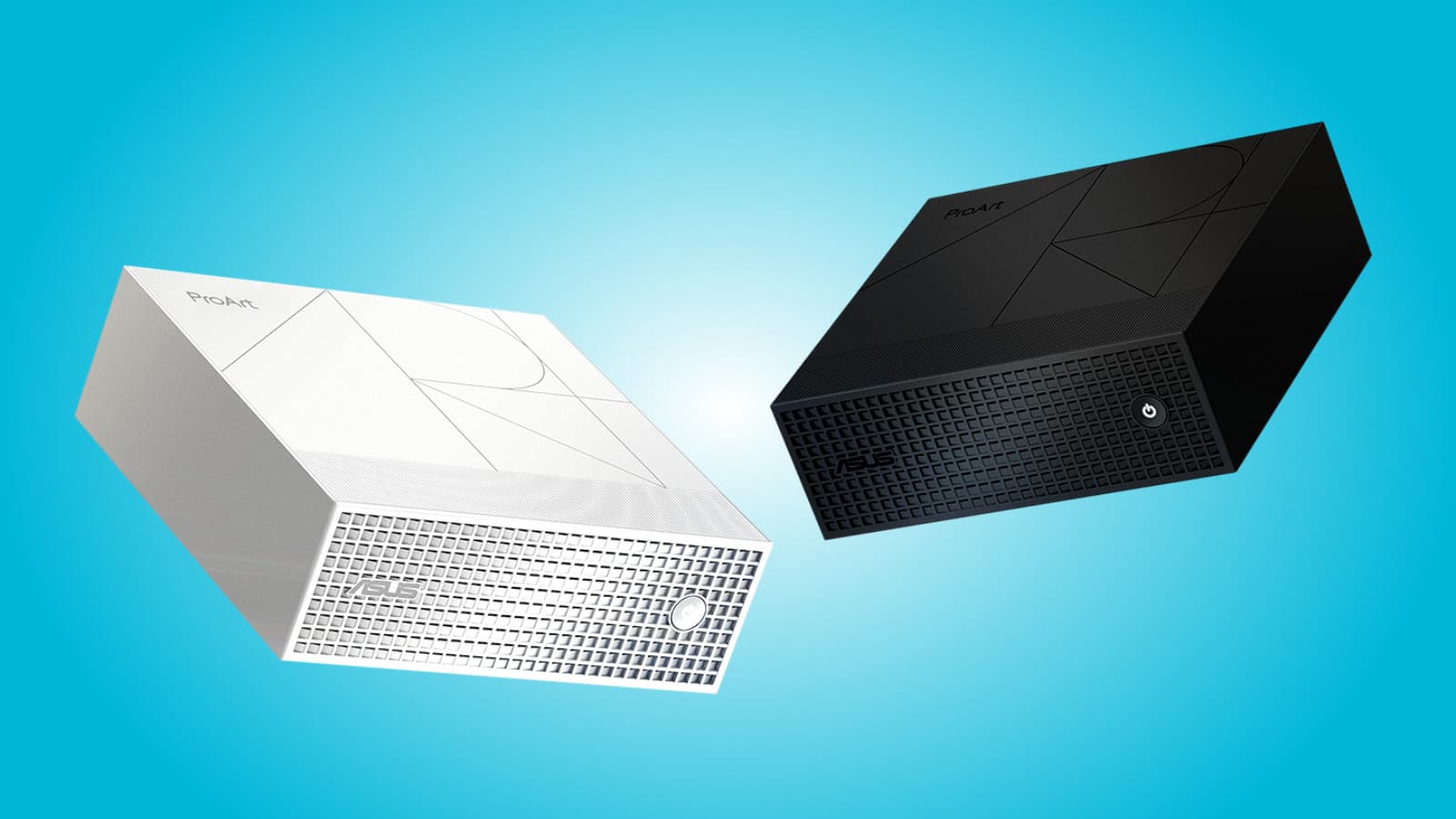
ASUS has locked in the final specifications for the ProArt GR1X, a creator-focused mini PC built on NVIDIA's RTX Spark N1X superchip that squeezes up to 1 petaflop of AI compute into a 1.1-liter box. ASUS had teased the machine without full details until now; the finalized specifications put it on track for release "later this year" through select premium retailers.
What's inside the 1.1-liter box
The official ASUS product page lists the full configuration:
| Spec | ProArt GR1X |
|---|
| Superchip | NVIDIA RTX Spark N1X: 20-core Grace CPU + Blackwell GPU with 6,144 CUDA cores |
| AI performance | Up to 1 petaflop (FP4) |
| Memory | 64GB or 128GB LPDDR5X unified memory |
| Storage | M.2 NVMe PCIe 5.0/4.0 slots |
| Networking | 10G Ethernet, Wi-Fi 7, Bluetooth 5.4 |
| Ports | 4x USB-C (one with 240W PD 3.1 EPR power input, three with DisplayPort), HDMI 2.1 with 8K output |
| Displays | Up to four external displays |
| Cooling | Dual fans, four heat pipes, 140W TDP, rated for 24/7 workloads |
| Size / weight | 150 x 150 x 51 mm (about 1.1L), 1.48kg |
Unusually for a desktop, the GR1X is powered over USB-C through a 240W adapter — the same USB Power Delivery 3.1 EPR standard used by high-wattage laptop chargers.
The cooling system is sized to the chip's 140W thermal envelope: two fans with 109 blades each, 57 ultra-wide heat-dissipation fins, and four heat pipes. That hardware is how ASUS justifies rating the machine for continuous 24/7 operation — a rating that matters for the target buyer, because a render node or a local AI inference box is often left running overnight, something most mini PCs are not designed to survive for long.
Notebookcheck's report adds that the GR1X uses only the top variant of the N1X — the 20-core CPU with the 6,144-core GPU — while a cut-down 18-core version is reportedly reserved for laptops. ASUS also claims the machine can hit 100 FPS in triple-A games at 1440p, though it is positioned as a creator and AI workstation rather than a gaming box.
Where it fits in the RTX Spark lineup
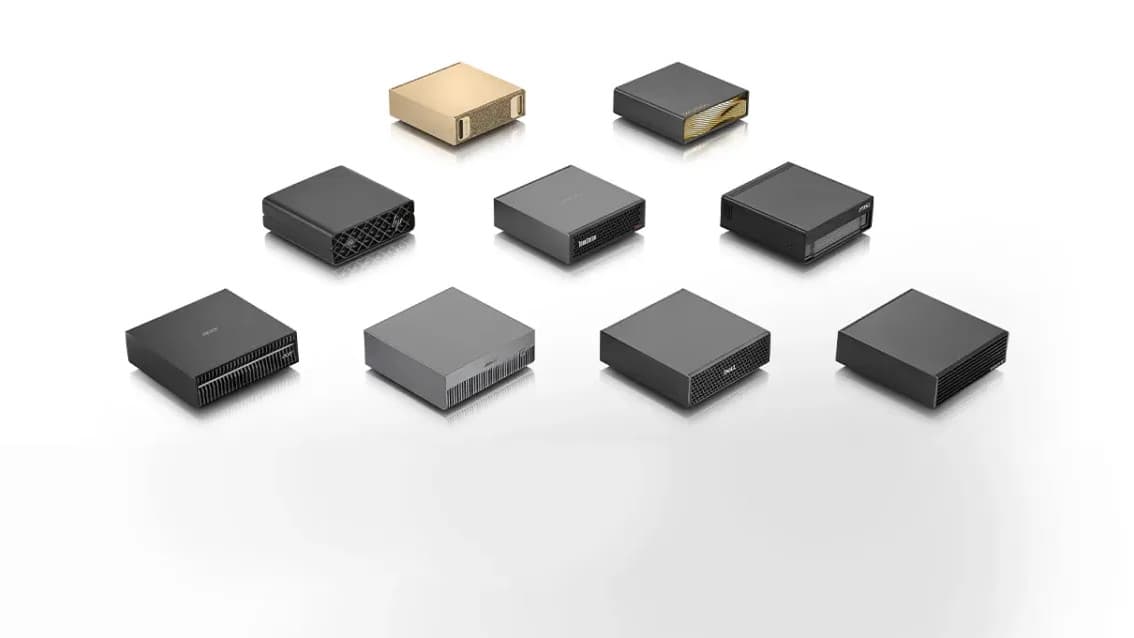
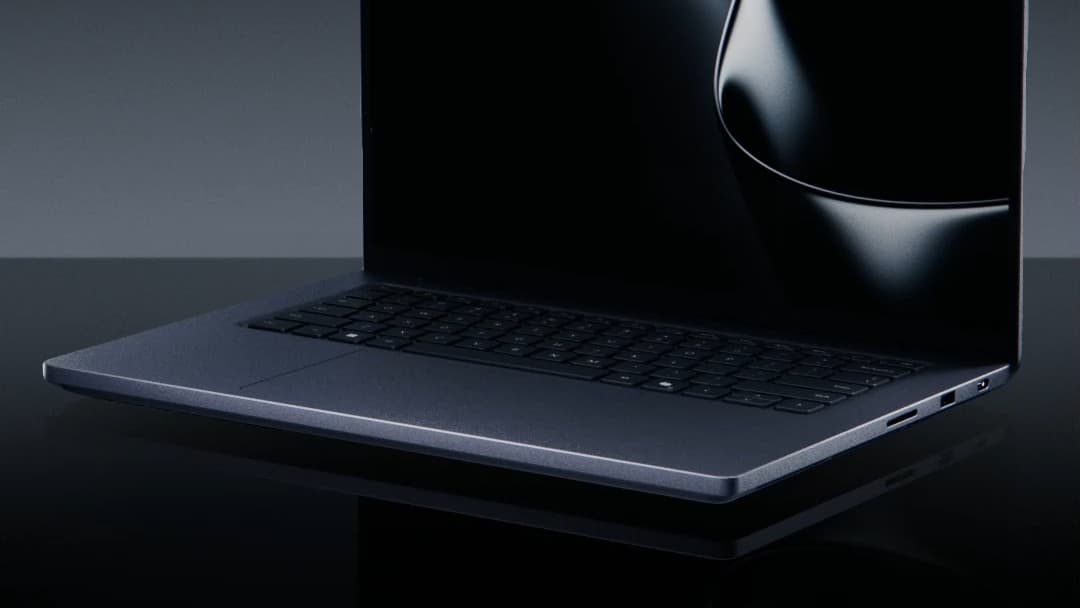
The GR1X joins a quickly growing family of machines built on NVIDIA's small-form-factor AI platform. NVIDIA's own DGX Spark 64GB arrives October 23 at $4,999 (around ₱312,000), sold only through OEM partners, and Microsoft put the same superchip family in its Surface Laptop Ultra. The pitch for all of them is the same: unified memory large enough to run serious AI models locally, without renting cloud GPUs.
Unified memory is the spec that makes that pitch work: the CPU and GPU share one large pool instead of the GPU being limited to its own smaller bank of video memory. A model has to fit in memory to run at usable speed, so the GR1X's 128GB option can hold far larger AI models locally than consumer graphics cards, which typically top out at 16GB to 32GB of video memory.
Against that lineup, the GR1X's differentiators are the 128GB memory ceiling, the 10GbE port, and a chassis ASUS says is built for continuous around-the-clock workloads — the profile of a small studio's render-and-inference box rather than a hobbyist's desk toy.
Price and Philippine availability: not yet
ASUS has not announced pricing, and the product page currently offers only a "Notify Me" sign-up. Availability is stated as "later this year" through select premium retailers, in 64GB and 128GB configurations and a choice of Black or Silver.
No Philippine launch, pricing, or availability has been announced yet. ASUS does sell its ProArt line locally, so a PH listing is plausible once the global release lands — but until ASUS Philippines says otherwise, treat this one as a wait-and-see. Given that the closely related DGX Spark lists at $4,999 (around ₱312,000), the GR1X is unlikely to be an impulse purchase when it does arrive.