The Last Intel Macs Are Left Behind
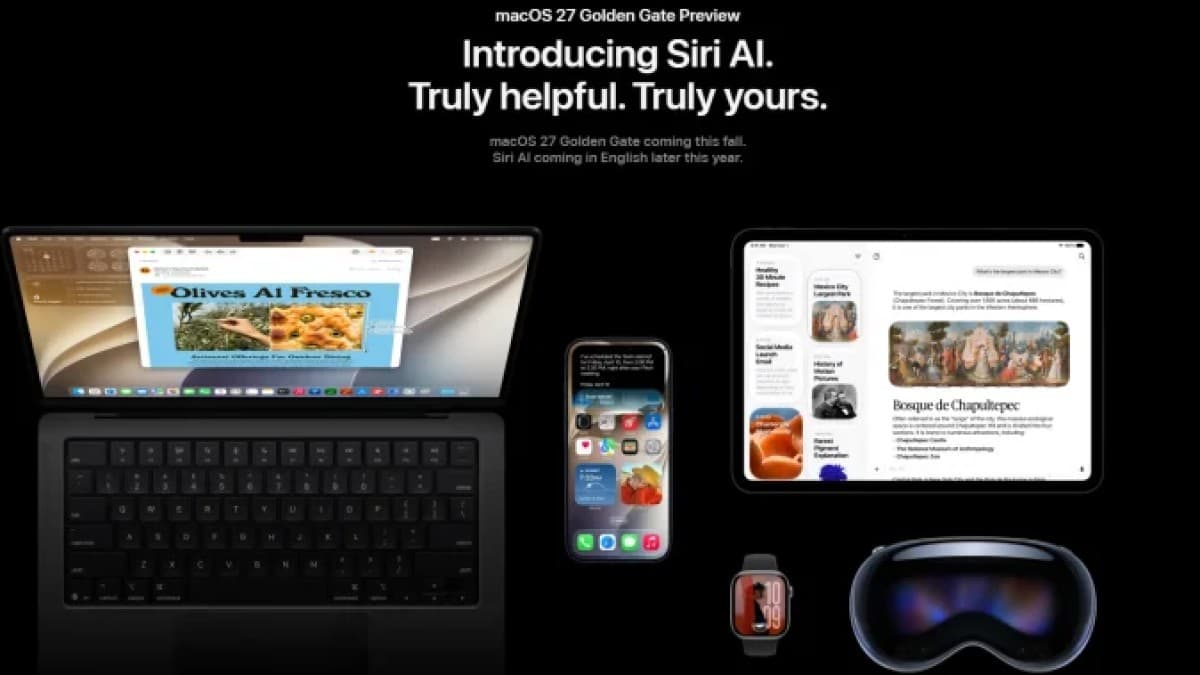
Apple's macOS 27 Golden Gate, announced at WWDC on June 8, 2026, marks a definitive end to Intel Mac support. The new operating system requires an M1 chip or newer, making macOS 27 the first major release to run exclusively on Apple silicon — and the last to still include Rosetta 2 compatibility for Intel-compiled applications.
The move completes a transition Apple began in late 2020 when it introduced the M1 chip across the MacBook Air, MacBook Pro, and Mac mini. The Intel-to-silicon shift was fully finished by mid-2023 with the M2 Mac Pro. With no Intel Mac still in the shipping lineup, Apple now has no business reason to maintain a parallel Intel software path — especially for a release defined by its deep AI integration.
Which Macs Are Cut Off
Four Intel Mac models will be capped at macOS 26 Tahoe as their final major OS release:
- MacBook Pro 16-inch (2019)
- MacBook Pro 13-inch (2020, four Thunderbolt 3 ports)
- iMac 27-inch (2020)
- Mac Pro (2019)
None of these machines can upgrade to Golden Gate regardless of how well-specced they are. Apple confirmed they will continue to receive security updates for three years after their final supported OS release — so owners are not immediately exposed, but major feature updates, new APIs, and everything that ships with Golden Gate will be out of reach.
What Runs on macOS 27
For owners of eligible hardware, macOS 27 Golden Gate supports:
- MacBook Air with Apple silicon (2020 and later)
- MacBook Pro with Apple silicon (2020 and later)
- iMac (2021 and later)
- Mac mini (2020 and later)
- Mac Studio (2022 and later)
- Mac Pro (2023 and later)
The minimum chip requirement is M1. The new MacBook Neo (2026) with the A18 Pro chip sits at the top of the compatible lineup and enables the broadest set of Apple Intelligence features.
What's New in Golden Gate
Beyond the compatibility change, macOS 27 introduces several headline additions:
Liquid Glass design. The overhauled interface aesthetic — shared with iOS — brings translucent, fluid visual elements throughout the OS for a more cohesive cross-platform look.
Upgraded Siri with Spotlight integration. Siri has been significantly rebuilt and is now woven directly into Spotlight search, supporting contextual, multi-step queries from the search bar. Visual Intelligence — the camera-powered understanding feature — also makes the jump to macOS.
Full Apple Intelligence suite. The complete set of AI writing, summarization, and generative image tools arrives on Golden Gate. However, the most advanced on-device features require M3 or newer with at least 12GB of unified memory. M1 and M2 Macs gain the basics but not the full-depth AI capabilities.
35GB storage is required for the installation.
Rosetta 2's Final Chapter
macOS 27 Golden Gate is the last major release with full Rosetta 2 support — the translation layer that lets Intel-compiled applications run on Apple silicon Macs. Starting with Golden Gate, Rosetta 2 no longer installs automatically during OS setup; users who still need it must install it manually. The layer will be removed entirely in macOS 28.
Apple provides a way to audit which apps still depend on Intel code: Settings > General > About > Intel-Based Apps. Any app listed there will stop running after a macOS 28 upgrade unless the developer ships a universal or Apple silicon binary.
What It Means for Intel Mac Owners
For owners of affected machines, the practical window is manageable. macOS 26 Tahoe will remain the final supported release, with security patches continuing for roughly three more years. That provides enough time to plan hardware transitions without facing an abrupt security cliff.
The cutoff is not surprising on a historical basis — Apple typically supports Mac hardware for five to six years, and the 2019–2020 Intel models are now six to seven years old. The larger signal is that Apple's AI strategy has now fully diverged from the Intel era: the features that define Golden Gate — deep Siri integration, Visual Intelligence, and on-device Apple Intelligence — depend on capabilities baked into Apple silicon that Intel chips cannot replicate.
Sources: