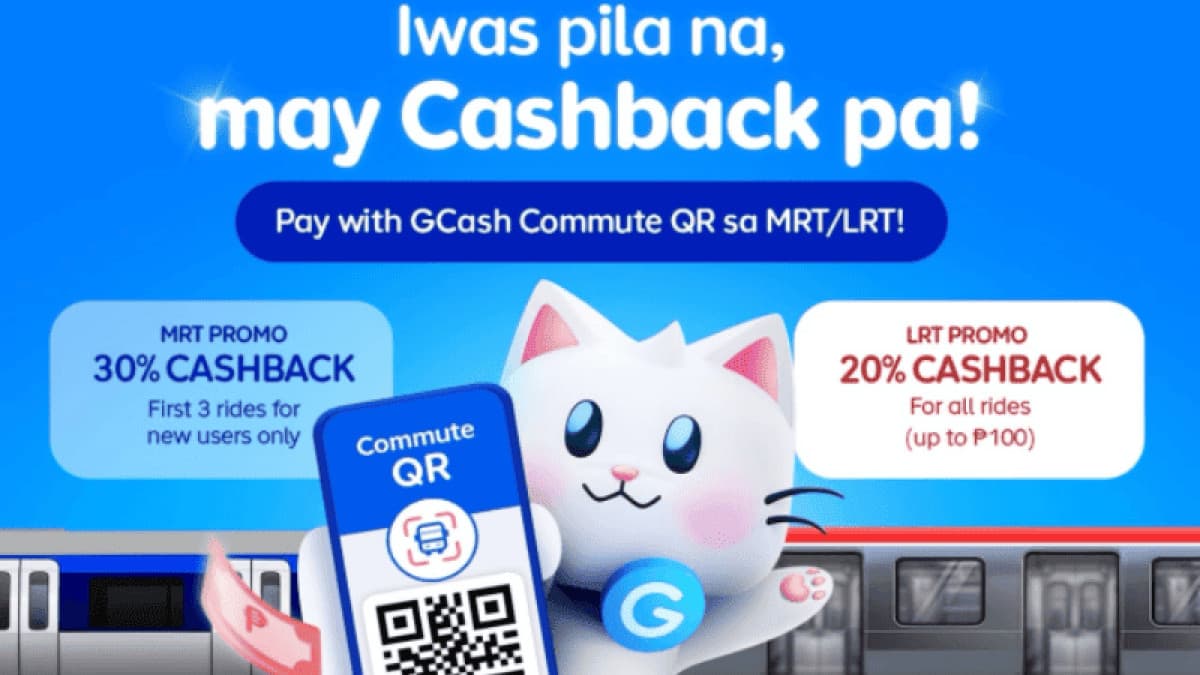
GCash is paying commuters to stop lining up for train tickets. Riders who pay their fare with GCash Commute QR now get 20 percent cashback on the LRT-2 and 30 percent cashback on their first three MRT-3 rides if they are new to the feature, GIZGUIDE reported as the promo went live. The offer runs until August 20, 2026, and the money goes straight back into the user's GCash wallet.
It is a small amount per trip. But on a daily commute it adds up, and it is aimed squarely at the group that has been slowest to move off single-journey tickets.
What you actually get
The two lines are treated differently, so it is worth knowing which one applies to you.
| Line | Cashback | Who qualifies |
|---|
| LRT-2 | 20% of the fare | All commuters paying with GCash Commute QR |
| MRT-3 | 30% of the fare | New and eligible riders, first three trips only |
Two conditions apply. Your GCash account has to be fully verified and active — a basic, unverified wallet will not earn the rebate. And the cashback is not instant: it is credited to your e-wallet on scheduled payout dates rather than the moment you tap out.
Ferdie Perez, GCash vice president and head of innovation, framed the promo around friction rather than discounts. "Innovation is most meaningful when it removes everyday friction and makes essential services more accessible," he said.
How GCash Commute QR works
Commute QR is not a tap-to-pay card and it is not the same as scanning a merchant's QR code. You generate your own QR code inside the GCash app, and the turnstile scans it.
The flow, as Dot Daily Dose documented when the LRT-2 rollout began, is three steps:
- Open the GCash app, tap Commute, and generate your QR code. You can save it for offline use, which matters inside stations where signal is unreliable.
- Scan the code at the entry turnstile.
- Scan the same code at the exit turnstile. The fare is deducted automatically based on the distance you travelled.
For the LRT-2 you need at least ₱16.50 in your wallet before the gate will let you through. On the MRT-3 the mechanic is different — the system charges the maximum fare of ₱28 on entry and refunds the difference when you tap out, so you need that higher balance on hand even for a short ride.
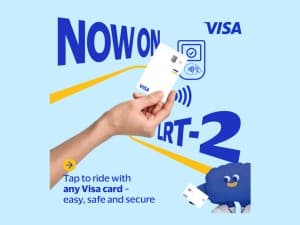
The LRT-2 cashless rollout itself was not a GCash-only project. It was built with the Department of Transportation, the Light Rail Manila Transit Authority, the Bangko Sentral ng Pilipinas, Rizal Commercial Banking Corp., and Visa, covering stations across Manila, San Juan, Quezon City, Marikina, Pasig, and Antipolo. We covered the LRT-2 tap-to-pay launch across all 13 stations when the gates first accepted digital fares.
Why a fare rebate is the interesting part
Cashless fare gates have been technically available on both lines for a while. Adoption is the harder problem, and a rebate is a blunt but effective way to buy a first trial.
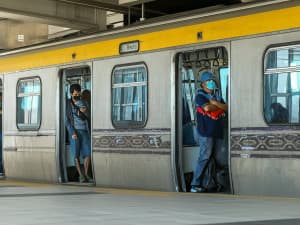
The scale explains the effort. The LRT-2 carried more than 58.7 million passengers last year, according to the figures cited at the cashless launch. Every one of those journeys that moves from a paper-ticket queue to a QR scan removes a person from the line at the counter — which is the actual benefit during rush hour, more than the few pesos back.
There is a catch worth naming plainly. The 30 percent MRT-3 offer caps out after three rides, so it is a trial incentive, not an ongoing discount. Once those three trips are used, you are paying the normal fare. The LRT-2's 20 percent applies for the promo period but ends on August 20. Treat this as a nudge to set the feature up, not as a long-term way to cut your transport budget.
Should you switch?
If you already ride the LRT-2 or MRT-3 regularly and your GCash account is verified, there is little reason not to. The QR works offline once generated, the fare deduction is automatic, and every transaction lands in your GCash history, which makes tracking a monthly commute spend far easier than counting stored-value cards.
The one practical warning: keep a buffer in your wallet. The MRT-3's charge-max-then-refund model means a ₱20 balance is not enough for a ₱15 ride, and a declined tap at a turnstile during rush hour is a worse experience than any cashback is worth.