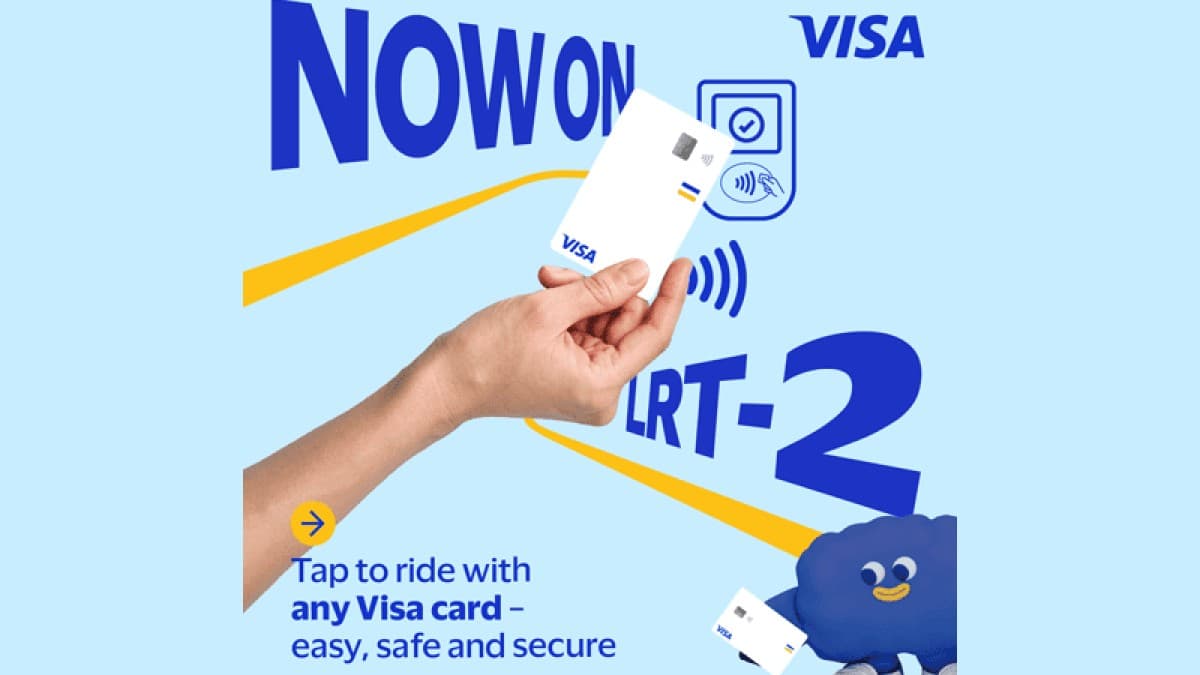
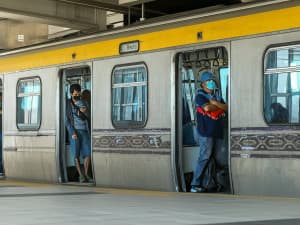
Riding the LRT-2 no longer needs a Beep card. Starting July 13, 2026, LRT-2 tap-to-pay is live at all 13 stations along the line. Commuters can now pay a fare by tapping a Visa or Mastercard bank card, scanning a GCash QR code, or using an NFC (Near Field Communication, the short-range wireless tech behind contactless taps) phone wallet such as Google Pay. The system is run by Rizal Commercial Banking Corporation (RCBC) together with Visa, the Department of Transportation (DOTr), and the Light Rail Transit Authority (LRTA).
This is being called the country's first rail-based automated fare collection system that puts three payment types into one platform: open-loop EMV bank cards (the global chip-card standard), mobile NFC wallets, and QR codes. "Open-loop" means you use a card or wallet you already own from any participating bank, instead of buying a separate ticket that only works on the train.
Key Takeaways
- When: Contactless fares went live on LRT-2 on July 13, 2026, across all 13 stations.
- How to pay: Tap a contactless Visa or Mastercard card, tap an NFC phone wallet like Google Pay, or scan a GCash QR at the gate.
- Promo: RCBC's PISO Fare Cashback Promo runs July 13 to July 31, effectively cutting the fare to ₱1 for qualified RCBC and MySSS DiskarTech cardholders.
- Scale: LRT-2 serves more than 160,000 riders a day, or over 58.7 million passengers a year.
- Who built it: RCBC is the acquiring bank, LANDBANK is the settlement bank, and Visa is the card network partner, with DOTr and LRTA.
What changed on the LRT-2
Before this, LRT-2 riders needed a single-purpose Beep card, which had to be bought and reloaded. Now the gates read everyday payment tools directly. You tap or scan when you enter, then tap or scan again when you exit, and the correct distance-based fare is charged, as detailed in the official launch announcement carried by Manila Bulletin.
The platform is built to be bank-agnostic. That means it accepts cards and wallets from any participating bank, e-money issuer, or fintech provider, not just one brand. For commuters, the main benefit is simple: no more separate transit card to buy, top up, or lose.
LRT-2 first opened in April 2003 and has since been extended eastward toward Rizal. Today it carries more than 160,000 passengers a day, which works out to over 58.7 million riders a year.
How to pay on the LRT-2 now
There are three main ways to tap and ride:
- Contactless bank cards — Tap a Visa or Mastercard debit, credit, or prepaid card that supports contactless payments (look for the wave symbol, branded PayWave on Visa or PayPass on Mastercard).
- NFC phone wallets — Hold an NFC-enabled phone or wearable with a wallet like Google Pay over the reader.
- GCash QR — Open the GCash app and scan the QR code at the gate to pay from your GCash balance.
You use the same method on entry and exit so the system can compute the fare for the distance you travelled. QR payments through GCash tie into the wider push for QR Ph, the national standard that has been taking a growing share of digital payments in the Philippines.
The PISO fare promo: what you actually pay
To get people to try the new gates, RCBC is running a PISO Fare Cashback Promo from July 13 to July 31, 2026. It is open to RCBC debit and credit cardholders and to MySSS RCBC DiskarTech debit cardholders.
Here is how the cashback works in practice: you are charged the normal fare when you tap, then RCBC credits back the difference so your effective fare drops to just ₱1 (one peso). Inquirer reports that for the MySSS card, the remaining balance is refunded within three banking days and the deal covers up to eight qualified rides per day during the promo window. So the ₱1 fare is a rebate, not an upfront price at the gate.
The banks behind the system: RCBC and LANDBANK
Two state-linked and private banks make the money move behind the scenes. RCBC is the acquiring bank, meaning it processes the card taps at the gates. LANDBANK acts as the settlement bank, handling how the collected fares are cleared between parties, BusinessWorld reported.
As of July 15, LANDBANK confirmed that its own cards now work on LRT-2 too. Riders can tap LANDBANK Visa debit, credit, or Mastercard prepaid cards enabled with PayWave or PayPass, and the same works for cards from Overseas Filipino Bank (OFBank), a LANDBANK subsidiary. LANDBANK had earlier enabled its cards on MRT-3.
The project sits under the government's Automated Fare Collection System (AFCS) Proof of Concept, part of the broader Philippine Automated Fare Collection System (PAFCS). The ceremonial launch happened at Legarda Station on July 13, led by Finance Secretary and LANDBANK Chairman Frederick D. Go, DICT Secretary Henry Aguda, DOTr Undersecretary Timothy John R. Batan, and LRTA Administrator Hernando T. Cabrera, alongside RCBC President and CEO Reginaldo Anthony Cariaso and Visa Philippines Country Manager Jeffrey Navarro.
Visa's fifth transit project in the Philippines
According to Visa's Country Manager for the Philippines, Jeffrey Navarro, the LRT-2 rollout is Visa's fifth transit project in the country, following MRT-3 and bus systems in Cebu, Mandaue, and Bacolod. (Some reports counted it as the fourth; the official figure quoted by Visa is the fifth, counting the four earlier deployments plus LRT-2.)
Visa says it now runs more than 870 tap-to-ride projects worldwide, and that about 94 percent of commuters in the region expect a contactless option. The company's research arm, the Visa Economic Empowerment Institute, estimates that open-loop contactless systems can lift public transport ridership by as much as 10 percent, because paying is faster and there are no card-buying queues.
What it means for Metro Manila commuters
For daily riders, the practical win is fewer steps: no buying a Beep card, no reloading, and shorter lines at the gate during rush hour. If you already carry a contactless bank card or use GCash, you can ride LRT-2 today without anything new. The move also lines up the three Metro Manila rail lines — MRT-3, and now LRT-2 — under a similar cashless approach, which points to a future where one card or phone works across the network. RCBC has been expanding its digital-payments footprint on several fronts, including recent fee changes on its Pulz and DiskarTech apps.
One thing to watch: the ₱1 fare is a limited promo that ends July 31, and the cashback is a rebate credited later, not a discount charged at the gate. After the promo, you pay the regular distance-based fare. There is also, as of publication, no announced date for extending the same open-loop system to LRT-1, so for now the tap-to-ride convenience is a Metro Manila rail feature that is still rolling out line by line.
FAQ
Do I still need a Beep card to ride LRT-2?
No. You can now tap a contactless Visa or Mastercard bank card, use an NFC phone wallet like Google Pay, or scan a GCash QR at the gate. The Beep card still works, but it is no longer the only option.
How do I get the ₱1 fare?
Use a qualified RCBC debit or credit card, or a MySSS RCBC DiskarTech debit card, between July 13 and July 31, 2026. You are charged the normal fare, then RCBC credits back the difference so your effective fare is ₱1, for up to eight qualified rides a day.
Which cards and wallets are accepted?
Contactless Visa and Mastercard debit, credit, and prepaid cards (including LANDBANK and OFBank cards), NFC mobile wallets such as Google Pay, and GCash QR are all supported across the 13 LRT-2 stations.