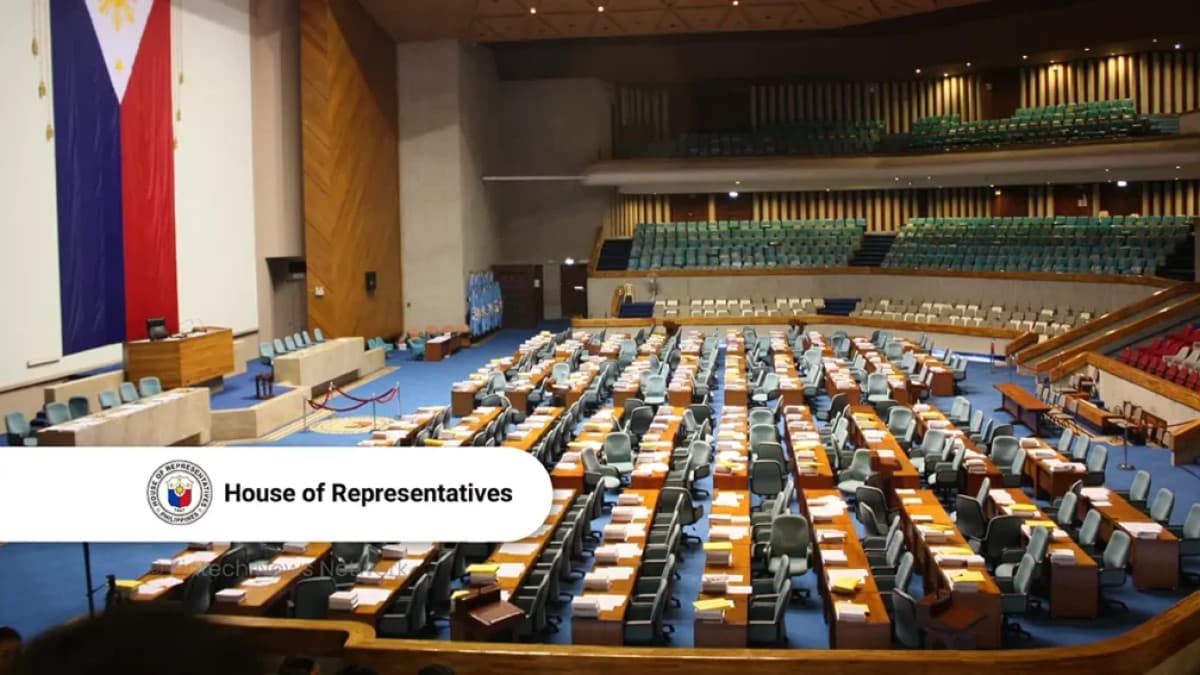
Millions of Filipinos pay bills, send money and buy things digitally every day, and almost none of it counts when they apply for a loan. A bill now in the House of Representatives is meant to change that.
House Bill 9149, the Open Finance and Consumer Data Empowerment Act of 2025, would give consumers the legal right to authorise accredited lenders and financial service providers to access up to 24 months of their financial and transactional data. That includes data outside traditional banking: e-wallet transactions, utility bill payments, subscription records and rewards card activity.
The problem the bill is aimed at
The gap it targets is easy to describe. Digital payments made up 57.4 percent of all retail payment transactions in the Philippines in 2024, and roughly 58 million Filipinos use e-wallets. Yet someone with no bank loan, no credit card and no deposit account still looks invisible to a lender's credit check, no matter how consistently they have paid for electricity, internet or a delivery order over the past two years.
Rep. Jude Acidre of Tingog Party-list, a co-author, put it this way in BusinessMirror's report on the bill: "The digital economy has outpaced our regulatory infrastructure. Filipinos are generating rich financial data every day through their phones, their e-wallets, and their utility payments. We aim to leverage that data to democratize access to financial tools and services that have long been unavailable for millions."
What "open finance" actually means here
Open finance is the idea that your financial data belongs to you, and that you can direct the institutions holding it to hand a copy to someone else. It is a permission system, not a data free-for-all — nothing moves unless the consumer authorises it.
Two parts of the bill matter most in practice:
- A consumer right to authorise sharing. You can tell an accredited lender to pull up to two years of your transaction history.
- A duty on data holders to comply. Banks, e-wallets and other institutions would be required to release that data when the consumer asks.
The second part is the one that changes behaviour. Todd Schweitzer, a board trustee at Fintech Alliance Philippines, described the missing piece as exactly that obligation: "Filipinos are digital natives and have rich data sources beyond banking data to demonstrate their creditworthiness. What's been missing is the legal right to put that data to work, and the mandate for data-holding institutions to provide that data upon the consumer's request."
A new regulator: the Consumer Data Commission
The bill would create a Consumer Data Commission under the Office of the President. Per Fintech News Philippines, it would be chaired by a Securities and Exchange Commission commissioner and co-chaired by a Bangko Sentral ng Pilipinas deputy governor, with representatives from the National Privacy Commission, the National Telecommunications Commission and the Philippine Competition Commission.
Its mandate would cover:
- Setting the technical and security standards for how data is transferred
- Accrediting the entities allowed to receive consumer data
- Running compliance audits and imposing sanctions on violators
- Reporting to Congress annually on consumer data rights and open finance
- Conducting a full review of the law every two years
That accreditation power is the consumer-protection backbone. Handing two years of transaction history to a lender is only safe if there is a body deciding who qualifies to receive it and what happens when someone mishandles it.
Why this matters for everyday borrowers
The practical effect, if the bill passes, is that a sari-sari store owner who has run a Maya or GCash account cleanly for two years could use that record as evidence when applying for working capital. Right now that history sits in an app and stops there.
It also fits a broader shift already underway. QR Ph has grown quickly enough that it overtook cards and e-wallets to reach 55 percent of PayMongo's payment volume, and the BSP has been steadily expanding the rails, most recently by launching Direct Debit PH and raising the InstaPay business limit to ₱500,000. Payment infrastructure has moved faster than the credit-scoring rules built on top of it.
Where it stands
HB 9149 is a proposed measure, not a law. It still has to clear committee, pass the House, find a Senate counterpart and be signed before any of this reaches consumers. Treat the 24-month window, the accreditation rules and the commission's structure as the current draft — all of them can change in committee.