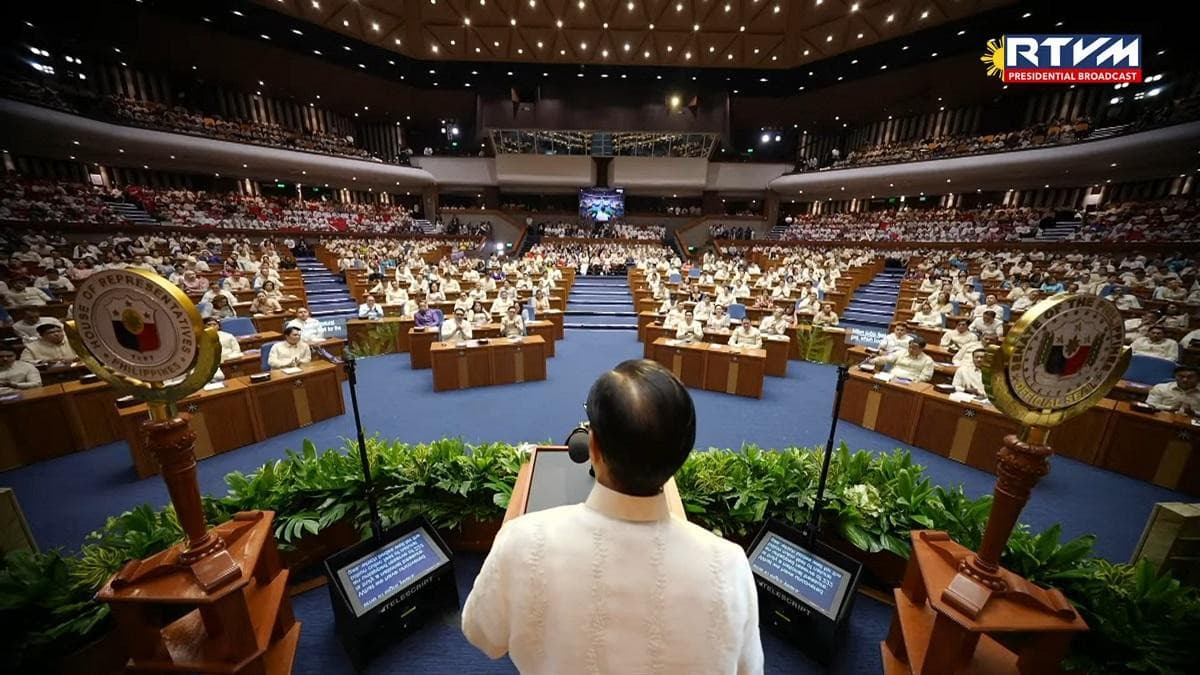
President Ferdinand Marcos Jr. asked Congress on July 27 to amend the Electric Power Industry Reform Act (EPIRA) so that electricity distributors can no longer pass system loss charges — or the value-added tax (VAT) computed on top of them — to consumers. In the same 2026 State of the Nation Address, he pushed for a proposed Sariling Kuryente Act meant to make rooftop solar panels and home battery storage cheaper and faster to install.
Both are asks, not laws. Neither changes anything on your next electricity bill. But together they are the clearest signal yet of where the administration wants household power costs to go.
What a system loss charge actually is
System loss is the electricity that never reaches your meter. Part of it is technical — energy lost as heat inside wires and transformers on the way from the plant to your house. The rest is non-technical: illegal connections, "jumpers", and meter tampering.
Under EPIRA, which took effect in 2001 and privatised much of the power sector, distribution utilities are allowed to recover a capped share of those losses from paying customers as a separate line on the monthly bill. Marcos's objection is that the people paying are not the people causing the loss.
"Panahon na para tanggalin na natin ang systems loss na pinapasa sa consumer" — it is time to remove the system loss being passed on to the consumer — he said in the address. He then put it as a demand rather than a request: "Therefore, we the people request, no we demand, for the immediate amendment of the EPIRA," he told legislators.
The tax on top of the loss
There is a second layer that the President specifically named: VAT. Because the system loss charge is treated as part of the billed amount, VAT is computed on it as well. The practical result is that a household pays tax on electricity it never received.
A narrower fix is already filed. Senator Risa Hontiveros lodged Senate Bill No. 2076 in May 2026 seeking to exempt system loss charges from VAT — removing the tax while leaving the underlying charge in place. What Marcos asked for goes further: prohibit the charge itself, and the VAT with it.
Sariling Kuryente Act: the rooftop solar half
The second measure is aimed at households that want to stop buying so much grid power in the first place. The proposed Sariling Kuryente Act — roughly, "your own electricity" — is meant to simplify and reduce the cost of installing solar panels and battery energy storage systems in homes.
The friction it targets is paperwork rather than hardware. Net metering, the arrangement that lets a home export surplus solar output back to the grid in exchange for a bill credit, currently runs through permitting requirements and utility approval timelines that the bill proposes to shorten. Cheaper batteries matter here too: without storage, a rooftop array stops helping the moment the sun goes down or the grid does.
The rest of the energy agenda
The energy section of the address went wider than bills. Marcos renewed his call to revive the Philippine nuclear energy program, and said the administration is tracking roughly 200 energy projects representing close to 10,000 megawatts of additional capacity by 2028, with 45 of them already completed.
What this could mean for your monthly bill
Nothing yet — and how much it would eventually save is not something the address answered. The size of any reduction depends on each distribution utility's own system loss rate, which varies, and the President did not put a peso figure on the relief.
The Department of Energy has backed the direction, but with a caveat worth noting: Energy Secretary Sharon Garin said the decision carries broader economic implications and needs input from Congress and the government's economic managers. In other words, removing a cost from consumer bills does not make the cost disappear — it moves the question of who absorbs it.
What happens next
Both items now sit with Congress, which decides whether an EPIRA amendment and the Sariling Kuryente Act move as priority measures. Hontiveros's VAT-exemption bill gives the Senate a narrower version already in the pipeline if the broader amendment stalls.