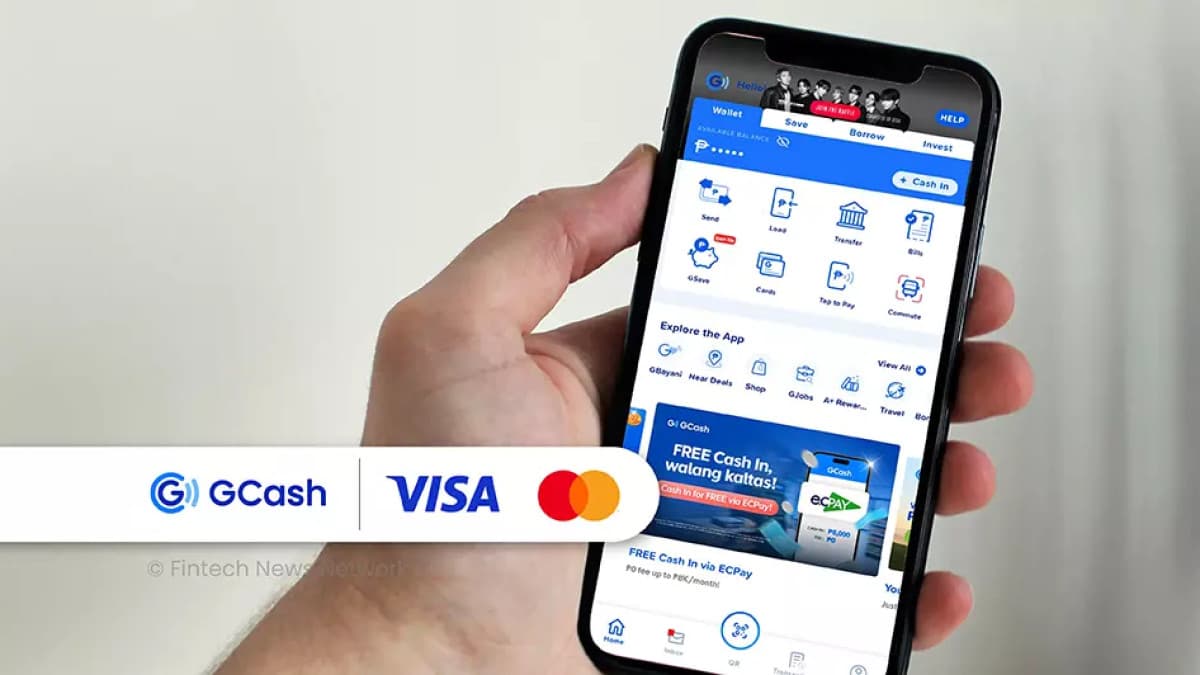
GCash is about to remove the most annoying step in a QR payment: the top-up. Under a new feature called link-and-pay, announced with Visa on August 3, 2026, you will be able to attach an eligible Visa credit or debit card to your GCash account and charge a QR payment directly to that card, even when your wallet balance is empty.
Right now, a Filipino paying by GCash QR with a short balance has to stop, cash in from a linked bank account or transfer money in from another bank, then scan again. Link-and-pay removes that detour. Business Inquirer reported that the card becomes a direct funding source at checkout, wherever GCash QR is already accepted.
How GCash link-and-pay works
The flow is short. You open the Cash In section on the GCash dashboard, choose the card-linking option, enter the card details, and confirm. At a merchant, you scan the QR as usual and pick Card instead of your wallet balance as the payment method.
You will not be limited to one card. Fintech News Philippines reported that users can link up to three Visa or Mastercard debit or credit cards, set one as the default, and manage or unlink them inside the app. Linking a card is confirmed with a one-time password; paying with it is not.
One thing to keep straight: this is not the physical GCash Visa card many people already carry. That card spends your wallet balance. This new feature points the other way, letting a bank-issued card fund the wallet's QR payments.
Visa Payment Passkey replaces the SMS OTP
Every card-funded transaction is verified with Visa Payment Passkey, a biometric check built on Fast Identity Online (FIDO) standards, the industry rules for logging in without a password. Instead of waiting for an SMS one-time password, you approve the payment with a fingerprint, face scan, or your phone PIN.
Visa says biometric authentication can cut fraud rates by up to 50 percent compared with SMS-based one-time passwords. That claim matters locally, because the SMS OTP is exactly the weak point that Philippine phishing and SIM-swap scams have been built around for years. A passkey never travels through the mobile network, so there is nothing for a scammer to intercept or trick out of you.
Why this is landing now
Timing is not a coincidence. Digital transactions now make up 57.4 percent of monthly retail payments in the country, based on Bangko Sentral ng Pilipinas data cited alongside the announcement, and QR is carrying a growing share of that. We have seen the same shift at the processor level, where QR Ph overtook cards and e-wallets at 55 percent of PayMongo's payment volume.
The competitive backdrop is sharper still. Apple Pay started accepting Philippine-issued cards in the same week, which puts card-based tap-to-pay directly against wallet-based QR for the first time. Card networks have also been moving into transport, where contactless Visa and Mastercard fares went live across LRT-2's 13 stations. Link-and-pay lets Visa ride the QR rails rather than fight them, and lets GCash keep the checkout even when the money is sitting in a bank.
What the executives said
Visa Philippines Country Manager Jeffrey Navarro framed it as a flexibility play, saying consumers "increasingly expect flexibility in how they pay, and are looking for payment experiences that are simple, secure and seamless." Ren-Ren Reyes, President and CEO of G-Xchange, Inc., the operator of GCash, said the feature is meant to give Filipinos more freedom in managing payments without changing how the app feels to use.
What is still unknown
Three gaps are worth flagging before you plan around this.
- No confirmed launch date. The companies said the feature is coming soon; one report points to a rollout within August, but neither company has committed publicly to a day.
- No fee disclosure. Nothing has been said about whether a card-funded QR payment carries a fee, is treated as a purchase, or is treated as a cash advance by your card issuer. That distinction decides whether this is cheap or expensive for you.
- Merchant coverage. It is described as working wherever GCash QR is accepted, but small merchants on older QR setups may behave differently.
Until GCash publishes the terms, the safest read is that this is a convenience upgrade, not a cheaper way to pay. Check how your issuer classifies the transaction on your first statement.