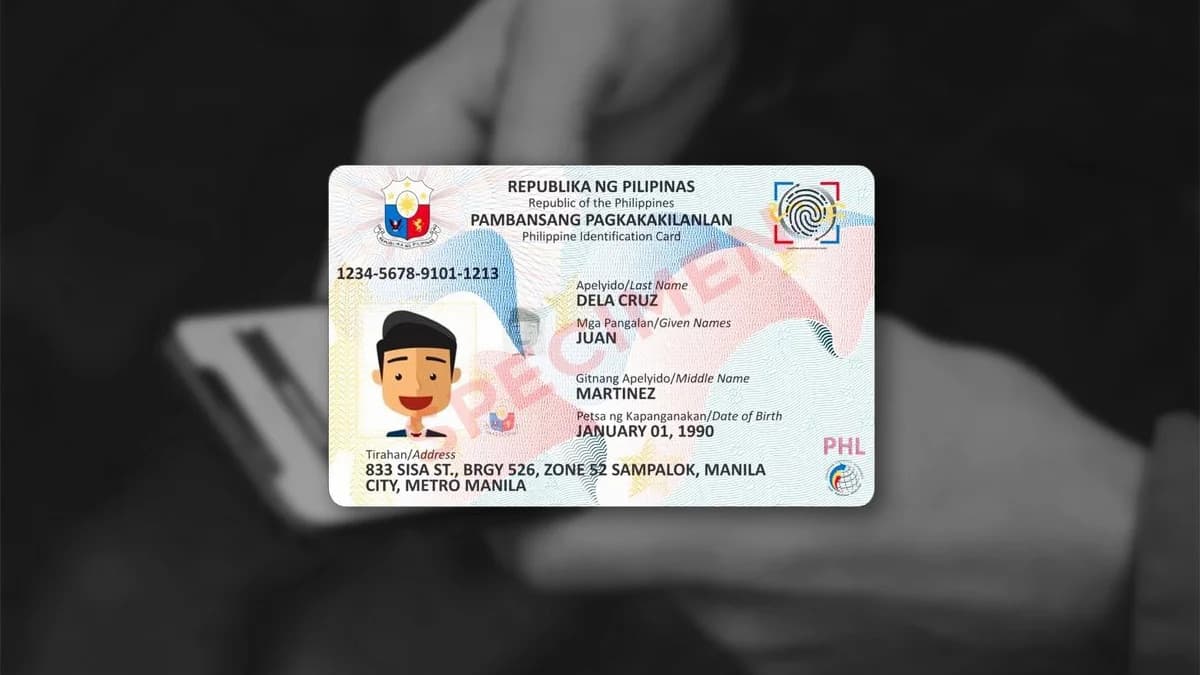
The Bangko Sentral ng Pilipinas (BSP) wants your National ID to become the default way banks and e-wallets confirm who you are. Under a draft circular released for public comment in the first week of August, BSP-supervised institutions — including universal and commercial banks, digital banks, e-money issuers such as GCash and Maya, and licensed crypto platforms — would be required to connect to the Philippine Statistics Authority's (PSA) National ID Authentication Services, or NIDAS, for KYC (know-your-customer) checks, the identity verification financial institutions must perform before opening an account.
"NIDAS enables BSIs to leverage the National ID for more accurate, secure, and efficient customer identification and verification, strengthening know-your-customer processes," the central bank said in the draft, as published in coverage of the proposal.
Who must comply, and when?
The draft sets two compliance waves, counted from the date the rule is issued:
- Three months — universal and commercial banks with retail operations, digital banks, e-money issuers (the category that covers GCash and Maya), and licensed virtual asset service providers (crypto exchanges and wallet operators).
- Six months — other banks, including thrift, rural, and cooperative banks, plus payment system operators.
Institutions will need to submit complete applications and the required documentation to the PSA to get connected.
How the National ID checks would work
NIDAS verifies identity using biometrics and demographic data — face scans, fingerprints, and ID numbers. The draft defines two levels of checking:
- Tier 1 (basic authentication) — an automated back-end token match that returns a simple yes-or-no confirmation that the person is who they claim to be.
- Tier 2 (electronic KYC) — a secure exchange of pre-agreed demographic data between the institution and the PSA for deeper customer due diligence.
A successful biometric and demographic match would satisfy KYC requirements for opening a new account. In practice, that means no more photographing your physical ID card or uploading scans just to open a bank or e-wallet account.
What it means for your GCash and bank accounts
For most Filipinos, the changes would show up as faster sign-ups and fewer document uploads. The BSP also expects standardized identity checks to cut down on fraud — a persistent problem for local e-wallets — and to widen access to financial services for people whose only government ID is the National ID. The proposal builds on the government's broader push to put the PhilID to work, from free train rides for National ID holders to payments plumbing like Direct Debit PH.
Importantly, the draft does not lock out people without a National ID. Institutions may still accept other valid IDs and use alternative verification methods, including when NIDAS itself is unavailable.
What the BSP says it wants to achieve
In the draft, the central bank frames the mandate around six stated objectives:
- make identity verification safer and cut fraud;
- speed up customer onboarding;
- reduce reliance on physical identification documents;
- expand access to the financial system for more Filipinos;
- support the government's wider digitalization push; and
- strengthen consumer protection through standardized identity checks.
The verification levels are explicitly risk-based, so a low-risk transaction can rely on a quick yes-or-no match while higher-risk onboarding triggers the fuller demographic check. That mirrors how the regulator has been tuning other consumer rules lately, such as its cost-based approach to transfer fees under Circular 1238.
What happens next
The circular is still a draft, and the BSP is collecting comments from the industry before finalizing it. The compliance clock — three months for the biggest retail players, six for the rest — only starts once the final rule is issued. If it takes effect in its current form, the National ID would shift from being one accepted ID among many to the backbone of identity checks across the Philippine financial system.