Samsung has introduced Flex Titanium, a new foldable display technology that the company says makes its next-generation Galaxy foldables more durable and their screen creases far less visible. Samsung announced Flex Titanium on July 15, 2026, days before its next Galaxy Unpacked event, and confirmed the technology will debut inside the foldables it reveals on July 22.
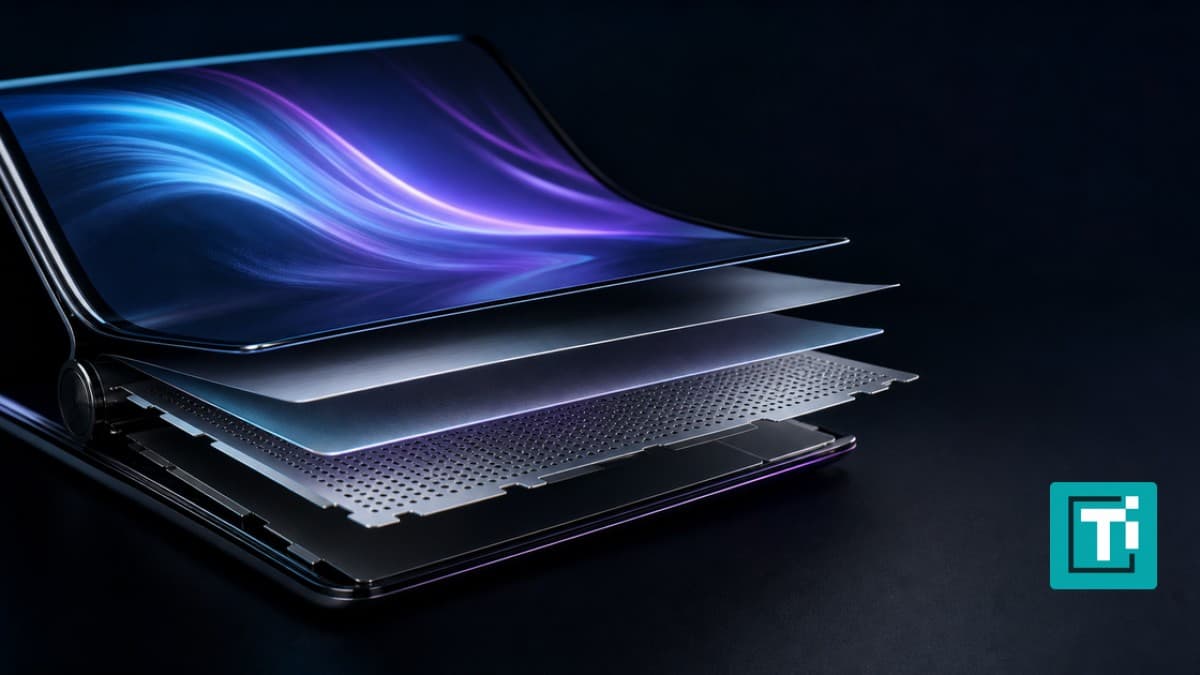
Flex Titanium is a redesign of the layers that sit under a foldable screen. Instead of the polymer (plastic) support film used in earlier designs, Samsung now uses two titanium-based parts working together: a thin titanium-alloy film and a titanium plate.
Key Takeaways
- Flex Titanium is Samsung's new foldable display structure, built from a titanium-alloy film and a titanium plate.
- The titanium-alloy film is about one-third the thickness of a human hair but 20 times stiffer than the older polymer film.
- Micro-patterned holes in the titanium plate keep the screen flexible while reducing the visible crease.
- The technology debuts on Samsung's next-generation Galaxy foldables at Galaxy Unpacked on July 22 in London.
How Flex Titanium works
Samsung built Flex Titanium around one hard problem. A foldable screen needs a support layer that is strong enough to survive knocks, flexible enough to fold thousands of times, and thin enough to keep the phone slim. Most metals are strong but too stiff to fold. Samsung's answer was to engineer titanium into two separate parts.
The titanium-alloy film
The titanium-alloy film sits directly below the OLED panel (the layer that actually lights up the screen). Samsung says it delivers 20 times greater mechanical stiffness than the polymer film used before, which means it resists bending and pressure much better. A precision rolling process makes the film extremely thin, roughly one-third the thickness of an average human hair, so it adds strength without making the phone thicker, Samsung said in its announcement.
Samsung noted that titanium is trusted in demanding jobs such as satellite antennas and the wheels of a Mars rover, a way of underlining how tough the material is.
The titanium plate
Under the film sits a titanium plate. This is the flexible base that supports the whole display module. Samsung added tiny micro-patterned holes to the folding section of the plate, which is what lets a stiff metal bend without cracking. The plate also uses what Samsung calls advanced hole processing to bond more tightly with the display and remove air gaps between the layers.
"By introducing sophisticated micro-patterned holes to the folding section of the titanium plate, we have successfully secured flexibility with robust durability," said Kyung-Jin Yoo, EVP and Head of Mobile Display Product Development Team at Samsung Display.
The result, Samsung says, is a screen that stays better supported when open, folds reliably over time, and shows a fainter crease down the middle.
A sharper screen that uses less power
Flex Titanium is not only about the support layers. Samsung also paired it with a high-resolution display architecture and what it calls next-generation organic materials. Together these are meant to deliver a sharper, more vivid image while cutting power use, which should help battery life on the next foldables.
"Samsung's strength in the foldable category comes from connecting user needs with technologies that deliver tangible benefits in everyday life," said Sunghoon Moon, EVP and Senior Executive at Samsung's Mobile R&D Office. He said the company is building on years of expertise to bring display innovations into devices "anchored by exceptional viewing."
Why titanium, and why now
Samsung says Flex Titanium is built on seven generations of foldable phones. Across those years, the most common complaints from buyers have been the visible crease, worries about long-term durability, and thickness. This new structure targets all three at once: the stiffer film and plate improve support and toughness, while the slim titanium layers help keep the folded phone from getting bulkier.
It is worth being clear about what Samsung has and has not shown. The company has shared the engineering approach and its own figures, such as the 20x stiffness claim, but it has not yet published independent drop-test or fold-cycle results. Those real-world durability numbers usually arrive only once reviewers get hands-on units after launch.
The timing is deliberate. Samsung revealed the tech just before Galaxy Unpacked on July 22, where it is expected to show the phones that use it. Early hands-on coverage already points to a wider, more tablet-like Galaxy Z Fold 8 as the headline foldable of the show.
What it means for foldable buyers in the Philippines
Samsung actively sells its Galaxy Z foldables in the Philippines, so Flex Titanium matters for local buyers weighing their next upgrade. The current Galaxy Z Fold7 carries an official Philippine price of ₱112,990 for 256GB, ₱120,990 for 512GB, and ₱141,990 for 1TB, according to Samsung Philippines.
The next-generation foldables with Flex Titanium have no official Philippine price or release date yet. Samsung will confirm those only after the July 22 launch. For Filipino users who fold and unfold their phones dozens of times a day, a stiffer, longer-lasting screen stack is exactly the kind of upgrade that reduces the risk of a costly repair, but until local pricing and availability are announced, the honest picture is that they are still to be confirmed.
When you can see it: Galaxy Unpacked on July 22
Samsung will reveal the first Flex Titanium foldables at Galaxy Unpacked in London on July 22, 2026. The event streams live on Samsung.com, Samsung Newsroom, and Samsung's YouTube channel starting at 9 a.m. EDT, which is around 9 p.m. Philippine time. Leaks point to three foldables at the show, a wider Galaxy Z Fold 8, a premium Fold 8 Ultra, and the Galaxy Z Flip 8, SamMobile reports, which would be the first time Samsung launches three foldables at once.
FAQ
Which phones will use Flex Titanium?
Samsung says it debuts on its next-generation Galaxy foldables. These are widely expected to be the Galaxy Z Fold 8, Fold 8 Ultra, and Z Flip 8 shown at Unpacked on July 22.
Does Flex Titanium remove the crease completely?
No. Samsung says it reduces how visible the crease is, not that it disappears. The claim is a fainter crease plus better durability, not a perfectly flat screen.
How much will the new foldables cost in the Philippines?
No official Philippine price has been announced yet. For reference, the current Galaxy Z Fold7 starts at ₱112,990. Samsung usually confirms local pricing after the global launch.