Skip to content

Beelink EQi 304 Is the First Mini PC With Intel's Wildcat Lake Chip on the 18A Process

Beelink's EQi 304 is the first mini PC with Intel's Wildcat Lake Core 3 chip on the 18A process, starting at $509 (around ₱31,300) with a 24 TOPS NPU.

C
Clurky
Clurky
3 min read
Beelink EQi 304 mini PC, a small square desktop computer
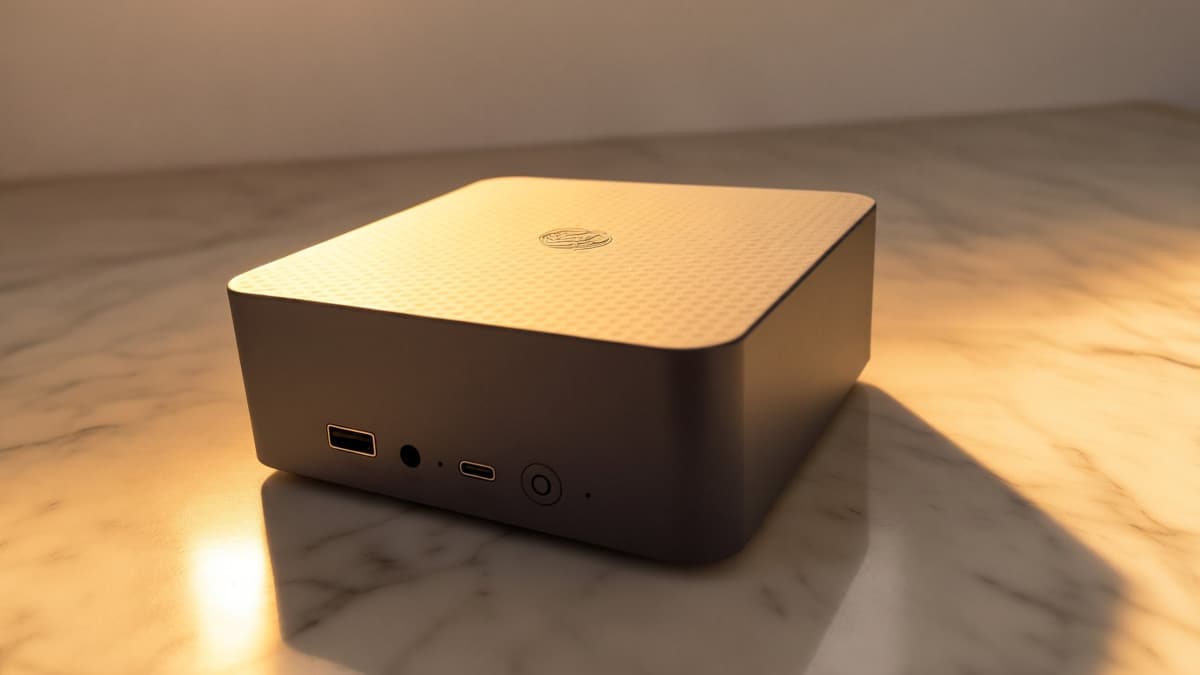
The Beelink EQi 304, the first mini PC to use Intel Wildcat Lake, in its compact square chassis.

The Beelink EQi 304 is the first mini PC to ship with Intel's new Wildcat Lake chip, making it an early look at Intel's low-power silicon built on the company's 18A manufacturing process. The compact, Mac Mini-style desktop uses the Intel Core 3 304 processor and starts at $509 (around ₱31,300). Despite its small size, it packs fast Thunderbolt 4 ports, 10-gigabit networking, and an AI-capable processor.

Key Takeaways

  • The Beelink EQi 304 is the first mini PC with Intel's Wildcat Lake chip, the Core 3 304, built on the Intel 18A process.
  • The processor has five cores, a 4.3GHz turbo, an Xe3-LPG GPU, and a 24 TOPS NPU for on-device AI, all at a low 15W.
  • It offers up to 32GB of DDR5 RAM and 512GB of UFS 3.1 storage, with two M.2 slots for up to 4TB more each.
  • Connectivity includes two Thunderbolt 4 ports, 10GbE and 2.5GbE LAN, Wi-Fi 6, and HDMI for up to three 4K displays.
  • Pricing starts at $509 (around ₱31,300) and runs to $739 (around ₱45,400), with Windows 11 Pro and a three-year warranty.

What is Intel Wildcat Lake

Wildcat Lake is Intel's newest family of low-power processors, and the EQi 304 is the first mini PC to use it. The chip inside is the Intel Core 3 304, notable because it is made on the Intel 18A process — Intel's most advanced manufacturing node. A "process node" describes how Intel builds the chip; a newer node usually means better efficiency and battery-friendly performance.

The Core 3 304 uses a 1+4 core layout (one performance core plus four efficient cores), giving five cores and five threads, with a top turbo speed of 4.3GHz. It includes an Xe3-LPG integrated GPU (the graphics section) and a dedicated NPU — a Neural Processing Unit, the part that handles AI tasks — rated at 24 TOPS (trillions of operations per second). All of this runs at a low 15W, which keeps the mini PC cool and quiet.

Specs and configurations

Beelink sells the EQi 304 in three memory options. The base model uses soldered LPDDR5 memory, while the higher tiers use replaceable DDR5 SO-DIMM sticks:

ModelMemoryPrice (USD)Approx. Peso
EQi 304 (base)16GB LPDDR5-5600$509around ₱31,300
EQi 30424GB DDR5$659around ₱40,500
EQi 30432GB DDR5$739around ₱45,400

All models come with 512GB of UFS 3.1 storage. UFS 3.1 is the fast flash storage usually found in phones — quicker than older eMMC, though not as fast as a modern NVMe SSD. For expansion, there are two M.2 2280 slots that each support up to 4TB drives.

Ports, size, and design

For such a small box, the port selection is generous. It has two USB-C Thunderbolt 4 ports (40Gbps, with DisplayPort output), an HDMI port, and support for up to three 4K displays at 60Hz. Networking is a highlight: it includes both 10-gigabit (10GbE) and 2.5-gigabit (2.5GbE) wired LAN, plus Wi-Fi 6 and Bluetooth 5.2.

The chassis measures just 126 x 126 x 44.2mm and weighs 500 grams, with a square, Mac Mini-like look. It ships with Windows 11 Pro and a three-year warranty.

Why It Matters

The EQi 304 matters less for its raw power and more for what it represents: the first shipping device on Intel's 18A process, a node Intel is counting on to stay competitive. Seeing 18A reach a real, buyable product — with an AI NPU and 10-gigabit networking in a palm-sized box — is a meaningful milestone. For buyers, it points to a class of tiny, efficient desktops that can handle office work, media, and light AI tasks while sipping power. Intel's pricing moves have been in the news lately; see our report on Intel raising Core Ultra 200S Plus prices. Beelink has not confirmed Philippine availability, so the peso figures above are conversions from the US price, not a local SRP.

Sources:

Explore topics related to this article

C
Clurky

Clurky

@clurky

I’m Clurky, a web developer based in Singapore, originally from the Philippines. I track the latest industry shifts, software releases, and hardware trends, cutting through the marketing noise to analyze how these advancements truly impact the user. Drawing on my background in professional web development, I provide a technical, perspective-driven look at the news and emerging technology that shapes our digital world.

44 posts

Comments

Join the conversation

Sign in to leave a comment and reply to others.

Sign in
Loading comments...