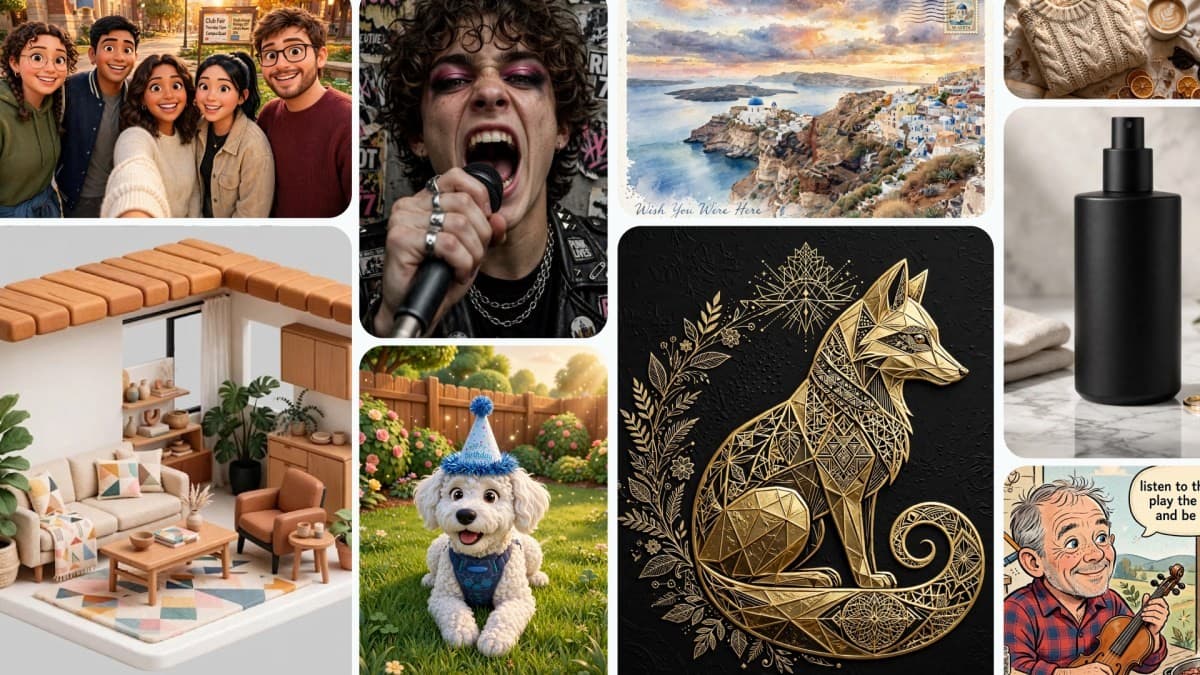
Meta has removed the Muse Image feature that let anyone create AI-generated pictures from public Instagram photos, pulling it about three days after launch following a wave of privacy complaints. The feature let a user @-mention any public Instagram account inside an AI prompt, and Meta AI would then use that account's photos as reference material for a brand-new image. Every adult with a public profile was switched on by default. In an update to its own announcement, Meta said the feature is "no longer available" after it "missed the mark."
Key Takeaways
- Meta pulled the Instagram photo-referencing part of Muse Image on July 10, roughly three days after it went live on July 7.
- The feature let users @-mention any public Instagram account so Meta AI could remix that account's photos into new AI images.
- All adult users with public accounts were opted in by default and had to switch the setting off themselves.
- Talent agency CAA and the actors' union SAG-AFTRA pushed back, asking for a consent-first approach instead of opt-out.
- The wider Muse Image generator stays live on Instagram and WhatsApp, including in the Philippines.
What Meta actually removed
Muse Image is Meta's first image generation model from Meta Superintelligence Labs (the company's AI research group), and it launched on July 7 as part of Meta AI. It is a text-to-image tool: you type a description and it makes a picture. It currently runs inside Instagram and WhatsApp, with a rollout to Facebook, Messenger, and advertisers through Meta Advantage+ creative still to come. The launch also added more than 30 new AI-powered effects for Instagram Stories.
The part that Meta took away is narrower than the whole tool. On top of plain text prompts, users could add photos from a public Instagram account as a visual reference by @-mentioning that account in a prompt. Meta AI would then "remix" those photos into a new AI output. TechCrunch reported that only this account-referencing feature was switched off; the rest of Muse Image keeps working.
Why users and Hollywood pushed back
The complaint was not that the tool existed, but how consent worked. When Muse Image arrived on July 7, Meta automatically opted in every adult with a public Instagram account. There was no prompt asking permission and no notice when someone else used your photos. To stay out, you had to find and turn off a setting yourself.
That opt-out-by-default design drew fast criticism from the creative industry. PetaPixel reported that the actors' union SAG-AFTRA urged members to disable the setting and pressed Meta for a consent-first model rather than opt-out. Talent agency CAA raised its concerns with Meta directly.
Consumer and digital-rights groups were blunter. Speaking to a Manila audience, Rappler quoted J.B. Branch of the nonprofit Public Citizen, who said Meta had chosen "the creepiest possible path," arguing that "people should not wake up to discover their face has become raw material for someone else's AI experiment." The same report cited Donald Campbell of the tech-justice group Foxglove, who called the opt-out requirement "an obvious recipe for disaster" given the recent rise in non-consensual AI-altered images.
What Meta said
Meta's statement was short. "Our intent was to provide a useful creative tool and to give people control over whether their public content could be referenced in this way," the company said. "We've heard the feedback that this feature missed the mark, so it's no longer available." Meta has not said whether it will bring the feature back with different controls.
Is Muse Image available in the Philippines, and how do you opt out?
Yes. Muse Image is live in the Philippines through Meta AI on Instagram and WhatsApp, so Filipino users with public accounts were part of the same default opt-in before the account-referencing feature was pulled. The broader generator and the Instagram Stories effects still work here.
Even with the @-mention feature gone, the underlying "allow AI to use my content" setting is still there, and it also covers other reuse. To switch it off on the Instagram app, open your profile, tap the menu (the three lines at the top right), find "Sharing and Reuse," then toggle off "Allow people to use your content on Instagram and with AI features on Meta." Rappler notes it is also worth turning off the setting that lets others reuse your original audio, to lower the risk of voice-based deepfakes.
Why It Matters
This is the second time in recent memory that Meta has walked back an AI feature only after public pressure, and it lands directly on Filipino users because Muse Image shipped here at launch. Instagram is one of the most-used platforms in the Philippines, and many small businesses, creators, and everyday users run public accounts, so an opt-out default meant their photos were in scope by design, not by choice. The reversal is a reminder to check your privacy settings after any big Meta update, since the safest option is often switched on for you rather than left for you to enable. It also fits a wider pattern of platforms rolling out AI features first and asking for consent later, which is exactly what regulators and creator groups say should change. For readers who want more background, see our earlier coverage of Meta's new AI age detection and content filters and the Meta AI chatbot flaw that exposed Instagram accounts.
FAQ
Is Muse Image gone completely?
No. Meta only removed the feature that let users generate images from a public Instagram account by @-mentioning it. The Muse Image text-to-image generator and the new Instagram Stories effects remain available.
Is Muse Image available in the Philippines?
Yes. It launched on July 7 as part of Meta AI inside Instagram and WhatsApp, and is accessible to users in the Philippines, with Facebook, Messenger, and advertiser tools listed as coming soon.
How do I stop Meta from using my photos for AI?
On the Instagram app, go to your profile, open the menu, tap "Sharing and Reuse," and turn off "Allow people to use your content on Instagram and with AI features on Meta." Consider also disabling the original-audio reuse option.