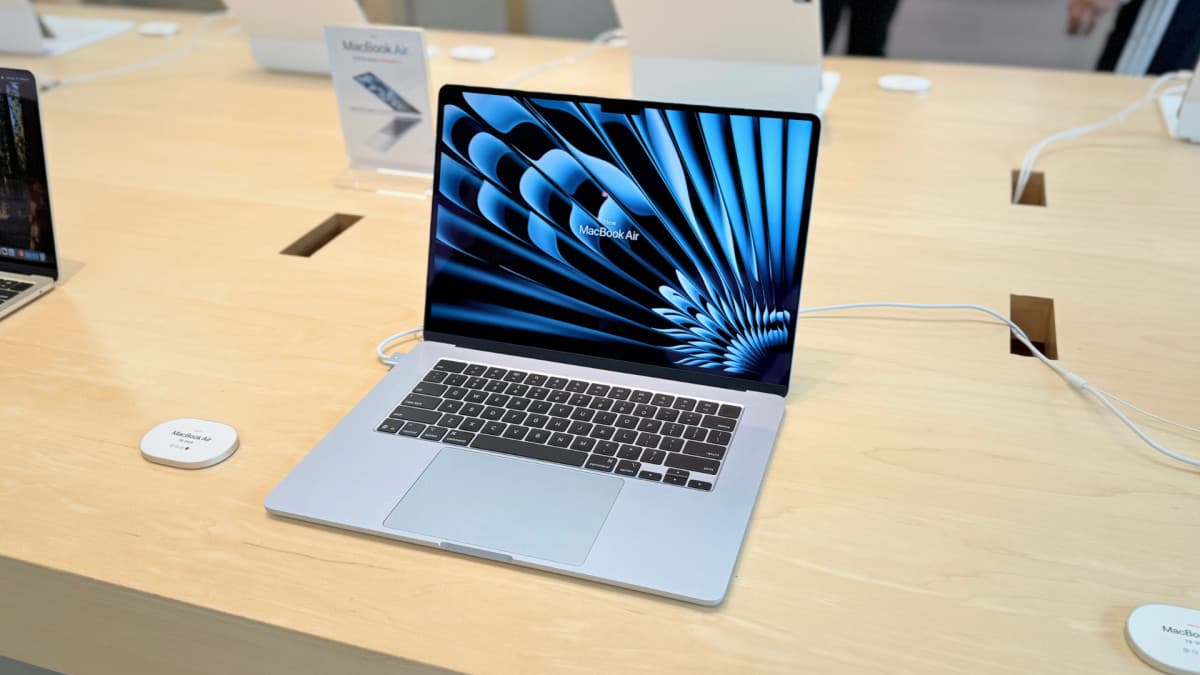
Apple's best-selling laptop is hard to get. MacBook Air availability has tightened sharply across Apple's retail network, with several configurations showing delivery dates in late August and some custom-built models not arriving until September. The cause is the global memory shortage — the same squeeze on RAM and storage chips that has been pushing gadget prices up all year, including here in the Philippines.
What is actually happening in stores
Bloomberg's Mark Gurman reported the shortage, and retail staff told him the lack of stock is unlike anything they can recall for the MacBook Air. 9to5Mac's write-up puts it plainly: order one now and you likely will not get it until the very end of the month.
Apple has responded in ways that are visible from the outside. Digital Trends reports that the company delayed its back-to-school promotion, that some promotional pages now mark the Air as "subject to availability," and that stores are steering shoppers toward the entry-level 14-inch MacBook Pro instead. That last part is not purely accidental — Apple is also clearing current MacBook Pro stock ahead of an M6 refresh later this year.
The price picture, with one discrepancy worth naming
The US price has moved twice this year, and the two reports do not fully agree on the starting point. Digital Trends says the 13-inch M5 MacBook Air launched at $1,099 (around ₱67,300) in March and rose to $1,299 (around ₱79,600) in June. 9to5Mac gives the earlier figure as $999 (around ₱61,300) before the increase to $1,299. Both agree on where it landed and why: a price rise of $200 to $300 in a single quarter, driven by component costs, on a laptop Apple normally leaves alone.
In the Philippines, the M5 MacBook Air was priced at ₱72,990 for the 13-inch and ₱85,990 for the 15-inch at launch, with 512GB of storage and 16GB of unified memory standard on both. Education pricing was ₱65,990 and ₱78,990. Apple has since raised local Mac and iPad prices, which we covered when MacBook prices went up across the Philippine line-up.
Why memory chips are the bottleneck
The short version: AI data centres are buying the memory. Building AI systems consumes enormous quantities of high-end DRAM (the fast working memory in every computer) and the high-bandwidth memory stacked next to AI accelerators. Chipmakers have shifted capacity toward those higher-margin orders, and consumer-grade memory and storage have become both scarcer and more expensive as a result.
This is not a short blip. Digital Trends notes Samsung expects RAM shortages to get worse through 2027 and 2028 as AI capacity keeps expanding. Gurman reports Apple is working the problem from two sides — raising prices, and sourcing memory from Chinese suppliers.
The pattern has been visible in our own coverage for months: DDR2 memory prices surged 60% as the squeeze cascaded down to older chip types, and Qualcomm confirmed a Snapdragon price increase starting September 1. Apple being caught by the same shortage is notable mainly because Apple usually is not — its long-term supply contracts normally insulate it.
What this means if you are buying a laptop in the Philippines
Three practical points, based on what has been reported rather than on guesswork.
First, the shortage reported so far is about Apple's US retail network. No Philippine-specific stock shortage or delivery delay has been announced by Apple or local resellers, so treat the September dates as a US data point, not a local promise.
Second, the price direction is already local. Philippine phone prices have moved for exactly this reason — POCO raised its Philippine prices by up to ₱12,000 citing the RAM shortage — and Apple's Mac and iPad prices here have already gone up once. If you are choosing between buying now and waiting, the memory market gives you no reason to expect a better price later this year.
Third, watch the configuration, not just the model. Because the squeeze is on memory and storage specifically, the models that get scarce and expensive first are the ones with larger RAM and SSD options. A base configuration in stock may be a better buy than a made-to-order one that spends weeks in a queue.
What to watch next
The M6 MacBook Pro refresh Apple is reportedly clearing stock for lands later this year, and it will be the first real test of whether Apple can hold pricing through the shortage. Whether the MacBook Air gets a matching update — and at what price — is the number Filipino buyers should be watching.