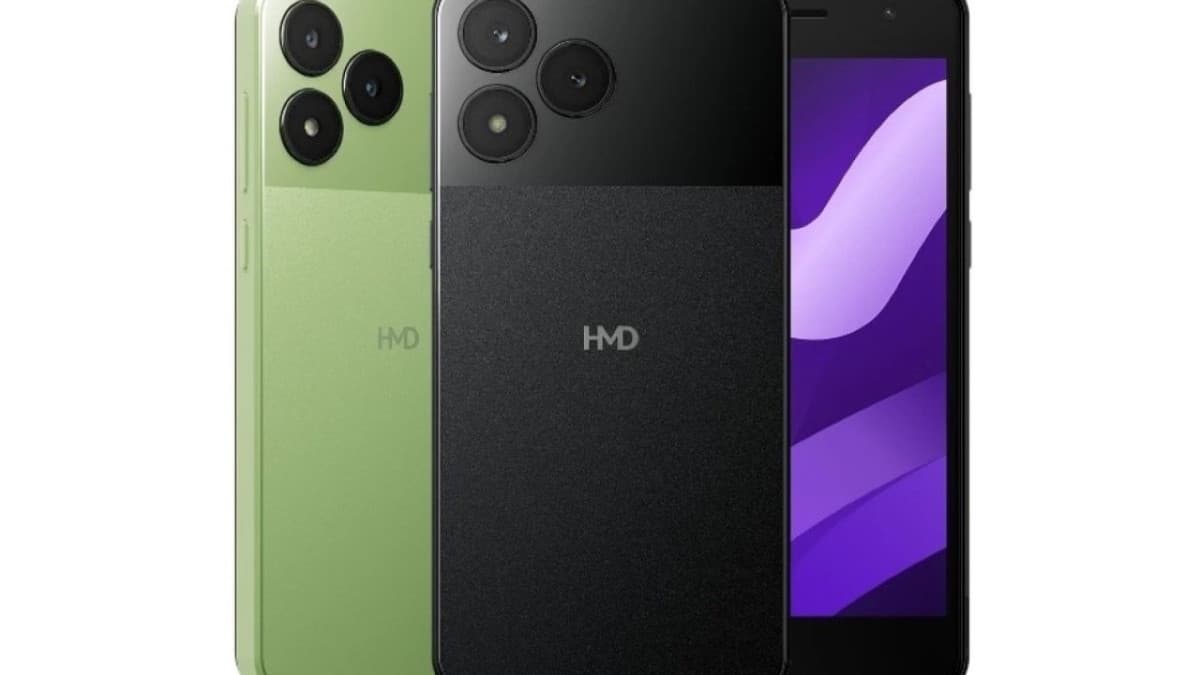
HMD has brought back the Asha name, and the first market to get it is the Philippines. The HMD Asha 305 sells for ₱3,990 and does two things almost no current phone does: it runs a deliberately cut-down version of Android, and its battery pops out.
Asha was Nokia's budget line early last decade, aimed at buyers moving up from basic handsets. The 305 revives that idea for a market where a working phone at under ₱4,000 still matters.
What a "lite smartphone" means here
HMD is not calling this a full smartphone. It calls it a lite smartphone, and the software is why. The Asha 305 runs Pulse OS, which GSMArena describes as a build based on AOSP — the Android Open Source Project, the free version of Android without Google's own services layered on top.
Instead of the Play Store, the phone ships with access to more than 100 selected apps, including Facebook Lite, Instagram Lite, WhatsApp, TikTok Lite and YouTube. These are the trimmed-down versions built for slower connections and smaller memory, which is the right call on 2GB of RAM.
The trade-off is real and worth stating plainly: you are not installing arbitrary apps from the Play Store on this device. If you need a specific banking app, a government app or a niche tool, check that it exists in the curated list before buying.
Specifications
| Component | HMD Asha 305 |
|---|
| Display | 5-inch LCD, 480 x 854 |
| Chipset | Unisoc T137 |
| Memory | 2GB RAM, 16GB storage |
| Rear camera | 2MP with LED flash |
| Front camera | 2MP |
| Battery | 2,500mAh, removable |
| Standby | Up to 32 hours claimed |
| Connectivity | Dual 4G SIM, Wi-Fi, GPS, Bluetooth 4.2 |
| Ports | USB Type-C, 3.5mm headphone jack |
| Software | Pulse OS (AOSP-based) |
| Price | ₱3,990 |
The box includes the removable battery, a USB Type-C cable and a charger. Two colour options are offered.
The removable battery is the actual news
Almost every phone sold today seals the battery inside the chassis. Replacing one means a service centre visit, a wait, and a cost that on a cheap phone can approach the price of a new unit. The Asha 305 lets the owner swap it out.
For a ₱3,990 phone, that changes the maths. A phone at this price is often bought as a second line, a work handset, or a first phone for a student or an older relative — situations where a dead battery two years in usually means the whole device is thrown away. A ₱3,990 phone with a battery you can replace has a realistic path to a longer service life.
It also helps in practice for anyone away from reliable power. A spare charged battery in a bag is the simplest possible power solution, and it does not need a cable.
Who this is honestly for
Be clear-eyed about the rest of the sheet. A 5-inch 480 x 854 display is low-resolution by any current standard, and 2MP cameras front and back are for scanning a QR code or a quick record shot, not photography. The Unisoc T137 with 2GB of RAM will handle messaging, calls, maps and light social apps, and will struggle beyond that.
So this is not a competitor to entry-level Android phones like the Acer Sospiro A15 and others in the ₱5,000 and up bracket. It sits below them, in the space between a basic feature phone and a real smartphone — for a buyer who mainly needs calls, messaging, a few apps and long battery life, and who values the ability to swap a battery over a better camera.
At ₱3,990, it is competing less with other Android phones than with the used market and with feature phones. Against those, dual 4G SIM support, USB-C charging and a curated set of working apps is a reasonable package.
Availability
The Asha 305 is available at HMD's official stores in the Philippines. HMD has indicated the phone could reach additional markets in the coming weeks, but the Philippines is where it launched first.