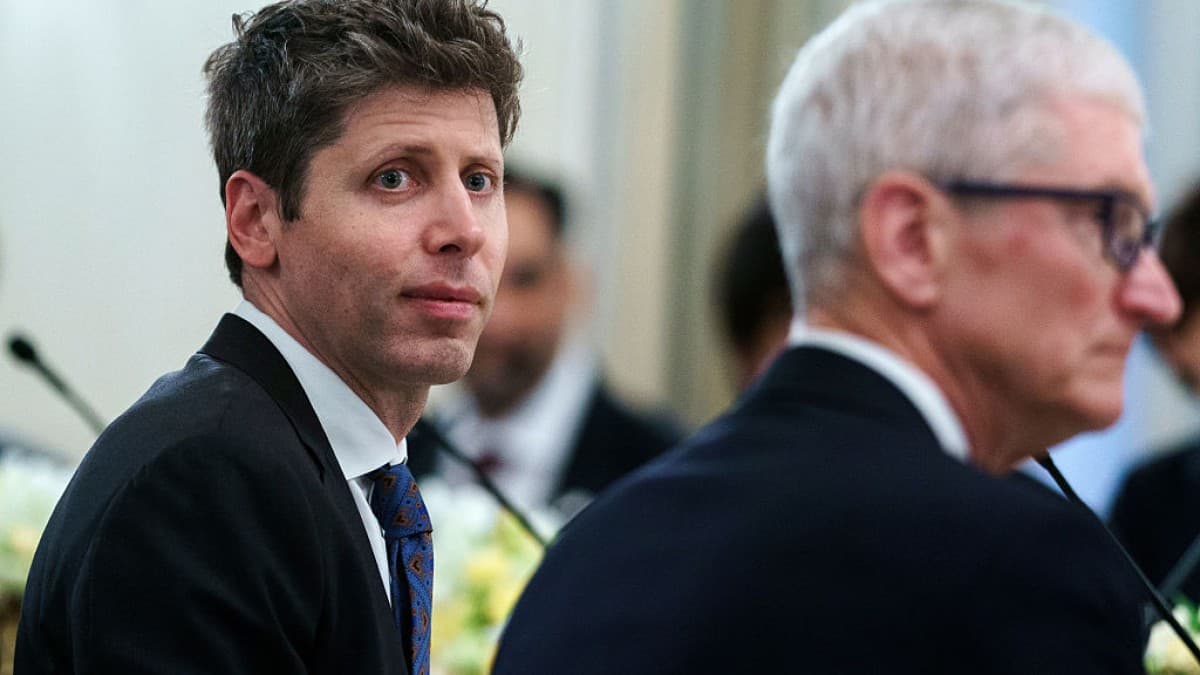
Apple has sued OpenAI over alleged trade secret theft, accusing the ChatGPT maker of running a coordinated scheme to steal iPhone hardware secrets and use them to build competing artificial intelligence (AI) gadgets. The complaint, filed Friday, July 10, 2026, in the U.S. District Court for the Northern District of California, also names io Products, the hardware design startup co-founded by former Apple design chief Jony Ive that OpenAI bought last year.
Apple says the theft happened "at every level," from junior engineers up to OpenAI's chief hardware officer. It is a sharp turn for two companies that were partners just two years ago, when Apple built ChatGPT into the iPhone's software.
Key Takeaways
- Apple sued OpenAI and io Products on July 10, 2026 in a California federal court, alleging trade secret theft and breach of contract.
- Two former Apple staff are named: Tang Tan, now OpenAI's chief hardware officer, and Chang Liu, a former Apple electrical engineer.
- Apple claims one engineer downloaded more than 1,000 pages of confidential documents and kept an Apple-issued laptop after leaving.
- OpenAI paid about $6.5 billion (around ₱400 billion) for io, the startup co-founded by ex-Apple designer Jony Ive; Ive is not named in the suit.
- Apple is seeking a court order to stop OpenAI using the material, plus damages.
What Apple is alleging
At the center of the case are two people who left Apple for OpenAI. Tang Tan spent more than two decades at Apple, where he was a vice president leading product design for the iPhone and Apple Watch before departing in early 2024. He is now OpenAI's chief hardware officer. Apple accuses Tan of using confidential Apple project code names during job interviews to draw out insider information, and of directing Apple employees who were interviewing at OpenAI to bring "actual parts" — real hardware components, CAD files, and prototypes — to "show and tell" sessions.
The second person, Chang Liu, worked at Apple for eight years as a senior systems electrical engineer before joining OpenAI in early 2026. Apple says Liu exploited a security gap to download more than 1,000 pages of confidential engineering documents after resigning, and failed to return his Apple-issued laptop.
Apple also alleges that OpenAI coached departing Apple employees on how to get around the company's security checks when they left, and that the effort was aimed at unreleased products, technical specifications, and details about Apple's suppliers and contractors. The company notes that more than 400 former Apple employees now work at OpenAI.
Apple says it first raised the alarm privately, sending OpenAI a letter in February 2026 that went unanswered before it decided to go to court.
Why the two former partners are now fighting
The lawsuit is striking because Apple and OpenAI were high-profile partners. In 2024, Apple integrated ChatGPT into the iPhone's operating system as part of Apple Intelligence, letting Siri hand off certain questions to OpenAI's chatbot with the user's permission.
Relations cooled when OpenAI moved into hardware. In 2025, OpenAI acquired io Products — the design firm started by Jony Ive, the designer behind the look of the iPhone, iPod, and MacBook — in a deal reported at about $6.5 billion (around ₱400 billion). That purchase put OpenAI on a path to build its own consumer devices, putting it in direct competition with the iPhone. Reports cited in the case point to OpenAI working on a screenless, pocket-sized AI device, a possible smartphone as far out as 2028, and a home smart speaker.
Jony Ive himself is not named as a defendant, even though his former firm io Products is.
What each side is saying
Apple framed the suit as a defense of its people's work. "We will always defend our teams' hard work and innovations, and we are taking all appropriate steps to do so," the company said in a statement carried by TechCrunch.
OpenAI pushed back. "We have no interest in other companies' trade secrets," the company said. "We remain focused on building innovative technology that empowers people everywhere."
Apple is asking the court to bar OpenAI and io from using or sharing the alleged trade secrets, to order the return of confidential materials, to preserve evidence, and to pay damages. The case is at an early stage, and the allegations have not been tested in court.
Why It Matters for Filipino users
For now, this is a legal fight between two US companies, and there is no announced change to services Filipinos already use. ChatGPT is built into Apple Intelligence, which is available in English on compatible iPhone, iPad, and Mac models in the Philippines running iOS 26.1 or later, so day-to-day Siri-to-ChatGPT handoffs are not affected by the filing. OpenAI's reach here goes beyond Apple, too — it recently partnered with Viber to add ChatGPT tools for Philippine users.
The longer-term angle is competition. If OpenAI ships its own AI hardware, Filipino buyers could eventually get a new class of device to weigh against the iPhone — but that is years away, no Philippine pricing or launch has been announced, and the lawsuit could shape whether and how those products arrive. OpenAI's hardware ambitions also sit alongside its wider product push, including plans to merge ChatGPT, Codex, and Atlas into one platform.
What happens next
Expect a drawn-out case. Trade secret suits between large technology firms often take years and hinge on what internal documents and communications reveal. OpenAI has not yet filed its formal response. Until then, the practical takeaway for readers is simple: nothing changes today in the apps and phones you already own, but two of the biggest names in technology are now openly at odds over who owns the ideas behind the next generation of AI devices.