Government Doubles Down on AI and Chips
The Philippine government is moving with renewed urgency to turn the country into a global center for artificial intelligence and semiconductor manufacturing. Executive Secretary Ralph Recto announced a new investment incentive package after visiting Texas Instruments' local facility, citing specific directives from President Ferdinand Marcos Jr. to prioritize attracting major technology investments into the AI and chips sectors.
The timing reflects both an opportunity and a geopolitical moment: global supply chains are actively restructuring away from concentrated semiconductor dependencies, and the Philippines sees a narrow window to capture a share of that realignment.
Pax Silica: The Centerpiece
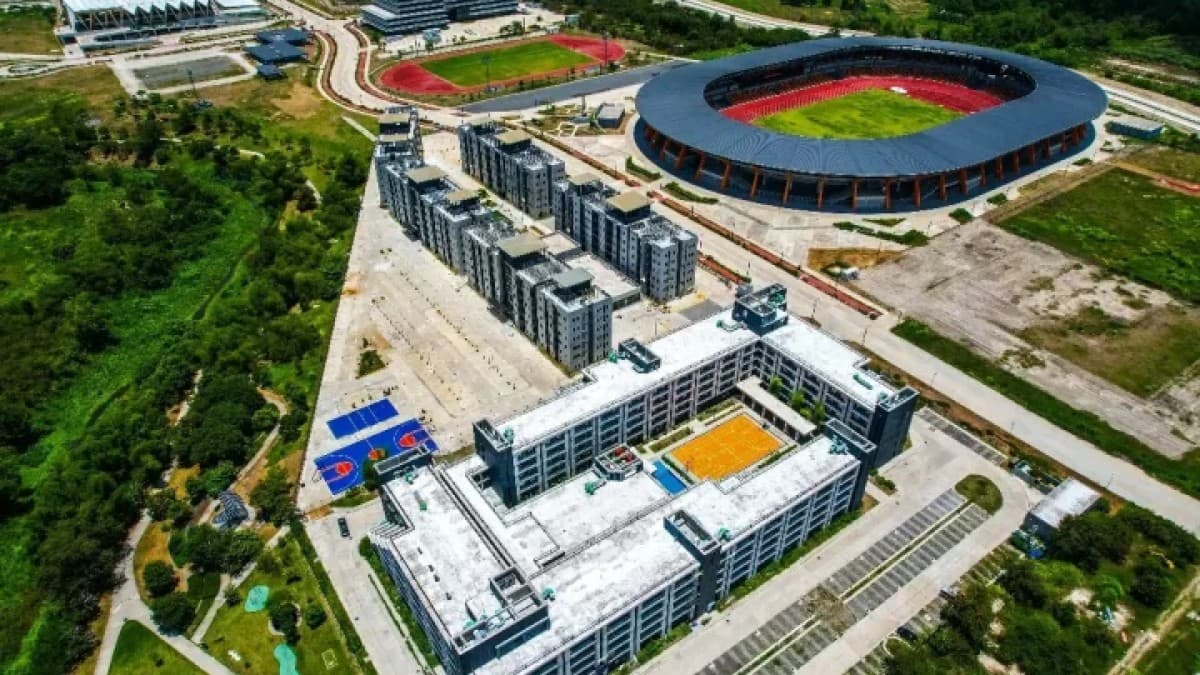
The anchor of the Philippines' strategy is Pax Silica — a 4,000-acre (1,618-hectare) AI-native industrial zone designated for New Clark City in Capas, Tarlac. The Philippines became the 13th member of the Pax Silica Declaration in April 2026, a U.S.-led initiative designed to build a secure, resilient silicon supply chain spanning critical minerals, semiconductors, AI infrastructure, and advanced manufacturing.
Significantly, the Philippines is also the first host country for a Pax Silica economic security zone — giving it a first-mover advantage as the initiative expands. Recto described the facility as presenting "a once-in-a-generation opportunity for the Philippines" to host industries that will shape the global economy.
Investment Scale and Interested Companies
Initial investment for the zone is pegged at $10 billion, with U.S. companies expected to commit more than $1 billion in the early phases. More than 20 global technology firms have formally expressed interest in establishing operations at the site — some reports put the figure as high as 50 companies in various stages of engagement.
Alongside capital investment, the initiative includes a digital upskilling commitment targeting millions of Filipino workers, building the engineering and technical pipeline the hub will need to function at scale.
What the Hub Will House
Pax Silica at New Clark City is designed as a full-stack industrial cluster, not a single-purpose facility:
- Chip fabrication and semiconductor packaging — moving the country from basic assembly to higher-value wafer-level work
- Critical minerals processing — the Philippines holds significant reserves of nickel, copper, and cobalt, all essential inputs for semiconductors, batteries, and advanced electronics
- Hyperscale data centers — anchoring the AI computing infrastructure
- AI research laboratories
- Advanced manufacturing and logistics
Groundbreaking on the first phase of development is expected within the next two years, according to the Bases Conversion and Development Authority (BCDA), which oversees New Clark City.
Broader Industrial and Export Strategy
The Pax Silica push feeds into a larger national industrial upgrade. The Philippine electronics sector — currently dominated by lower-margin assembly work — has set a target of $110 billion in exports by 2030, requiring a shift toward integrated circuit design, wafer manufacturing, and advanced packaging. Attracting global chipmakers and AI infrastructure companies to a purpose-built zone is central to that ambition.
The country's mineral wealth is a natural complement: nickel, copper, and cobalt reserves give the Philippines a credible role not just in manufacturing end-products but in supplying critical materials that the broader semiconductor and battery supply chain needs.
Luzon Economic Corridor
Underpinning the logistics of the hub is the Luzon Economic Corridor — a U.S.-Japan collaborative infrastructure initiative linking Subic Bay, Clark, Manila, and Batangas. The corridor connects New Clark City to international shipping routes and the existing manufacturing and port infrastructure spread across Central and Southern Luzon, making the industrial zone viable for export-oriented operations.
Context and Caveats
Whether these targets are met will depend on several variables: the pace of regulatory approvals and land development, the execution of supporting infrastructure, and the willingness of global companies to commit capital at the scale envisioned once due diligence is complete. The $10 billion figure covers the full zone's potential, not committed investment already in hand.
Still, the Philippines' combination of geographic location, English-speaking technical workforce, mineral assets, and close U.S. strategic alignment gives it a genuine case to make in an era when chip supply chain diversification has become a policy priority for Washington and its allies.
Sources: