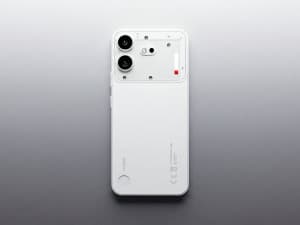
DJI has launched the Mic Mini 2S, a compact wireless microphone that finally adds the one feature its predecessor lacked: onboard recording. The 12-gram transmitter now carries 14.5GB of internal storage and can capture 32-bit floating-point audio on its own, so a dropped receiver signal no longer means lost sound. DJI released it in China first, with global availability expected to follow.
Key Takeaways
- The DJI Mic Mini 2S adds 14.5GB of onboard storage and 32-bit floating-point internal recording — the "S" stands for storage.
- If the receiver signal drops, the transmitter keeps recording locally for up to 28 hours at default 24-bit quality.
- A single receiver now supports up to four transmitters, a capability previously reserved for the flagship Mic 3.
- The transmitter weighs 12 grams, ranges up to 400 meters, and lasts up to 11 hours per charge.
- It launched in China first; global pricing and release have not been announced.
What's New: Recording That Can't Drop Out
The headline change is internal recording. The original Mic Mini streamed audio to a receiver but couldn't store it on the transmitter, so an interrupted signal risked a gap in the recording. The Mic Mini 2S fixes that with 14.5GB of built-in storage and 24-bit/32-bit float capture. In practice, that means the clip on your subject keeps saving even if they walk out of range of the receiver, with loop recording rated up to 28 hours at the default 24-bit setting.
32-bit floating-point recording is the other pro-grade addition. It captures such a wide dynamic range that audio which clips or comes in too quiet can be recovered in editing — a safeguard that matters for run-and-gun creators who can't ride levels in real time. In its hands-on review, The Gadgeteer highlighted the onboard recording as the feature that meaningfully separates the 2S from the outgoing Mic Mini 2.
Specs and Battery
| Specification | DJI Mic Mini 2S |
|---|
| Internal storage | 14.5GB |
| Recording | 24-bit / 32-bit floating-point |
| Transmitters per receiver | Up to 4 |
| Transmitter weight | 12 grams |
| Range | Up to 400 meters (ideal conditions) |
| Transmitter battery | Up to 11 hours |
| Receiver battery | Up to 10 hours |
| Total with charging case | ~40 hours |
| Loop recording | Up to 28 hours |
| Noise reduction | Two-tier AI (Weak / Strong) |
Support for up to four transmitters on a single receiver is notable: that many-to-one setup was previously exclusive to DJI's flagship Mic 3, and it lets creators mic several people at once for interviews or panels. DJI also kept backward compatibility, so the new receiver pairs with older Mic Mini and Mic Mini 2 transmitters. A two-tier AI noise reduction system offers a lighter mode for indoor background noise and a stronger mode for heavier outdoor ambience.
Price and Availability
DJI launched the Mic Mini 2S in China first, and international pricing has not yet been confirmed. Announced China prices convert roughly as follows at current rates (about ₱9.06 to the yuan):
- One-to-two kit with charging case: ¥1,199 (around ₱10,900)
- 1-to-1 bundle / phone-to-phone kit with case: ¥629 (around ₱5,700)
- Single transmitter: ¥399 (around ₱3,600)
- Magnetic covers: ¥199 (around ₱1,800)
Those figures are direct conversions of the China SRP and are not official Philippine or global prices, which DJI has yet to release.
Why It Matters
Onboard recording pushes the cheapest mic in DJI's wireless lineup much closer to the reliability of far pricier rigs. For Filipino content creators, vloggers, and small production teams who already lean on DJI gear like the DJI Osmo Pocket 4P, a pocket-sized mic that keeps a backup recording locally — and can cover four speakers at once — removes a common point of failure without the flagship Mic 3's cost. The main open question is when it reaches markets outside China, and at what local price.
FAQ
Is the DJI Mic Mini 2S available worldwide?
Not yet. DJI launched it in China first and has not announced global availability or international pricing.
What does the "S" in Mic Mini 2S stand for?
DJI positions the "S" as storage — the model's defining upgrade is 14.5GB of onboard recording space.
How many people can it record at once?
A single receiver supports up to four transmitters, allowing four separate audio sources to be captured simultaneously.
Sources: