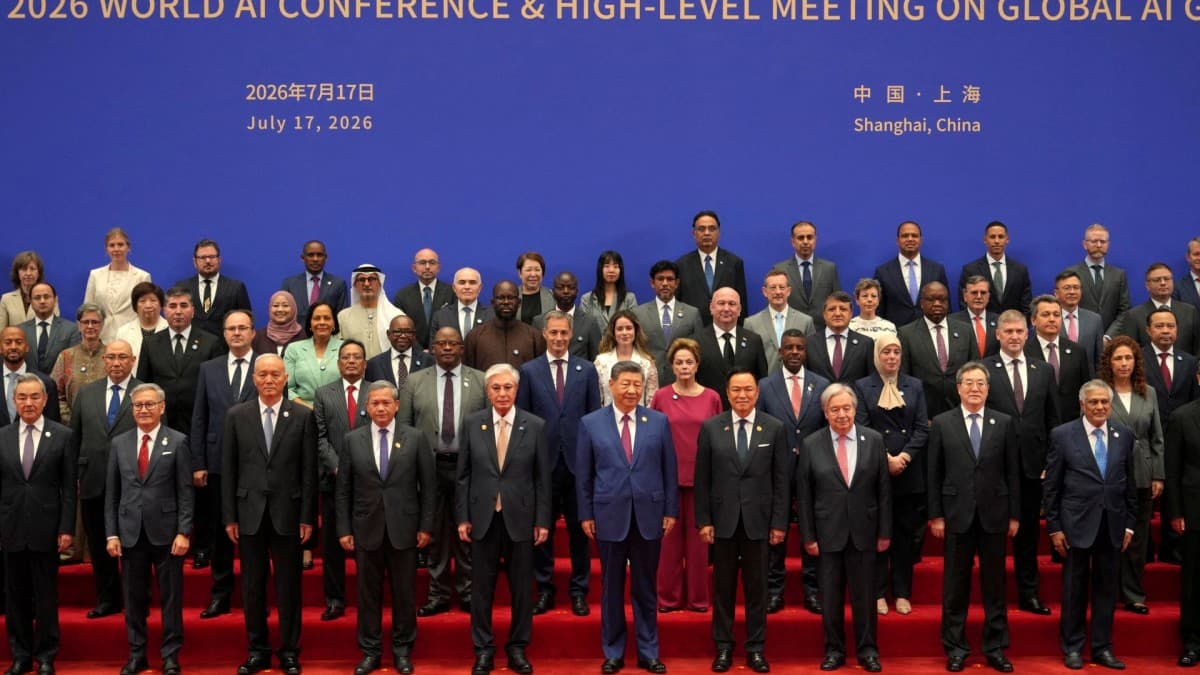
A new intergovernmental body for artificial intelligence rules now exists, and it is headquartered in Shanghai. The World Artificial Intelligence Cooperation Organization (WAICO) was formally established on July 16, 2026, when 29 countries signed its founding agreement. Five of those founding members are the Philippines' neighbours in Southeast Asia — Indonesia, Malaysia, Cambodia, Laos and Myanmar. The Philippines is not on the list.
Who signed, and who did not
The 29 founding members, as recorded in the organisation's founding documents, are: Algeria, Belarus, Brazil, Cambodia, Cameroon, China, Congo, Cuba, Ethiopia, Indonesia, Kazakhstan, Kenya, Kyrgyzstan, Laos, Lesotho, Malaysia, Mozambique, Myanmar, Nicaragua, Oman, Pakistan, Russia, Senegal, Serbia, South Africa, Tajikistan, Uzbekistan, Venezuela and Zambia.
The absences are as telling as the signatures. No major Western democracy signed — not the United States, the United Kingdom, Germany, France, Japan or Australia. Chinese Foreign Minister Wang Yi signed on China's behalf, and UN Secretary-General António Guterres attended the ceremony.
What WAICO says it will do
WAICO is set up as an independent intergovernmental organisation guided by United Nations Charter principles. Its stated aims are to promote international cooperation on AI and to help develop AI regulation that keeps the technology, in its words, beneficial and safe. It is explicitly open to all sovereign states and oriented toward the Global South — countries that have largely watched AI rulemaking happen elsewhere.
The signing came one day before the 2026 World Artificial Intelligence Conference opened in Shanghai on July 17, running through July 20 under the theme "Intelligent Partners, Co-create the Future." Speaking at the conference, Chinese President Xi Jinping urged countries to treat open-source AI as a shared opportunity, saying AI development "should not be a solo performance by a single country, but a symphony of international cooperation."
The obvious reading
WAICO is widely read as a counterweight to Western-led AI governance forums. The membership list supports that reading: it is heavy on Global South and non-aligned states, and empty of the countries where most frontier AI models are actually built. An organisation writing AI rules without the labs that make the models has limited practical leverage over them — at least for now. Its real influence will depend on whether members adopt WAICO standards in their own national laws, which is exactly what has not happened yet.
Where this leaves the Philippines
The Philippines sits in an awkward gap. Its ASEAN neighbours Indonesia, Malaysia, Cambodia, Laos and Myanmar are founding members; it is not. That is consistent with the country's broader posture — Manila has leaned toward US-aligned technology partnerships, including the proposed Pax Silica AI hub at New Clark City — but it means Philippine regulators will not be in the room as this particular bloc drafts its standards.
That matters more than it sounds. AI rules written elsewhere still reach Filipino users through the products they buy and the outsourcing work they do. Standards on model transparency, data handling and cross-border AI services set by a 29-country bloc will shape what regional vendors offer here, whether or not the Philippines has a seat. No Philippine government statement on WAICO membership had been issued as of publication, and there is no public indication that the country plans to join.
FAQ
Is the Philippines a member of WAICO?
No. The Philippines is not among the 29 founding members that signed on July 16, 2026. No official statement on future membership has been announced.
Where is WAICO based?
In Shanghai, China. It is structured as an independent intergovernmental organisation rather than a Chinese government agency.
Does WAICO have power to enforce AI rules?
Not directly. Like most intergovernmental bodies, its standards would take effect only if member states write them into national law. Its authority is unproven so far.