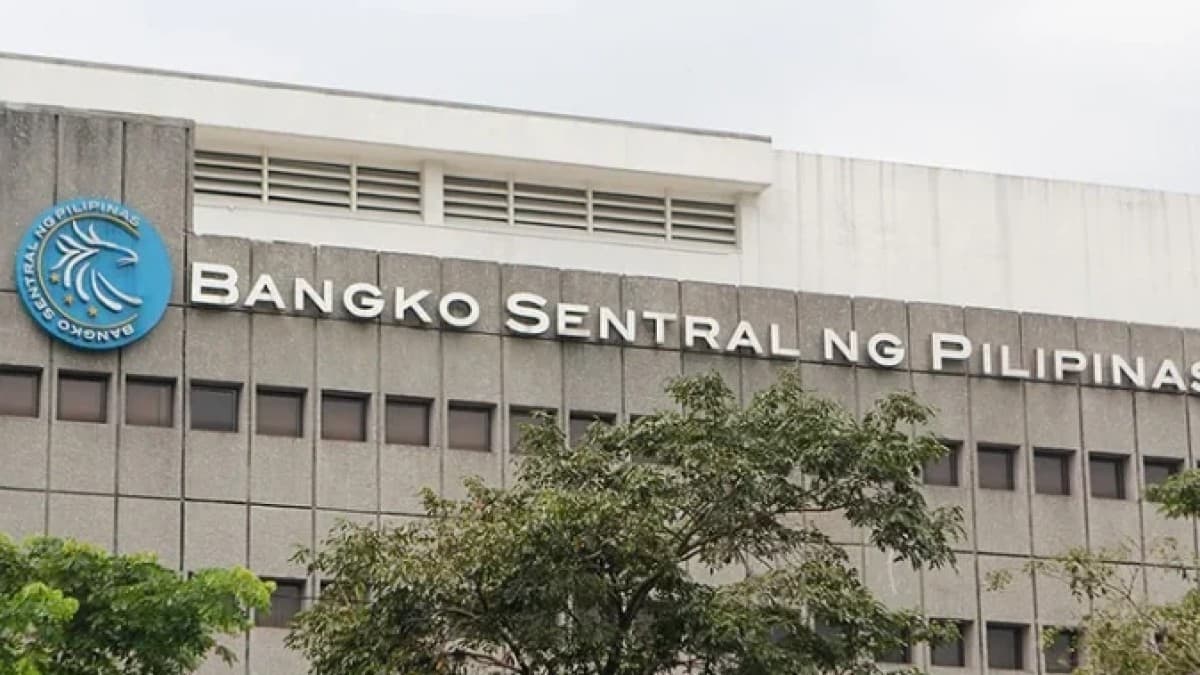
BSP Issues a New Framework for Digital Payment Pricing
The Bangko Sentral ng Pilipinas (BSP) has moved to reshape how banks and e-wallets price their digital payment services. On June 17, 2026, the central bank issued BSP Circular No. 1238 — signed by BSP Governor Eli M. Remolona, Jr. — establishing a market-based pricing framework for electronic fund transfers. Alongside it, Memorandum No. M-2026-025, signed by BSP Deputy Governor Mamerto E. Tangonan, lifted the moratorium on fee adjustments for InstaPay and PESONet that had been in effect since 2021.
The Moratorium That Just Ended
The BSP introduced a freeze on InstaPay and PESONet fee increases in 2021 as a measure to keep digital payments accessible during a period when Filipinos were shifting rapidly away from cash and branch banking. For five years, financial institutions could not raise their transfer fees on those two payment rails.
That moratorium ended with the June 17 memorandum. In a statement, Deputy Governor Tangonan said: "The lifting of the moratorium enables a more responsive and sustainable pricing environment, while ensuring that adequate regulatory oversight and consumer protection mechanisms remain firmly in place."
What Circular 1238 Requires
While the moratorium is lifted, Circular 1238 replaces blanket price controls with a more structured framework.
Cost-based pricing. Financial institutions must base fees on actual costs incurred in delivering electronic payment services, including network switch fees where applicable. Fee structures must be backed by quantitative analysis — banks and e-wallets cannot price arbitrarily.
Market fairness. Fees must be "reasonable, fair, and based on market conditions." Digital transaction charges must remain lower than the cost of equivalent over-the-counter or manual banking transactions, preserving the efficiency advantage of digital delivery.
On-us vs. off-us parity. Fees for transfers between accounts at different institutions (off-us) must not materially differ from fees for transfers within the same institution (on-us). The intent is to prevent financial institutions from using fee structures to discourage customers from transacting outside their own ecosystem.
Full-amount guarantee. Recipients must receive the full transaction amount without backend deductions. Institutions cannot recoup fees from the receiving end of a transfer.
Zero cost for small merchants. Financial institutions cannot charge small merchants for accepting electronic payments. This directly protects micro and small businesses from absorbing the cost of digital money acceptance.
Regulatory Oversight Remains Active
The BSP retains authority to request additional documentation from any institution whose pricing appears unreasonable. Institutions that cannot substantiate their fee structures face further regulatory scrutiny. The framework is designed to balance pricing flexibility with consumer protection — replacing one rigid rule set with another that is more responsive to market conditions while still keeping the central bank's oversight in place.
Context: Where Are Fees Today?
Despite the moratorium, digital payment fees in the Philippines have not been uniformly low. Finance Secretary Frederick Go acknowledged in discussions surrounding the new rules that some transfer fees "can still reach as high as PHP 50" — an amount that is significant for small, frequent transactions such as sari-sari store settlements or peer-to-peer remittances. The new framework aims to bring those fees down over time by anchoring them to demonstrable delivery costs rather than allowing institutions to maintain historical rates.
Banking industry groups had previously requested transition time — as early as February 2025 — to adjust their systems to the anticipated changes, indicating that the policy shift had been in preparation for some time.
What's Next: Zero-Fee Transfers on the Horizon?
The BSP is also exploring whether interbank transfer fees could eventually be eliminated entirely, pending Monetary Board approval. If that measure passes, free person-to-person transfers would extend beyond same-institution transactions — such as GCash-to-GCash or BPI-to-BPI moves that are already zero-cost — and cover cross-institution digital transfers across the entire Philippine banking ecosystem. No timeline has been set for that decision.
Sources: